On eBird ↗
Flammulated Owl
Live sightings near you, the range map, bar charts of when it is seen, and Macaulay Library photos and recordings.
Flammulated Owl
Psiloscops flammeolus
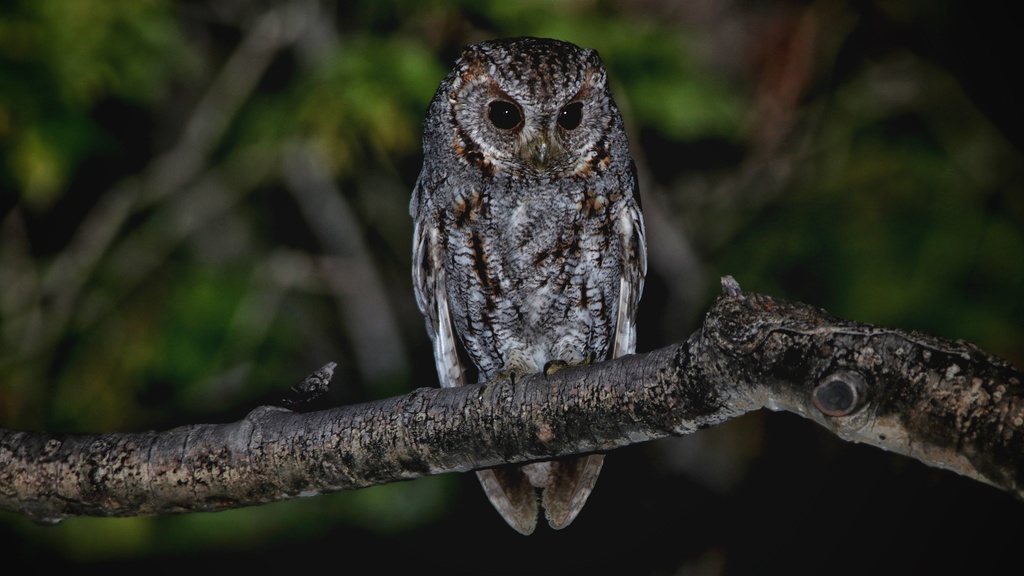
The flammulated owl (Psiloscops flammeolus) is a small, nocturnal owl approximately 15 centimetres (6 in) long with a 36 centimetres (14 in) wingspan. Males and females can be distinguished by their weight. Females are larger, ranging from 62–65 grams (2.2–2.3 oz) and males are smaller ranging from 50–52 grams (1.8–1.8 oz). The owl gets the name flammulated from the flame like markings on its face (Bremiller, 2003). It breeds from southern British Columbia and the western United States to central...
From the article Flammulated owl on Wikipedia (CC BY-SA), quoted section by section
Description
The flammulated owl is a small, nocturnal owl approximately 15 cm (6 in) long with a 36 cm (14 in) wingspan. With such large wings for a small body, they can fly rapidly from tree to tree. Males and females can be distinguished by their weight. Females are larger, ranging from 62–65 g (2.2–2.3 oz) and males are smaller ranging from 50–52 g (1.8–1.8 oz). The owl gets the name flammulated from the flame-like markings on its face. The flammulated owl is similar in appearance to the western screech owl, but is only about one-quarter the mass, lacks large ear tufts (but has small ear tufts that are barely visible), and has dark eyes and a different voice. The elf owl is smaller and the mountain pygmy owl is about the same size. The call is a series of relatively deep, single or double hoots.
Range & habitat
It breeds from southern British Columbia and the western United States to central Mexico. It is a neotropical migrant and winters south of the United States, but also in South Texas, Arizona, and California. Unlike many owls, they are migratory, leaving Canada and the United States in the fall. In the winter, they are found in northern Central America, from southern Mexico to Guatemala and El Salvador. They leave their breeding grounds in August to head to their wintering areas, and then return to their breeding grounds in late April and early May.
Wikipedia: “Distribution and habitat”
What it does
They feed almost entirely on insects, but very occasionally eat small mammals such as shrews and small rodents. The insects they eat mostly consist of small Lepidoptera. They also eat crickets and beetles.
Wikipedia: “Food and feeding”
Listen
Looking for field recordings…
Where it lives
Recorded sightings
—
geo-referenced records in GBIF, from museums, herbaria and field observers.
Drag the globe to turn it. Dots are where records exist, not a range map; darker means more records.
In the stacks
Searching the stacks…
Every page naming Psiloscops flammeolus in the Biodiversity Heritage Library →
This page is assembled live from iNaturalist, GBIF, Wikipedia, the Source Library and the Internet Archive. It is not yet part of the hand-edited codex. iNaturalist taxon 339605.