On eBird ↗
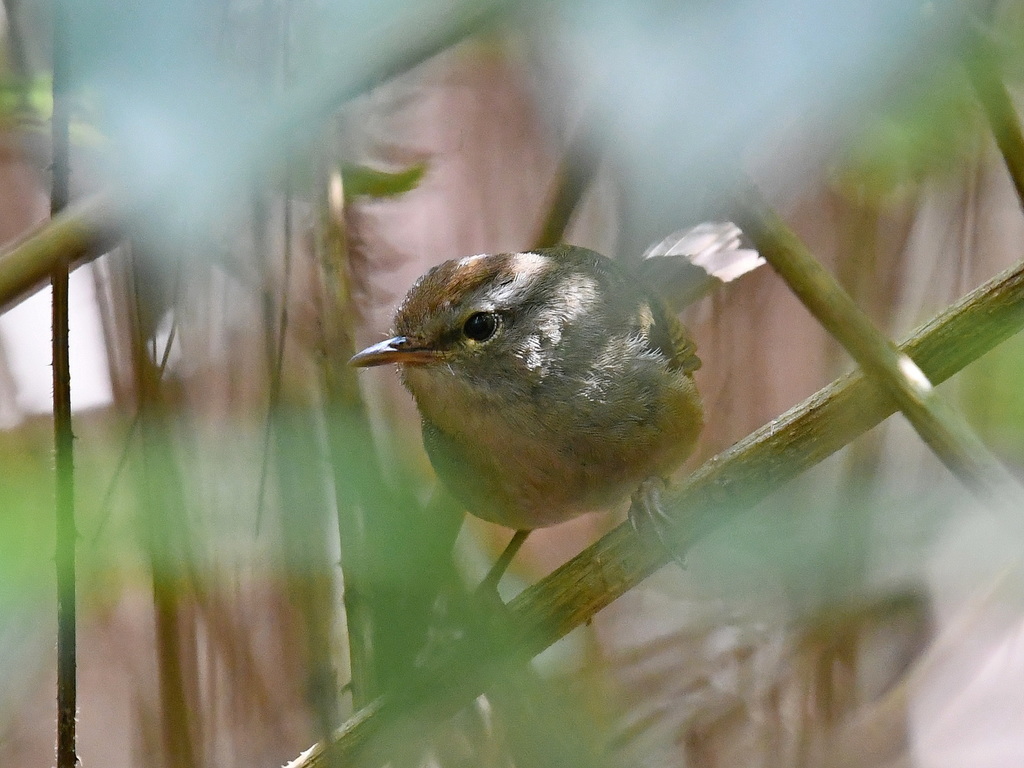
Philippine Bush Warbler
Live sightings near you, the range map, bar charts of when it is seen, and Macaulay Library photos and recordings.
Philippine Bush Warbler
Horornis seebohmi
The Philippine bush warbler (Horornis seebohmi), also known as the Luzon bush warbler, is a species of bird in the family Cettiidae.
It was formerly conspecific with the Japanese bush warbler. It is found only in the Philippines in the Cordillera Mountain Range of northern Luzon. It is found in tropical montane forest.
From the article Philippine bush warbler on Wikipedia (CC BY-SA), quoted section by section
Description
This species was once conspecific with the Japanese bush warbler and differs vocally, through its smaller size, deeper rufous upper back, darker lores and grayer
Wikipedia: “Description and taxonomy”
Range & habitat
It is found in tropical montane pine forests above 800 meters in elevation. It is typically found in the understory and low thickets in the forest strata. Little else is known about this bird. IUCN has assessed this bird as least-concern with the population believed to be stable but more surveys are needed to determine the actual population health and distribution of the species.
== References ==
Wikipedia: “Habitat and conservation status”
What it does
Presumed to feed on small invertebrates. Typically seen alone foraging in low dense vegetation. This species is very vocal while remaining hidden in the thickets. Birds in breeding condition with enlarged gonads collected in April. Juveniles have been seen from May to July but otherwise no other information on this species breeding habits.
Wikipedia: “Ecology and behavior”
Listen
Looking for field recordings…
Where it lives
Recorded sightings
—
geo-referenced records in GBIF, from museums, herbaria and field observers.
Drag the globe to turn it. Dots are where records exist, not a range map; darker means more records.
In the stacks
Searching the stacks…
Every page naming Horornis seebohmi in the Biodiversity Heritage Library →
This page is assembled live from iNaturalist, GBIF, Wikipedia, the Source Library and the Internet Archive. It is not yet part of the hand-edited codex. iNaturalist taxon 339701.