On eBird ↗
Long-tailed Bush Warbler
Live sightings near you, the range map, bar charts of when it is seen, and Macaulay Library photos and recordings.
Long-tailed Bush Warbler
Locustella caudata
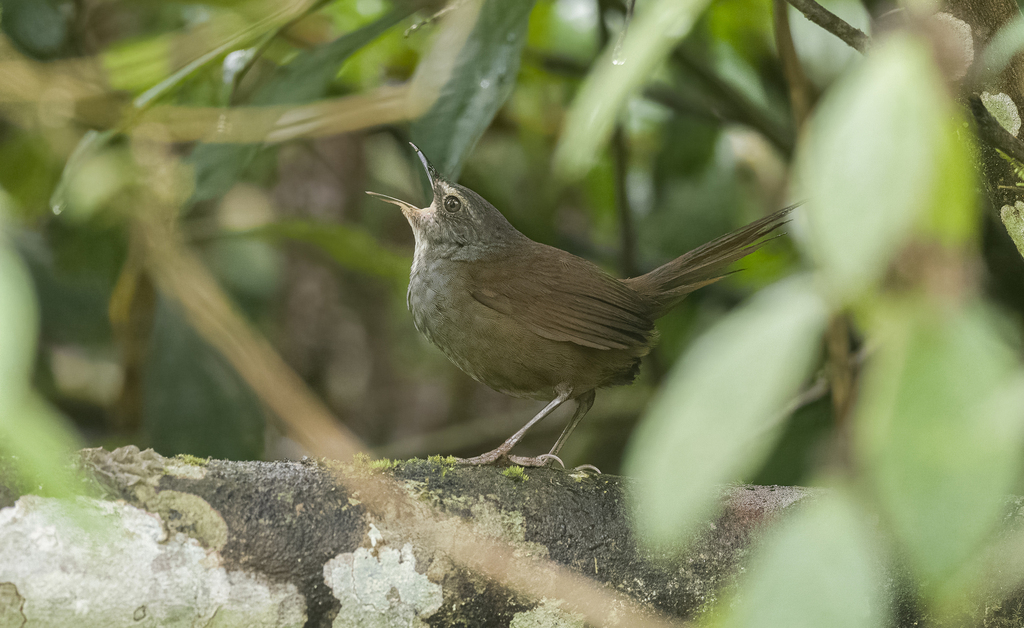
The long-tailed bush warbler (Locustella caudata) also known as the Long-tailed grasshopper-warbler is a species of grass warbler (family Locustellidae). It was formerly included in the "Old World warbler" assemblage. It is found only in the Philippines on the islands of Mindanao and Luzon.
From the article Long-tailed bush warbler on Wikipedia (CC BY-SA), quoted section by section
Description
Three subspecies are recognised:
L. c. caudata– all of Mindanao except the Zamboanga Peninsula; Longer tail L. c. malindangensis – west Mindanao in the Zamboanga Peninsula - Darker sides on face and a whiter throat L. c. unicolor – Luzon; Dark upperparts, rufous belly and a shorter tail The birds in Luzon and Mindanao have vastly different calls and the potential of there is potential for these birds to be split into their own distinctive species.
Wikipedia: “Description and taxonomy”
Range & habitat
It occupies montane mossy forest above 700 meters above sea level. IUCN has assessed this bird as Least-concern as a lot of its montane habitat is difficult to access and it is reasonably common within its wide range. However, it is still declining due to habitat loss through deforestation, mining, land conversion and slash-and-burn.
Wikipedia: “Habitat and conservation status”
What it does
These birds feed on small insects. Forages alone or singly. Breeding season is unkwnon but young birds seen from February to September.
Wikipedia: “Ecology and behavior”
Listen
Looking for field recordings…
Where it lives
Recorded sightings
—
geo-referenced records in GBIF, from museums, herbaria and field observers.
Drag the globe to turn it. Dots are where records exist, not a range map; darker means more records.
In the stacks
Searching the stacks…
Every page naming Locustella caudata in the Biodiversity Heritage Library →
This page is assembled live from iNaturalist, GBIF, Wikipedia, the Source Library and the Internet Archive. It is not yet part of the hand-edited codex. iNaturalist taxon 339728.