On eBird ↗
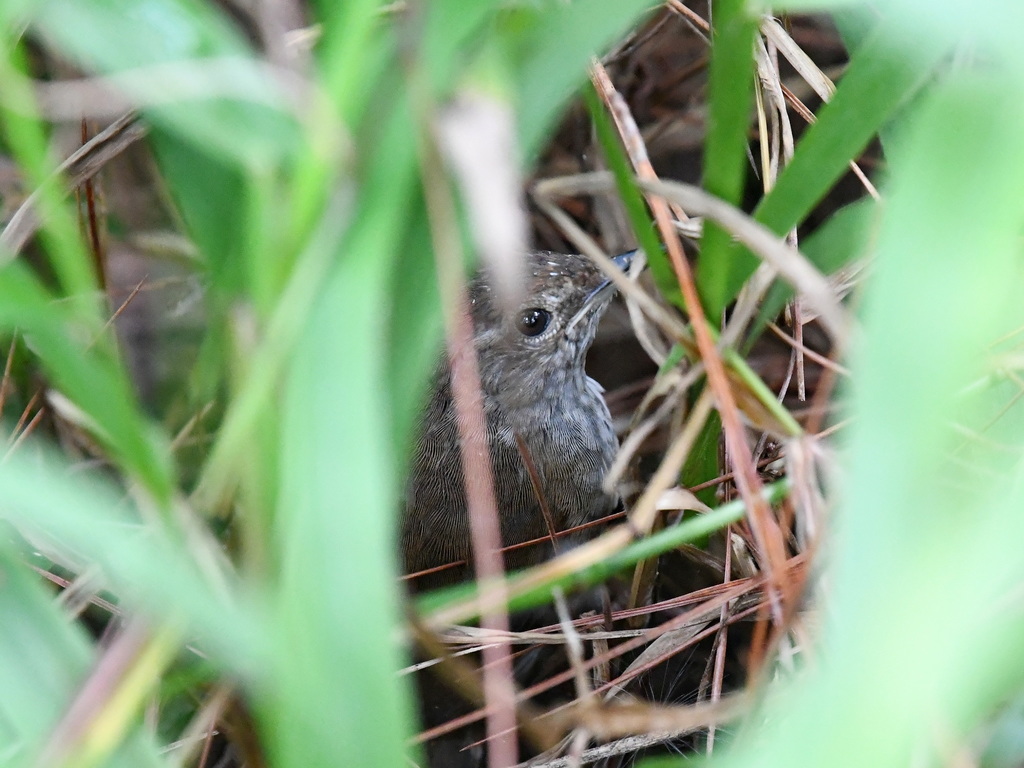
Benguet Bush Warbler
Live sightings near you, the range map, bar charts of when it is seen, and Macaulay Library photos and recordings.
Benguet Bush Warbler
Locustella seebohmi
The Benguet bush warbler (Locustella seebohmi) is a songbird species. Formerly placed in the "Old World warbler" assemblage, it is now placed in the newly recognized family Locustellidae. L. seebohmi was formerly known as russet bush warbler, but that name is now restricted to L. mandelli, formerly included in L. seebohmi as a subspecies but now considered a separate species.
From the article Benguet bush warbler on Wikipedia (CC BY-SA), quoted section by section
Description
It is a small and slender bird found in montane grassy valleys. This species is predominantly warm brown with a white throat and a grayish chest. It has a pale brow and pale barring on the vent. Its call is described as a series of cricket like ringing notes at regular intervals. Previously placed in Bradypterus but is now in Locustella. It was formerly conspecific with the Russet bush warbler.This species is monotypic and has no subspecies.
Wikipedia: “Description and taxonomy”
Range & habitat
It is found to steep grass valleys in montane areas from 800 to 1,800 metres (2,620 to 5,910 ft) above sea level. It appears to be limited to drier areas, and has been found in areas both with or without pine trees. Little else is known about this bird. IUCN has assessed this bird as least-concern with the population believed to be stable. There is a need for surveys to determine whether this species is rare and possibly threatened or whether it is just widely overlooked. Studies of its habitat associations and tolerance of degraded areas are needed.
== References ==
Wikipedia: “Habitat and conservation status”
What it does
Nothing is known about its ecology. It is presumed to feed on insects. It is most vocal in February.
Wikipedia: “Ecology and behavior”
Listen
Looking for field recordings…
Where it lives
Recorded sightings
—
geo-referenced records in GBIF, from museums, herbaria and field observers.
Drag the globe to turn it. Dots are where records exist, not a range map; darker means more records.
In the stacks
Searching the stacks…
Every page naming Locustella seebohmi in the Biodiversity Heritage Library →
This page is assembled live from iNaturalist, GBIF, Wikipedia, the Source Library and the Internet Archive. It is not yet part of the hand-edited codex. iNaturalist taxon 339736.