- Animals
- ›Chordates
- ›Vertebrates
- ›Birds
- ›Perching Birds
- ›Tree-Babblers, Scimitar-Babblers, and Allies
- ›Mixornis
On eBird ↗
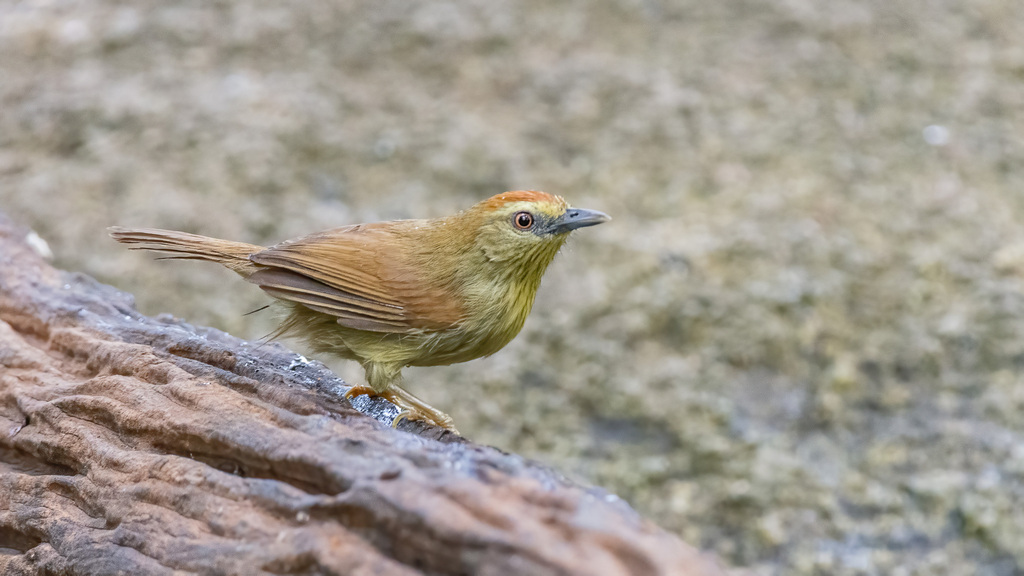
Pin-striped Tit-Babbler
Live sightings near you, the range map, bar charts of when it is seen, and Macaulay Library photos and recordings.
Pin-striped Tit-Babbler
Mixornis gularis
The pin-striped tit-babbler (Mixornis gularis), also known as the yellow-breasted babbler, is a species of bird in the Old World babbler family Timaliidae that is found in South and Southeast Asia.
From the article Pin-striped tit-babbler on Wikipedia (CC BY-SA), quoted section by section
Description
The species has a distinctive yellowish supercilium and rufous crown. The throat is yellowish with brown streaks. Call is a loud repeated chonk-chonk-chonk-chonk-chonk somewhat reminiscent of a common tailorbird. They forage in small flocks and creep and clamber in low vegetation. They breed in the pre-monsoon season from February to July and build a loose ball shaped nest made from grasses and leaves.
Range & habitat
The species is widely distributed and is found in Bangladesh, Bhutan, Brunei, Cambodia, China, India, Indonesia, Laos, Malaysia, Myanmar, Nepal, Philippines, Singapore, Thailand and Vietnam. In India, there are disjunct populations in southern India. This population was recorded by Salim Ali from Antharasanthe near the Kabini reservoir. There were no records of the species from this area after the initial collection. The southern population was rediscovered from the Masinagudi area in Mudumalai in 2004. Other populations are found in the northern Eastern Ghats.
== References ==
Wikipedia: “Distribution”
Listen
Looking for field recordings…
Where it lives
Recorded sightings
—
geo-referenced records in GBIF, from museums, herbaria and field observers.
Drag the globe to turn it. Dots are where records exist, not a range map; darker means more records.
In the stacks
Searching the stacks…
Every page naming Mixornis gularis in the Biodiversity Heritage Library →
This page is assembled live from iNaturalist, GBIF, Wikipedia, the Source Library and the Internet Archive. It is not yet part of the hand-edited codex. iNaturalist taxon 339771.