On eBird ↗
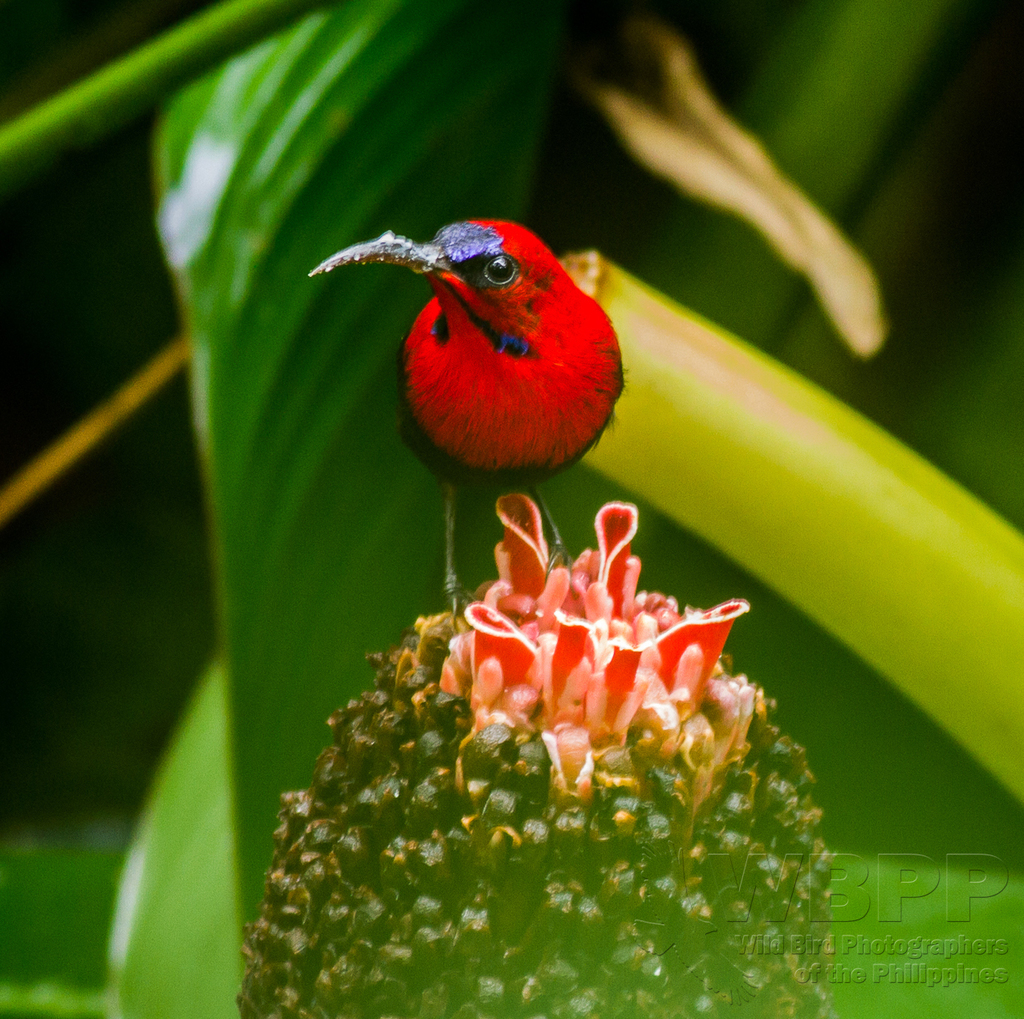
Magnificent Sunbird
Live sightings near you, the range map, bar charts of when it is seen, and Macaulay Library photos and recordings.
Magnificent Sunbird
Aethopyga magnifica
The magnificent sunbird (Aethopyga magnifica) is a species of bird in the sunbird family which feed largely on nectar, although they will also take insects, especially when feeding young. Flight is fast and direct on their short wings. Most species can take nectar by hovering like a hummingbird, but usually perch to feed most of the time. It is endemic to the western Philippines and was once considered a subspecies of the crimson sunbird.
From the article Magnificent sunbird on Wikipedia (CC BY-SA), quoted section by section
Description
This species was once conspecific with the Crimson sunbird but differs with its larger size. Males of the Magnificent sunbird differ with its black belly and purplish tails while females are much darker.
Wikipedia: “Description and taxonomy”
Range & habitat
It is found in fruiting and flowering trees in primary, secondary and cultivated areas up to 1000 masl. IUCN has assessed this bird as least concern with the population trend being assessed as stable. This is due to the species being able to tolerate degraded forest and cultivated areas unlike other forest specialists.
== References ==
Wikipedia: “Habitat and conservation status”
What it does
Feed largely on nectar, although they will also take insects, especially when feeding young. Flight is fast and direct on their short wings. Most species can take nectar by hovering like a hummingbird, but usually perch to feed most of the time. Breeds from February to June. Nest is bag shaped with roofed entrance made of roots, grass, plant fibers woven with spider webs. This nest is typically low and well concealed and close to large tree trunks. Clutch size is typically 2 to 3 reddish brown eggs with brownish red spotting and scribbles.
Wikipedia: “Ecology and behavior”
Listen
Looking for field recordings…
Where it lives
Recorded sightings
—
geo-referenced records in GBIF, from museums, herbaria and field observers.
Drag the globe to turn it. Dots are where records exist, not a range map; darker means more records.
In the stacks
Searching the stacks…
Every page naming Aethopyga magnifica in the Biodiversity Heritage Library →
This page is assembled live from iNaturalist, GBIF, Wikipedia, the Source Library and the Internet Archive. It is not yet part of the hand-edited codex. iNaturalist taxon 339878.