- Animals
- ›Chordates
- ›Vertebrates
- ›Reptiles
- ›Snakes and Lizards
- ›Lizards
- ›Wall lizards, amphisbaenians, and allies
- ›Spectacled Lizards
- ›Cercosaurinae
- ›Bachia
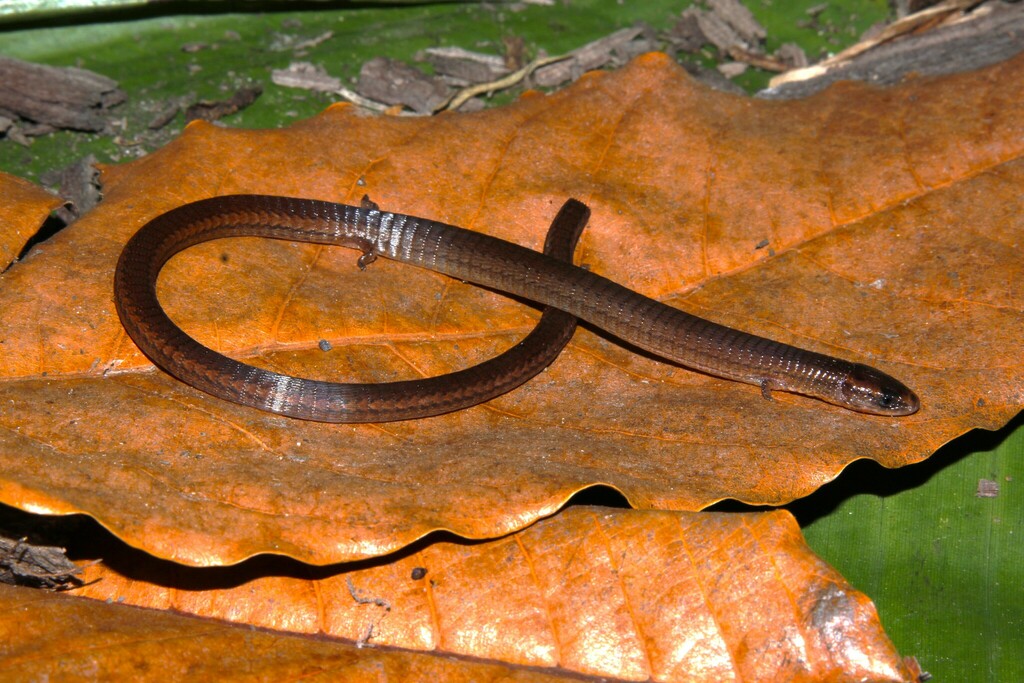
Manaus Earless Teju
Bachia panoplia
Bachia panoplia is a species of lizard in the family Gymnophthalmidae. It is endemic to Brazil.
From the article Bachia panoplia on Wikipedia (CC BY-SA), quoted section by section
Description
Bachia panoplia is a small, terrestrial, snake-like lizard with an elongated body and reduced limbs, typical of the genus Bachia. Like other fossorial gymnophthalmid lizards of the genus, it lacks external ear openings, has an elongate body and tail, and presents a distinctive eyelid structure with substantial variation in levels of limb reduction. The species is oviparous, laying eggs with little embryonic development within the mother. Bachia panoplia belongs to the bresslaui group within the genus, and exhibits intermediate limb morphology relative to other Bachia species and closely related genera.
Range & habitat
Bachia panoplia is known from specimens collected in Manaus, Amazonas, Brazil, indicating its presence in the Amazon rainforest region. Members of the genus Bachia typically occupy neotropical forest floor habitats, spending most of their time moving through leaf litter and soil.
Wikipedia: “Habitat and distribution”
What it does
Like other Bachia species, B. panoplia likely hunts for soft-bodied insects, particularly termites and ant larvae in underground nests. These lizards occasionally venture into decomposing wood where they may capture beetle larvae. Their snake-like appearance and fossorial adaptations allow them to move efficiently through the substrate in search of prey. Bachia species are considered shallow burrowers, showing morphological and behavioral traits indicating fossorial habits, including burrowing when disturbed.
Wikipedia: “Ecology and behavior”
Where it lives
Recorded sightings
—
geo-referenced records in GBIF, from museums, herbaria and field observers.
Drag the globe to turn it. Dots are where records exist, not a range map; darker means more records.
In the stacks
Searching the stacks…
Every page naming Bachia panoplia in the Biodiversity Heritage Library →
This page is assembled live from iNaturalist, GBIF, Wikipedia, the Source Library and the Internet Archive. It is not yet part of the hand-edited codex. iNaturalist taxon 34780.