- Animals
- ›Chordates
- ›Vertebrates
- ›Mammals
- ›Therians
- ›Placental Mammals
- ›Ungulates, Carnivorans, and Allies
- ›Carnivorans

Pinnipeds
Phocoidea
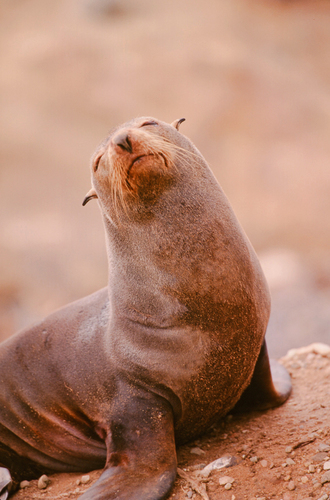
Pinnipeds (pronounced ), commonly known as seals, are widely distributed and diverse carnivorous, fin-footed, semiaquatic, mostly marine mammals, belonging to the clade Pinnipedia. They comprise the extant families Odobenidae (whose only living member is the walrus), Otariidae (the eared seals: sea lions and fur seals), and Phocidae (the earless seals, or true seals), with 34 extant species and more than 50 extinct species described from fossils. While seals were historically thought to have descended from two ancestral lines, molecular evidence supports them as a monophyletic group (descended from one ancestor). Pinnipeds belong to the suborder Caniformia of the order Carnivora; their closest living relatives are musteloids (weasels, raccoons, skunks and red pandas), having diverged about 50 million years ago.
Seals range in size from the 1 m (3 ft 3 in) and 45 kg (100 lb) Baikal seal to the 5 m (16 ft) and 3,200 kg (7,100 lb) southern elephant seal. Several species exhibit sexual dimorphism. They have streamlined bodies and four limbs that are modified into flippers. Though not as fast in the water as dolphins, seals are more flexible and agile. Otariids primarily use their front limbs to propel themselves through the water, while phocids and walruses primarily use their hind limbs for this purpose. Otariids and walruses have hind limbs that can be pulled under the body and used as legs on land. By comparison, terrestrial locomotion by phocids is more cumbersome. Otariids have visible external ears, while phocids and walruses lack these.
3 branches of this superfamily, most-observed first · about 35 known species
See this branch on the Wheel of Life →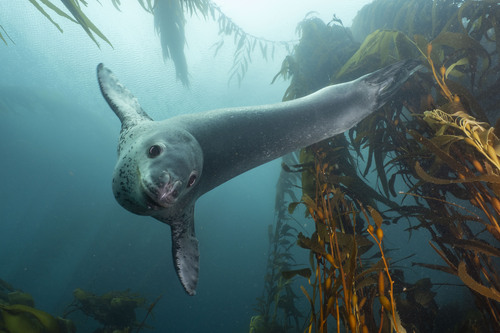

Where it lives
Recorded sightings
—
geo-referenced records in GBIF, from museums, herbaria and field observers.
Drag the globe to turn it. Dots are where records exist, not a range map; darker means more records.
In the stacks
Searching the stacks…
Every page naming Phocoidea in the Biodiversity Heritage Library →
This page is assembled live from iNaturalist, GBIF, Wikipedia, the Source Library and the Internet Archive. It is not yet part of the hand-edited codex. iNaturalist taxon 372843.