- Animals
- ›Chordates
- ›Vertebrates
- ›Mammals
- ›Therians
- ›Placental Mammals
- ›Ungulates, Carnivorans, and Allies
- ›Bats
- ›Yinpterochiroptera
- ›Rhinolophoid Bats
- ›Old World Leaf-nosed Bats
- ›Hipposideros
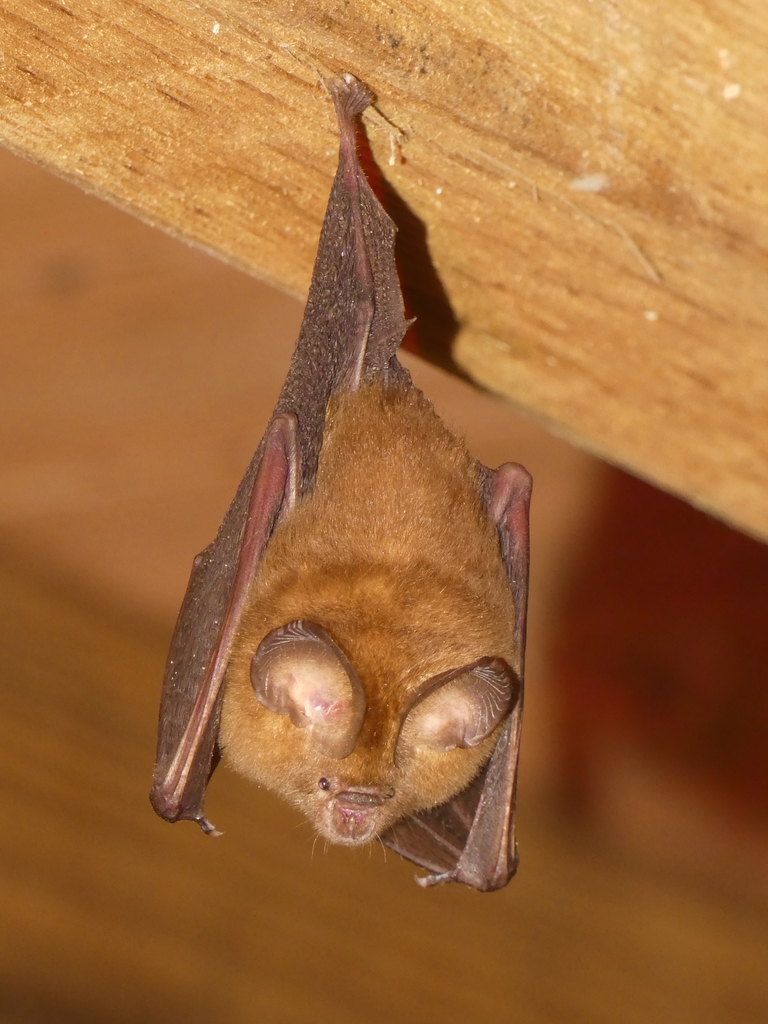
Dusky Roundleaf Bat
Hipposideros ater
The dusky leaf-nosed bat (Hipposideros ater) is a bat from the genus Hipposideros whose habitat extends from India and Sri Lanka to the Philippines, New Guinea and Northern Australia. This species is counted in the H. bicolor species group and was formerly classified within that species.
The genus name Hipposideros comes from the Greek words for "horse" (ἴππος) and "iron" (σίδηρος) and means "horseshoe"; a reference to the complex nose that species in this genus are known for. The generic designation ater is Latin for "black" and notes the relative dark color of this species's coat.
From the article Dusky leaf-nosed bat on Wikipedia (CC BY-SA), quoted section by section
Description
It is a very small leaf bat, but with huge, wide, round eyes. The coat is long and soft. The upside is grey-brown to grey, sometimes also orange. The square leaf nose is relatively simple in shape. The structure of the leaf nose appears on the H. cineraceus but the color appears more on the H. pomona. Instances of this species from both India as well as Catanduanes have a karyotype of van 2n=32, FN=60, just as many other Hipposideros species. In the table below are the sizes of H. ater in various areas.
== References ==
Range & habitat
In the Philippines this species is found in rainforests at sea level up to elevations of 1200 m. The animal rests in caves in both forests and agricultural areas. In Australia the species lives in both mangroves and rainforests in as well as in dry, open areas. Like most bats, H. ater is active at night. In Australia it sleeps in the daytime in caves, mines and sometimes tree holes, preferably in dark, warm and moist places. The animal eats small, flying insects. This bat flies slowly, but is manoeuvrable. The mating season is in April; the young are born from October to December and are weaned in January.
Wikipedia: “Habitat and behavior”
Listen
Looking for field recordings…
Where it lives
Recorded sightings
—
geo-referenced records in GBIF, from museums, herbaria and field observers.
Drag the globe to turn it. Dots are where records exist, not a range map; darker means more records.
In the stacks
Searching the stacks…
Every page naming Hipposideros ater in the Biodiversity Heritage Library →
This page is assembled live from iNaturalist, GBIF, Wikipedia, the Source Library and the Internet Archive. It is not yet part of the hand-edited codex. iNaturalist taxon 40715.