- Animals
- ›Chordates
- ›Vertebrates
- ›Mammals
- ›Therians
- ›Placental Mammals
- ›Ungulates, Carnivorans, and Allies
- ›Bats
- ›Yinpterochiroptera
- ›Pteropodoidea
- ›Old World Fruit Bats
- ›Flying-foxes, Monkey-faced Bats and allies
- ›Flying-foxes and allies
- ›Pteropus
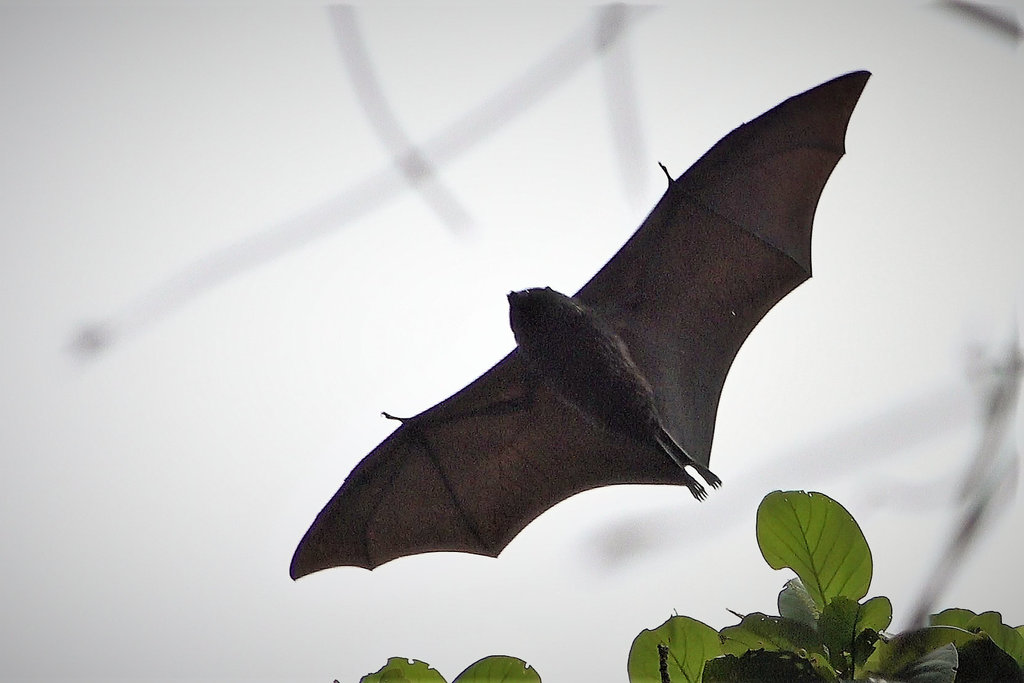
Comoro Flying-fox
Pteropus livingstonii
Livingstone's fruit bat (Pteropus livingstonii), also called the Comoro flying fox, is a megabat in the genus Pteropus. It is an Old World fruit bat found only in the Anjouan and Mohéli islands in the Union of the Comoros in the western Indian Ocean.
It is the largest and rarest bat of all Comorian species. Its preferred habitat is montane forest above 200 metres (660 ft) on Mohéli and above 500 metres (1,600 ft) on Anjouan, the destruction of which is a major threat to the bat population. As of 2003, the total population was estimated at 1,200 individuals. Other threats to the bats' survival include storms, hunting, and their struggles to readapt to new habitats.
From the article Livingstone's fruit bat on Wikipedia (CC BY-SA), quoted section by section
Range & habitat
Livingstone's fruit bat is found only on the islands of Anjouan and Mohéli, within the Comoros archipelago between Africa and northern Madagascar. It inhabits montane forest above 200 metres (660 ft) on Moheli and above 500 metres (1,600 ft) on Anjouan. All current Livingstone's fruit bat roosts are restricted to a narrow midaltitudinal range and are strongly associated with the presence of native and endemic trees, with the biggest roosts located in dense-canopy, old-growth forest. Livingstone's flying fox appears to show a preference for roosting in certain tree species, in particular the endemic Nuxia pseudodentata and native Gambeya spp. and at forested sites that are typically found on steep slopes, next to valleys where permanent watercourses are present, and facing in a southeast direction and in depressions to provide protection from wind and the midday sun. Only 15 roost-sites are currently occupied in Anjouan and six at Moheli.
Wikipedia: “Distribution and habitat”
What it does
In captivity, a colony can have a dominant male with up to eight breeding females. Livingstone's flying foxes are active both day and night, and are predominantly nocturnal, the highest activity was observed between 10 pm and 2 am. They typically fly to a feeding site a few hours before dusk, taking advantage of hot, daytime thermals, and hang from the trees before beginning to feed after nightfall. They forage for food primarily in the upper canopy of the forest, whereas the two other fruit bats native to the Comoros, the Seychelles fruit bat and the Comoro rousette, forage in the middle and lower canopy, respectively. The diet of Livingstone's fruit bats consists of fruit, pollen, nectar, seeds, and leaves. They have also been observed to hunt and eat moths in captivity. They drive off intruders on their feeding territory with chattering sounds, clapping their wings, and chasing, sometimes culminating in clawing and biting. When alarmed, they make squeaking sounds or a deep series of "clucks". After mating, the pregnant females relocate to maternity roost sites to give birth and raise their young until they reach maturity. They give birth to a single pup, typically in early September. The young pups are born fully furred and with their eyes open; their big feet are used to grip onto their mothers directly after birth. …
Wikipedia: “Behaviour and biology”
Listen
Looking for field recordings…
Where it lives
Recorded sightings
—
geo-referenced records in GBIF, from museums, herbaria and field observers.
Drag the globe to turn it. Dots are where records exist, not a range map; darker means more records.
In the stacks
Searching the stacks…
Every page naming Pteropus livingstonii in the Biodiversity Heritage Library →
This page is assembled live from iNaturalist, GBIF, Wikipedia, the Source Library and the Internet Archive. It is not yet part of the hand-edited codex. iNaturalist taxon 40879.