- Animals
- ›Chordates
- ›Vertebrates
- ›Mammals
- ›Therians
- ›Placental Mammals
- ›Ungulates, Carnivorans, and Allies
- ›Carnivorans
- ›Civets, Genets, and Oyans
- ›Sunda Civets
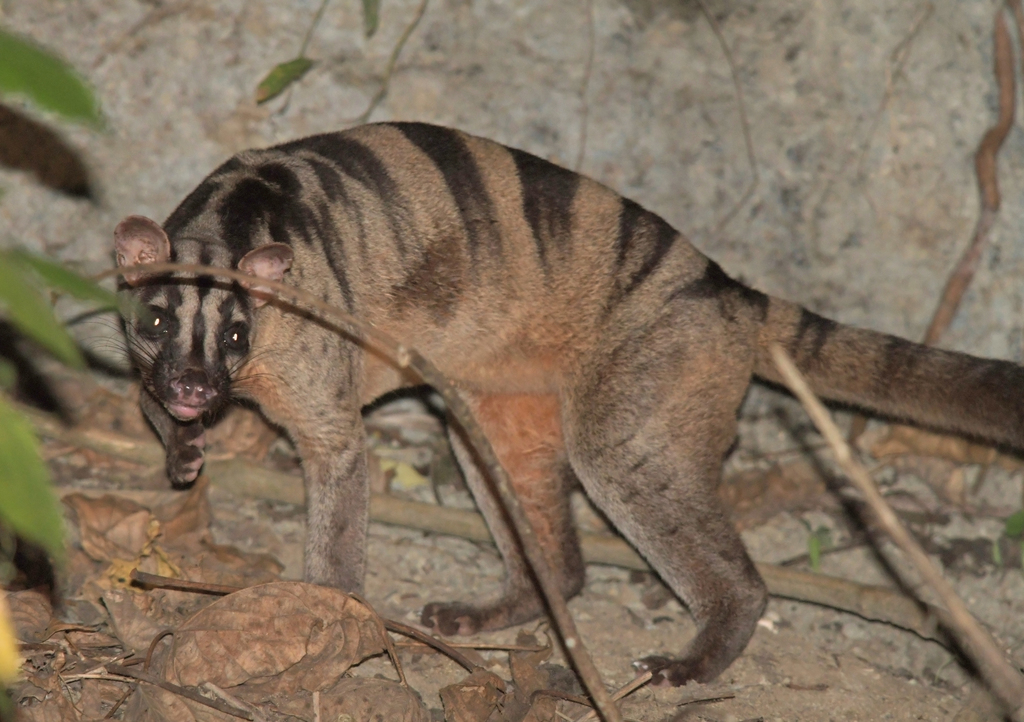
Banded Civets
Hemigalus
The banded palm civet (Hemigalus derbyanus), also called the banded civet, is a viverrid native to Indomalaya. They primarily inhabit lowland conifer habitat, which is under threat from encroaching human activity. It is estimated the population of the banded palm civet has decreased by around 30% in just three generations. Banded palm civets are usually approximately the size of a domestic cat; their fur is pale but with dark bands on the back. They are believed to be closely related to Hose's palm civets, which are similar in appearance and distribution.
The banded palm civet is the only species in its genus, first scientifically described in 1837. The species comprises four subspecies, distributed across Indonesia and Southeast Asia. Two of the subspecies diverged from each other as long ago as 2.7 million years.
1 branches of this genus, most-observed first · about 1 known species
See this branch on the Wheel of Life →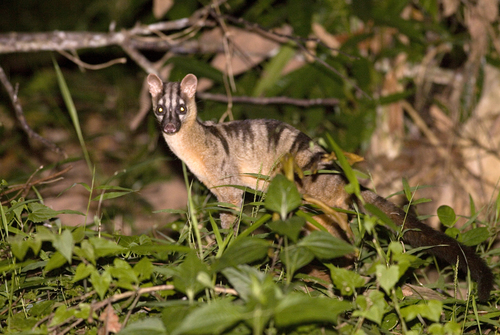
Where it lives
Recorded sightings
—
geo-referenced records in GBIF, from museums, herbaria and field observers.
Drag the globe to turn it. Dots are where records exist, not a range map; darker means more records.
In the stacks
Searching the stacks…
Every page naming Hemigalus in the Biodiversity Heritage Library →
This page is assembled live from iNaturalist, GBIF, Wikipedia, the Source Library and the Internet Archive. It is not yet part of the hand-edited codex. iNaturalist taxon 41634.