- Animals
- ›Chordates
- ›Vertebrates
- ›Mammals
- ›Therians
- ›Placental Mammals
- ›Ungulates, Carnivorans, and Allies
- ›Carnivorans
- ›Bears
- ›Typical Bears

Sun Bears
Helarctos
The sun bear (Helarctos malayanus) is a bear species in the family Ursidae found in the tropical forests of Southeast Asia. It is the only species in the genus Helarctos and the smallest bear species, standing nearly 70 cm (28 in) at the shoulder and weighing 25–65 kg (55–143 lb). It is stockily built, with large paws, strongly curved claws, small, rounded ears and a short snout. The fur is generally short and jet black, but can vary from grey to red. The sun bear gets its name from its characteristic orange to cream-coloured chest patch.
The sun bear's unique morphology with inward-turned front feet, flattened chest, powerful forelimbs with large claws suggests adaptations for climbing, and it is an excellent climber and the most arboreal of all bears. It sunbathes or sleeps in trees 2 to 7 m (6 ft 7 in to 23 ft 0 in) above the ground. It is mainly active during the day, though nocturnality might be more common in areas frequented by humans. It tends to remain solitary, but sometimes occur in pairs such as a mother and her cub. It does not hibernate, possibly because food resources are available the whole year throughout its range. It is an omnivore, and its diet includes ants, bees, beetles, honey, termites, and plant material such as seeds and several kinds of fruits; vertebrates such as birds and deer are also eaten occasionally. It breeds throughout the year; individuals become sexually mature at two to four years of age. Litters comprise one or two cubs that remain with their mother for around three years.
1 branches of this genus, most-observed first · about 1 known species
See this branch on the Wheel of Life →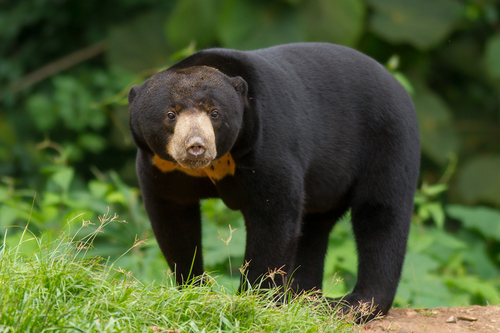
Where it lives
Recorded sightings
—
geo-referenced records in GBIF, from museums, herbaria and field observers.
Drag the globe to turn it. Dots are where records exist, not a range map; darker means more records.
In the stacks
Searching the stacks…
Every page naming Helarctos in the Biodiversity Heritage Library →
This page is assembled live from iNaturalist, GBIF, Wikipedia, the Source Library and the Internet Archive. It is not yet part of the hand-edited codex. iNaturalist taxon 41654.