- Animals
- ›Chordates
- ›Vertebrates
- ›Mammals
- ›Therians
- ›Placental Mammals
- ›Ungulates, Carnivorans, and Allies
- ›Carnivorans
- ›Canids
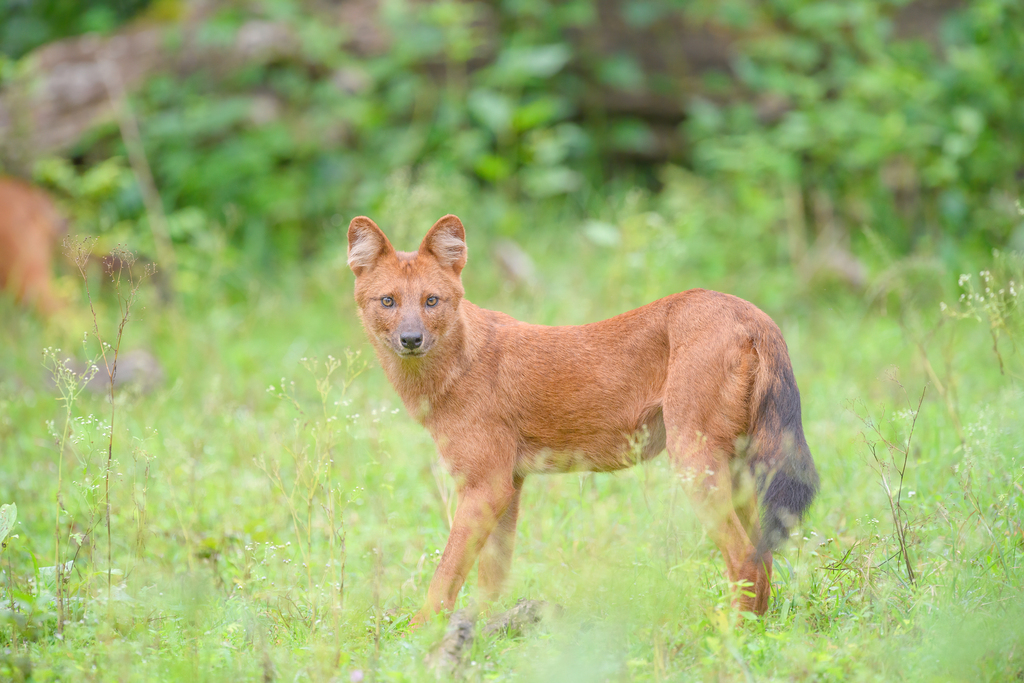
Dholes
Cuon
The dhole ( dohl; Cuon alpinus) is a canid native to South, East and Southeast Asia. The sole member of the genus Cuon, it is anatomically distinguished from members of the genus Canis in several aspects: its skull is convex rather than concave in profile, it lacks a third lower molar, and the upper molars possess only a single cusp as opposed to between two and four. During the Pleistocene, the dhole ranged throughout Asia, with its range also extending into Europe (with a single putative, controversial record also reported from North America) but became restricted to its historical range 12,000–18,000 years ago. It is now extinct in Central Asia, parts of Southeast Asia, and possibly the Korean Peninsula and Russia.
The dhole is a highly social animal, living in large clans without rigid dominance hierarchies and containing multiple breeding females. Such clans usually consist of about 12 individuals, but groups of over 40 are known. It is a diurnal pack hunter which preferentially targets large and medium-sized ungulates. In tropical forests, the dhole competes with the tiger (Panthera tigris) and the leopard (Panthera pardus), targeting somewhat different prey species, but still with substantial dietary overlap.
1 branches of this genus, most-observed first · about 1 known species
See this branch on the Wheel of Life →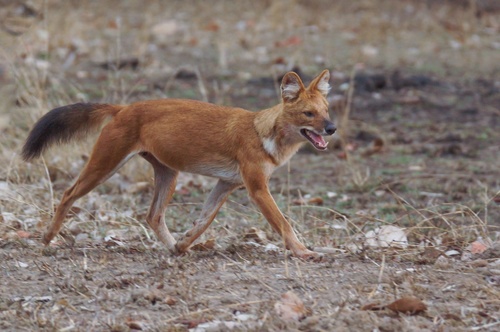
Where it lives
Recorded sightings
—
geo-referenced records in GBIF, from museums, herbaria and field observers.
Drag the globe to turn it. Dots are where records exist, not a range map; darker means more records.
In the stacks
Searching the stacks…
Every page naming Cuon in the Biodiversity Heritage Library →
This page is assembled live from iNaturalist, GBIF, Wikipedia, the Source Library and the Internet Archive. It is not yet part of the hand-edited codex. iNaturalist taxon 42100.