- Animals
- ›Chordates
- ›Vertebrates
- ›Mammals
- ›Therians
- ›Placental Mammals
- ›Ungulates, Carnivorans, and Allies
- ›Even-toed Ungulates and Cetaceans
- ›Ruminants
- ›Bovids
- ›Antelopes, Goats, and Sheep
- ›Duikers
- ›Cephalophus
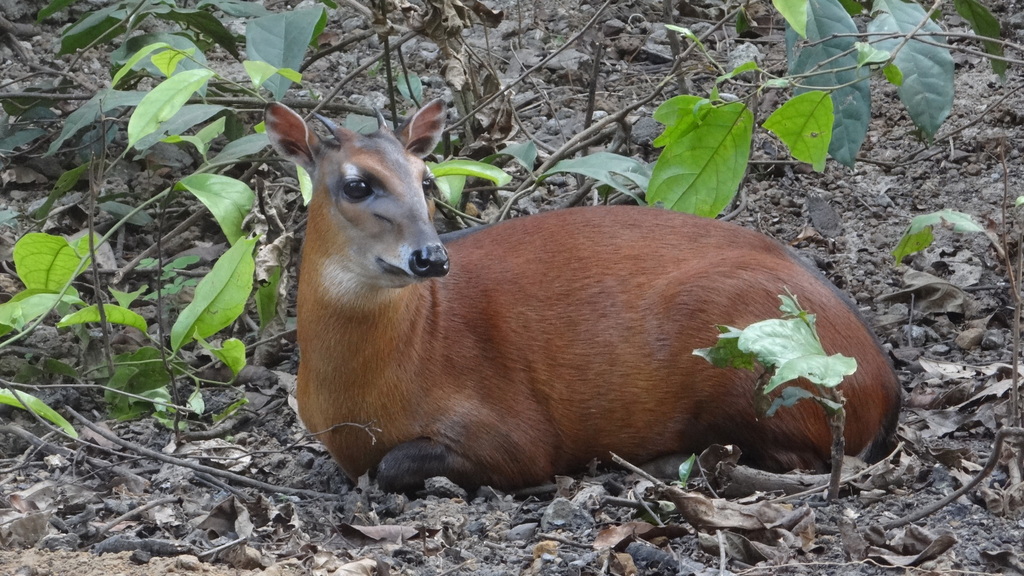
Bay Duiker
Cephalophus dorsalis
The bay duiker (Cephalophus dorsalis), also known as the black-striped duiker and the black-backed duiker, is a forest-dwelling duiker native to western and southern Africa. It was first described by British zoologist John Edward Gray in 1846. Two subspecies are identified. The bay duiker is reddish brown and has a moderate size. Both sexes reach 44–49 centimetres (17–19 in) at the shoulder. The sexes do not vary considerably in their weights either; the typical weight range for...
Listen
Looking for field recordings…
Where it lives
Recorded sightings
—
geo-referenced records in GBIF, from museums, herbaria and field observers.
Drag the globe to turn it. Dots are where records exist, not a range map; darker means more records.
In the stacks
Searching the stacks…
Every page naming Cephalophus dorsalis in the Biodiversity Heritage Library →
This page is assembled live from iNaturalist, GBIF, Wikipedia, the Source Library and the Internet Archive. It is not yet part of the hand-edited codex. iNaturalist taxon 42302.