- Animals
- ›Chordates
- ›Vertebrates
- ›Mammals
- ›Therians
- ›Placental Mammals
- ›Ungulates, Carnivorans, and Allies
- ›Even-toed Ungulates and Cetaceans
- ›Ruminants
- ›Bovids
- ›Antelopes, Goats, and Sheep
- ›Reduncines
- ›Kobus
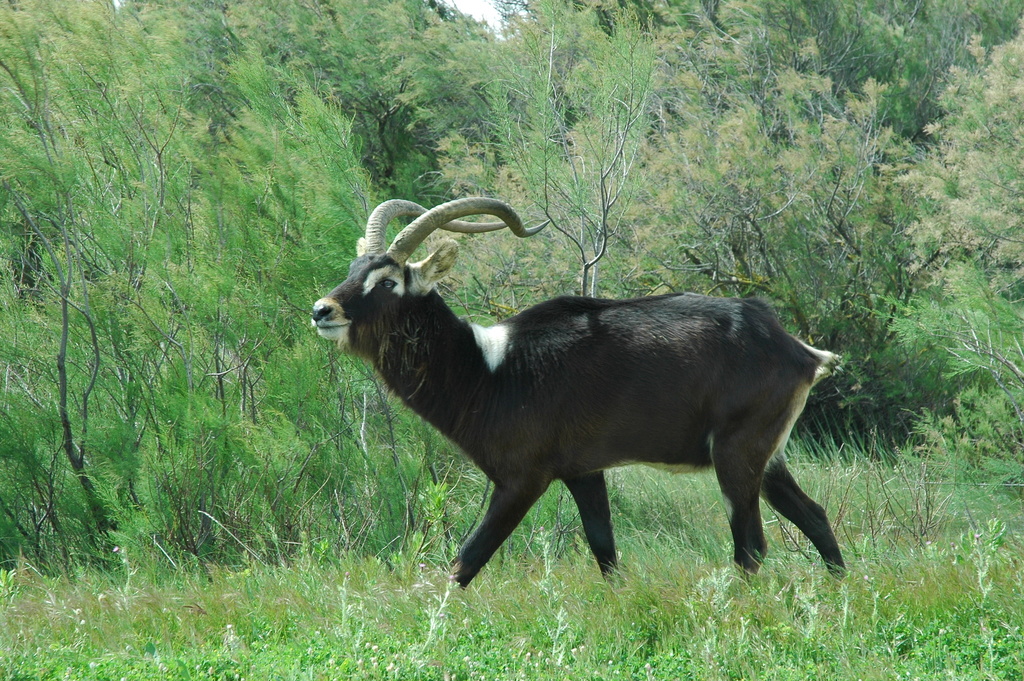
Nile Lechwe
Kobus megaceros
The Nile lechwe or Mrs Gray's lechwe (Kobus megaceros) is an endangered species of antelope found in swamps and grasslands in South Sudan and Ethiopia.
From the article Nile lechwe on Wikipedia (CC BY-SA), quoted section by section
Description
Males are an average of 165 cm (65 in) long and 100–105 cm (39–41 in) tall at the shoulders, and weigh between 90 and 120 kg (200 and 260 lb), while females are an average of 135 cm (53 in) long, 80–85 cm (31–33 in) tall at the shoulders, and weigh 60–90 kg (130–200 lb). Nile lechwes live an average of 10 to 11.5 years, and most uncommonly 19 years. Their coats are shaggy with the hair on the cheeks particularly long in both sexes, and males may have even longer hair on their necks. Nile lechwe exhibit extreme sexual dimorphism. Females are golden-brown with white underbellies and no horns. Juveniles also have a golden-brown coat, but the color changes to dark brown in young males when they reach two to three years of age. Adult males are blackish-brown to russet with white 'hoods' over their shoulders and small white patches over their eyes. The horns of the adult males are 50–87 cm (20–34 in) long, strongly ridged at their bases and are curved at the tips.
Range & habitat
The Nile lechwe typically occur in shallow waters bordering deeper swamps, where the water is 10–40 cm (3.9–15.7 in) deep. Nile lechwe are endemic to South Sudan and Ethiopia. In South Sudan, the majority of the population occurs in the Sudd swamps, and in the Machars near the Ethiopian border in smaller numbers. In Ethiopia occurs in the southwest, in Gambela National Park, but in very less numbers possibly due to human settlement and habitat degradation. The habitat of the Nile lechwe has been severely affected by civil wars, human displacement and resettlement, firearm attacks and increased hunting. Even its seasonal movements were restricted due to large populations of cattle in and around its range. The Nile lechwe population in the Sudds, however, remained somewhat stable throughout this period.
Wikipedia: “Habitat and distribution”
What it does
Nile lechwe can visually signal and vocalize to communicate with each other. They rear high in the air in front of their opponents and turn their heads to the side while displaying. Females are quite loud, making a toad-like croaking when moving. When fighting, males duck their heads and use their horns to push against each other. If one male is significantly smaller than the other, he may move next to the larger male in a parallel position and push from there, which prevents the larger male from pushing with all his force. Known predators are humans, lions, crocodiles, cheetahs, wild dogs, hyenas and leopards. They flee to water if disturbed, but females defend their offspring from smaller predators by direct attack, mainly kicking, if a male is cornered he will use his metre long horns to defend himself. Yearling Nile lechwes are often infected by warble flies, which can make them unhealthy and result in high mortality rates. Nile lechwe are crepuscular, active in the early morning and late afternoon. They gather in herds of up to 50 females and one male or in smaller all-male herds. They divide themselves into three social groups: females and their new offspring, bachelor males, and mature males with territories. A males with territory sometimes allows a bachelor male into his territory to guard the region and not to copulate.
Wikipedia: “Ecology”
Listen
Looking for field recordings…
Where it lives
Recorded sightings
—
geo-referenced records in GBIF, from museums, herbaria and field observers.
Drag the globe to turn it. Dots are where records exist, not a range map; darker means more records.
In the stacks
Searching the stacks…
Every page naming Kobus megaceros in the Biodiversity Heritage Library →
This page is assembled live from iNaturalist, GBIF, Wikipedia, the Source Library and the Internet Archive. It is not yet part of the hand-edited codex. iNaturalist taxon 42327.