- Animals
- ›Chordates
- ›Vertebrates
- ›Mammals
- ›Therians
- ›Placental Mammals
- ›Ungulates, Carnivorans, and Allies
- ›Even-toed Ungulates and Cetaceans
- ›Ruminants
- ›Bovids
- ›Antelopes, Goats, and Sheep
- ›Goats and Sheep

Tibetan Antelopes
Pantholops
The Tibetan antelope or chiru (Pantholops hodgsonii) (Tibetan: གཙོད་, Wylie: gtsod, pronounced [tsǿ]; Chinese: 藏羚羊; pinyin: zànglíngyáng) is a medium-sized bovid native to the northeastern Tibetan Plateau. Most of the population lives within the Chinese border, while some are scattered across India and Bhutan in the high-altitude plains, hill plateau, and montane valley. Fewer than 150,000 mature individuals are left in the wild, but the population is currently thought to be increasing.
In the 1980s and 1990s, they had become endangered due to massive illegal poaching. They are hunted for their extremely soft, light, and warm underfur, which is usually obtained after death. This underfur, known as shahtoosh (a Persian word meaning "king of fine wools"), is used to weave luxury shawls. Shahtoosh shawls were traditionally given as wedding gifts in India, and it takes the underfur of three to five adult antelopes to make one shawl. Despite strict controls on the trade of shahtoosh products and CITES listing, there is still demand for these luxury items. Within India, shawls are worth $1,000–$5,000; internationally, the price can reach as high as $20,000. In 1997, the Chinese government established the Hoh Xil National Nature Reserve (also known as Kekexili) solely to protect the Tibetan antelope population.
1 branches of this genus, most-observed first · about 1 known species
See this branch on the Wheel of Life →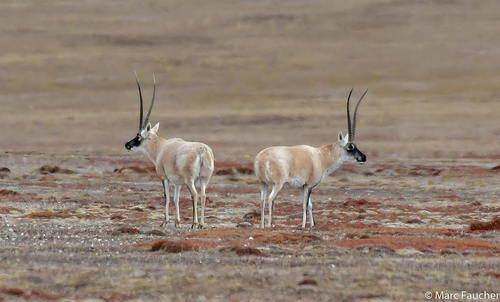
Where it lives
Recorded sightings
—
geo-referenced records in GBIF, from museums, herbaria and field observers.
Drag the globe to turn it. Dots are where records exist, not a range map; darker means more records.
In the stacks
Searching the stacks…
Every page naming Pantholops in the Biodiversity Heritage Library →
This page is assembled live from iNaturalist, GBIF, Wikipedia, the Source Library and the Internet Archive. It is not yet part of the hand-edited codex. iNaturalist taxon 42381.