- Animals
- ›Chordates
- ›Vertebrates
- ›Ray-finned Fishes
- ›Spiny-rayed fishes
- ›Blennies, Damselfishes and Allies
- ›Damselfishes
- ›Typical Damselfishes and Anemonefishes
- ›Neoglyphidodon
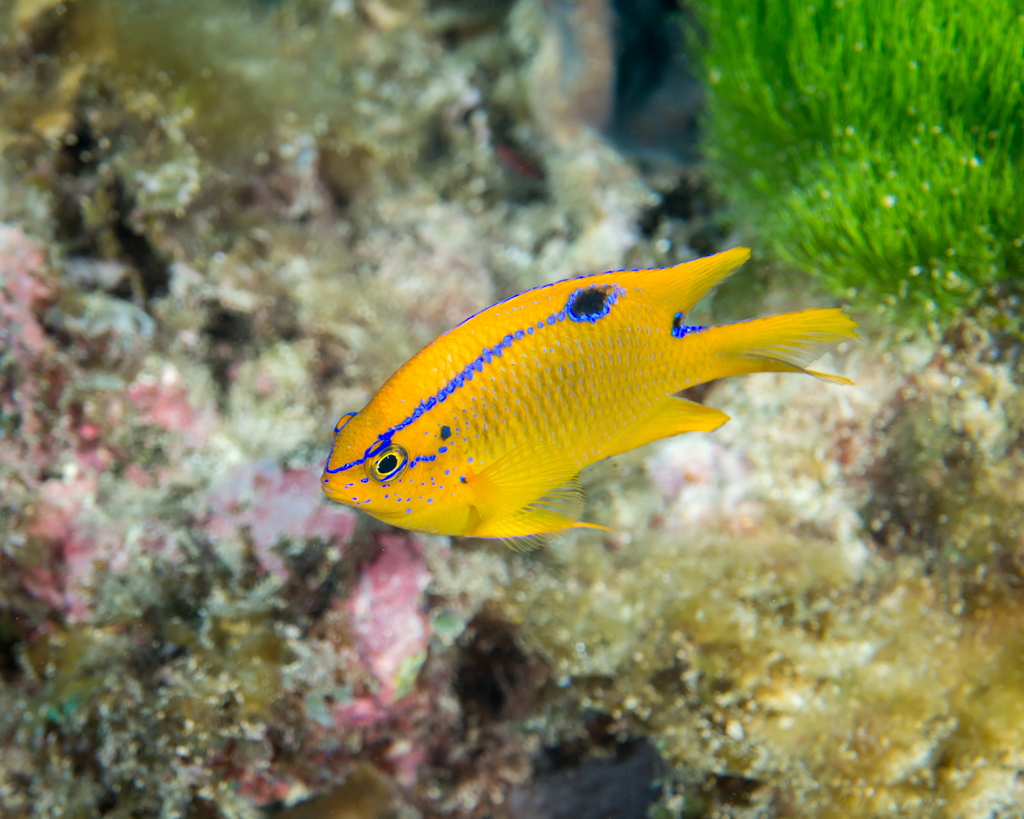
Multispine Damsel
Neoglyphidodon polyacanthus
Neoglyphidodon polyacanthus is a species of damselfish of the family Pomacentridae. It is native to the western Pacific Ocean. This species of fish is found in the aquarium trade.
From the article Neoglyphidodon polyacanthus on Wikipedia (CC BY-SA), quoted section by section
Description
Adults can grow up to 12 centimetres (4.7 in). The juvenile and adults of this species have different coloration. In adults, they have a grayish black coloration. Juveniles are yellow with blue lines extending from the eye to their eyespot. They lose their coloration as they mature.
Range & habitat
This species of fish is found in reefs in the western Pacific Ocean. Adults are found outside of lagoons while juvenile could be found in them. They are found in areas of the western Pacific Ocean from the southern Great Barrier Reef in Australia and New Caledonia. In Lord Howe Island, they are found everywhere. Neoglyphidodon polyacanthus is present at depths from 2 metres (6.6 ft) to 30 metres (98 ft).
Wikipedia: “Distribution and habitat”
Where it lives
Recorded sightings
—
geo-referenced records in GBIF, from museums, herbaria and field observers.
Drag the globe to turn it. Dots are where records exist, not a range map; darker means more records.
In the stacks
Searching the stacks…
Every page naming Neoglyphidodon polyacanthus in the Biodiversity Heritage Library →
This page is assembled live from iNaturalist, GBIF, Wikipedia, the Source Library and the Internet Archive. It is not yet part of the hand-edited codex. iNaturalist taxon 424819.