- Animals
- ›Chordates
- ›Vertebrates
- ›Mammals
- ›Therians
- ›Placental Mammals
- ›Ungulates, Carnivorans, and Allies
- ›Shrews, Moles, Hedgehogs, and Allies
- ›Shrews, Moles, and Hedgehogs
- ›Hedgehogs and Gymnures
- ›Hedgehogs
- ›Erinaceus
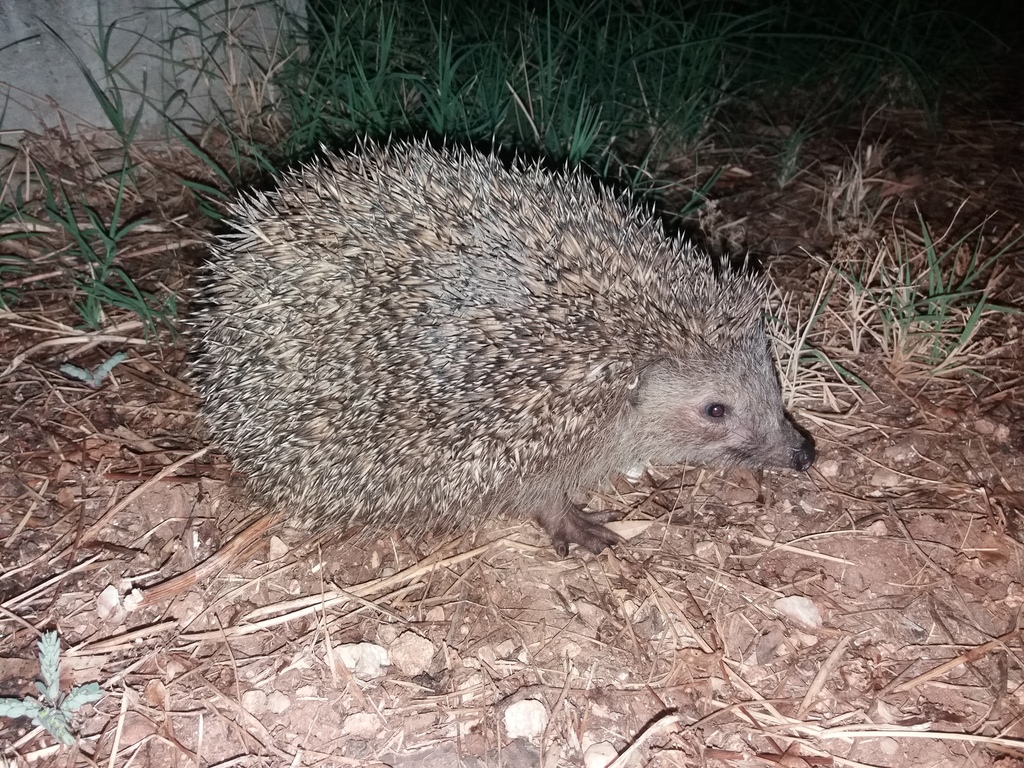
Southern White-breasted Hedgehog
Erinaceus concolor
The southern white-breasted hedgehog (Erinaceus concolor), sometimes referred to as white-bellied hedgehog or white-chested hedgehog, is very similar in lifestyle and appearance to the European hedgehog, but the former has a white spot on its chest. For a long time these two species were considered to be one. The northern white-breasted hedgehog was formerly recognized as a subspecies of the Southern white-breasted hedgehog but newer investigations see both as different species. The Southern white-breasted hedgehog and...
From the article Southern white-breasted hedgehog on Wikipedia (CC BY-SA), quoted section by section
Description
It is very similar in appearance to the European hedgehog (E. europaeus), but it has a white spot on its chest that easily distinguishes them. They weigh between 680 and 900 grams. Their body weight drops no lower than 600 grams during hibernation.
What it does
Like most hedgehogs, the southern white-breasted hedgehog's habitat ranges from deciduous forests to parks and gardens. Their diet is the same as well, consisting mostly of insects, slugs, snails, and worms. They also prey upon toxic beetles which they happen to be immune to. The breeding period is between March and July, with up to 7 offspring being produced after a gestation period of about 6 weeks. They hibernate from November to March. Unlike its European counterpart, the southern white-breasted hedgehog never digs dens. It prefers building grass nests in secluded places.
Wikipedia: “Behaviour”
Listen
Looking for field recordings…
Where it lives
Recorded sightings
—
geo-referenced records in GBIF, from museums, herbaria and field observers.
Drag the globe to turn it. Dots are where records exist, not a range map; darker means more records.
In the stacks
Searching the stacks…
Every page naming Erinaceus concolor in the Biodiversity Heritage Library →
This page is assembled live from iNaturalist, GBIF, Wikipedia, the Source Library and the Internet Archive. It is not yet part of the hand-edited codex. iNaturalist taxon 43043.