- Animals
- ›Chordates
- ›Vertebrates
- ›Mammals
- ›Therians
- ›Placental Mammals
- ›Primates, Rodents, and Allies
- ›Primates
- ›Monkeys, Apes, and Tarsiers
- ›Monkeys and Apes
- ›New World Monkeys
- ›Night Monkeys
- ›Aotus
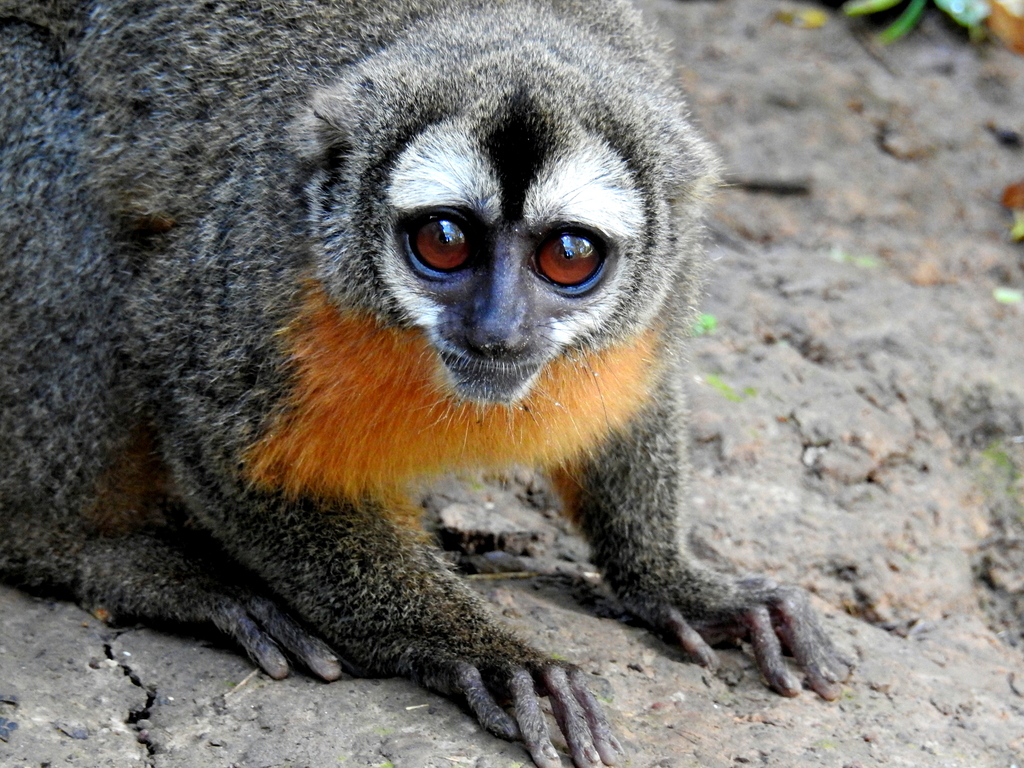
Black-headed Night Monkey
Aotus nigriceps
The black-headed night monkey (Aotus nigriceps) is a night monkey species from South America. It is found in Brazil, Bolivia and Peru. The A. nigriceps in Peru were notably inhabiting areas that were degraded, and often these areas were disturbed either by human activities or natural occurrences in the ecosystem. A black-headed night monkey is about the same size as a small squirrel. Black-headed night monkeys have small ears that are hidden by their fur. When they become adults they are about 750g and usually are about 14 months old. Black-headed night monkeys have three black stripes that meet on their forehead. These monkeys have white patches by their eyes, cheeks, and under their mouth. Their eyes are very large and brown.
From the article Black-headed night monkey on Wikipedia (CC BY-SA), quoted section by section
What it does
A newborn usually weighs about 90 to 150g. Sexual maturity for males is at 2 years and for females is about 3 or 4 years. They occur in between August and February. A female only gives birth to one infant each year. The males are the primary care givers to the infants. The female starts biting the infants feet or tail about 2 weeks after so they go with the male and about 8 weeks they start to leave them.
Wikipedia: “Reproduction”
Listen
Looking for field recordings…
Where it lives
Recorded sightings
—
geo-referenced records in GBIF, from museums, herbaria and field observers.
Drag the globe to turn it. Dots are where records exist, not a range map; darker means more records.
In the stacks
Searching the stacks…
Every page naming Aotus nigriceps in the Biodiversity Heritage Library →
This page is assembled live from iNaturalist, GBIF, Wikipedia, the Source Library and the Internet Archive. It is not yet part of the hand-edited codex. iNaturalist taxon 43414.