- Animals
- ›Chordates
- ›Vertebrates
- ›Mammals
- ›Therians
- ›Placental Mammals
- ›Primates, Rodents, and Allies
- ›Primates
- ›Monkeys, Apes, and Tarsiers
- ›Monkeys and Apes
- ›Apes and Old World Monkeys
- ›Old World Monkeys
- ›Cercopithecines
- ›Baboons, Macaques, and Mangabeys
- ›Macaca
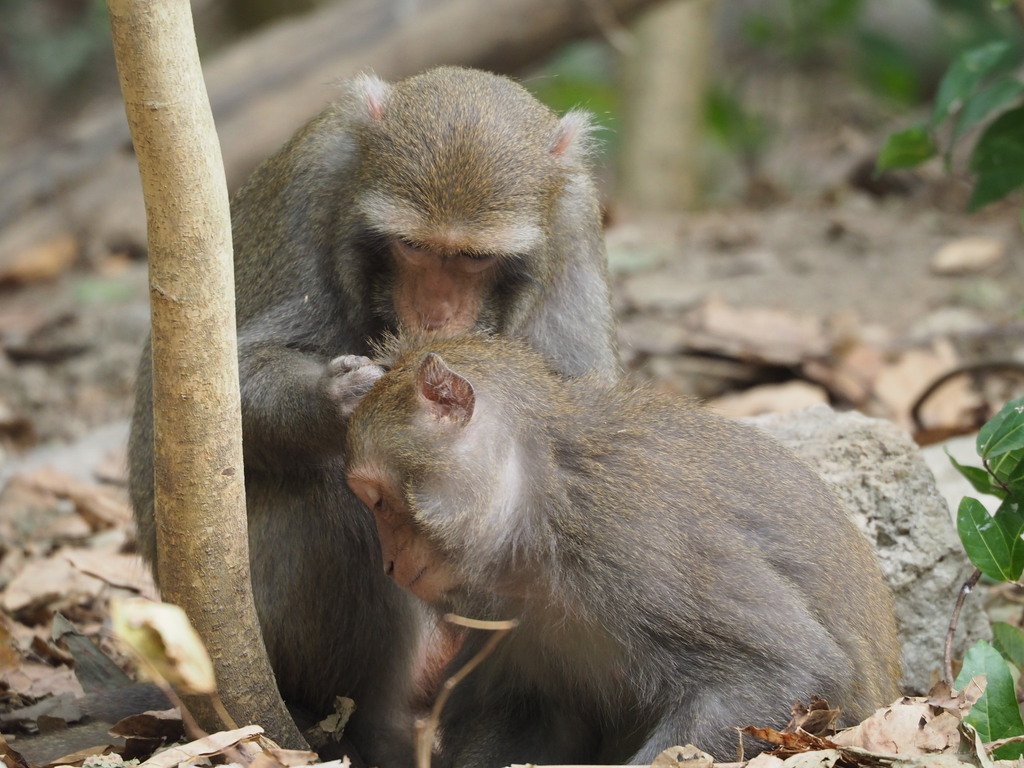
Formosan Rock Macaque
Macaca cyclopis
The Formosan rock macaque (Macaca cyclopis), also known as the Formosan rock monkey or Taiwanese macaque, is a macaque endemic to the island of Taiwan, which has also been introduced to Japan. Besides humans, Formosan rock macaques are the only native primates living in Taiwan. The species was first described by Robert Swinhoe in 1862.
From the article Formosan rock macaque on Wikipedia (CC BY-SA), quoted section by section
What it does
Among the 22 species of the genus Macaca that are found in southern and eastern Asia as well as northwestern Africa, the Formosan macaque is the only species endemic to the island of Taiwan. Formosan rock macaques live in mixed coniferous-hardwood temperate forest, as well as bamboo and grassland at 100–3600m (328–11,812 ft). The social structure of macaques is generally characterized as often occurring as a large stable multimale-multifemale troop. Formosan macaque is considered to be female-bonded which is similar to other species in the genus Macaca. Based on the study of Hsu and Lin, the average overall sex ratio was approximately 1:1, and the average adult sex ratio was close to 0.53. Solitary adult males accounted for 5% of the entire population, and they were seen interacting with social troops especially during mating season. They communicate using visual signals and sounds. They will "scream" when non-group members come near them. Group members usually respond using a "kyaw-kyaw" sound. Rock macaques are diurnal, arboreal, and terrestrial. They usually stay in trees and less so on the ground. They rest in forest and forage in grasslands. Their diet consists of fruits, tender leaves, buds, grass stems, insects, snails, and bird eggs.
Wikipedia: “Life and behavior”
Listen
Looking for field recordings…
Where it lives
Recorded sightings
—
geo-referenced records in GBIF, from museums, herbaria and field observers.
Drag the globe to turn it. Dots are where records exist, not a range map; darker means more records.
In the stacks
Searching the stacks…
Every page naming Macaca cyclopis in the Biodiversity Heritage Library →
This page is assembled live from iNaturalist, GBIF, Wikipedia, the Source Library and the Internet Archive. It is not yet part of the hand-edited codex. iNaturalist taxon 43450.