- Animals
- ›Chordates
- ›Vertebrates
- ›Mammals
- ›Therians
- ›Placental Mammals
- ›Primates, Rodents, and Allies
- ›Rodents
- ›Beavers, Pocket Gophers, and Allies
- ›Kangaroo Rats and Pocket Mice
- ›Pocket Mice
- ›Chaetodipus
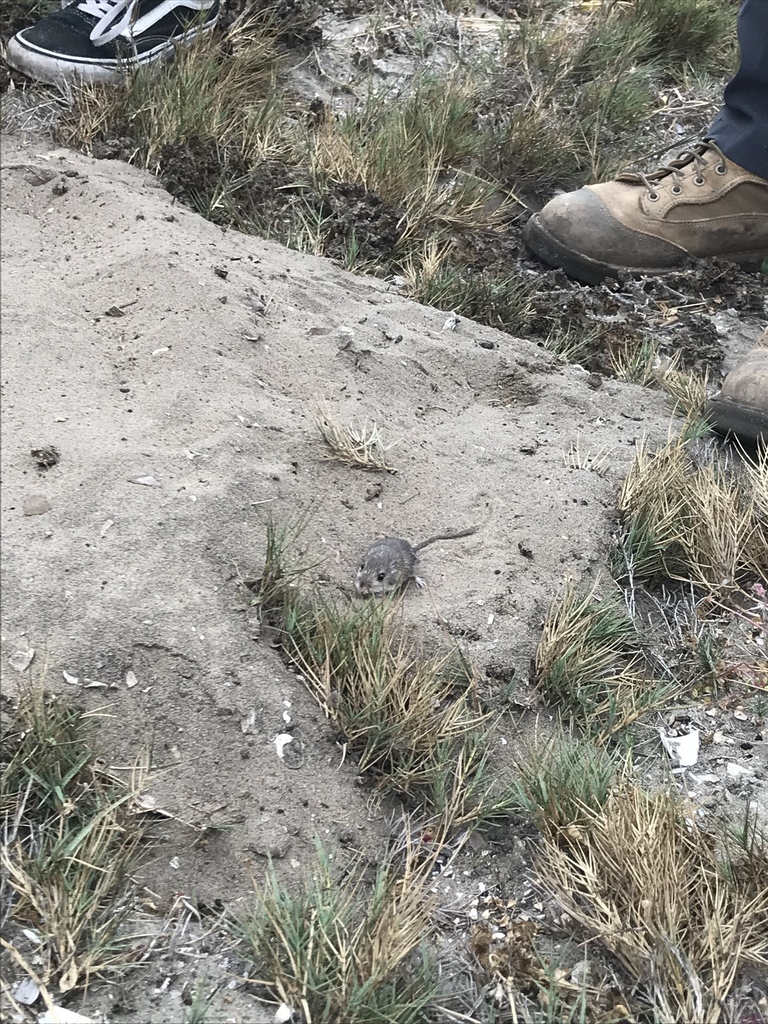
Little Desert Pocket Mouse
Chaetodipus arenarius
The little desert pocket mouse (Chaetodipus arenarius) is a species of small rodent in the family Heteromyidae. It is endemic to the Baja California peninsula of Mexico.
From the article Little desert pocket mouse on Wikipedia (CC BY-SA), quoted section by section
Description
The little desert pocket mouse reaches a length of about 154 mm (6.1 in) including a tail of 86 mm (3.4 in), with males being slightly larger than females. The fur is soft and fairly silky, with none of the spines found in some related species, although there may be a few soft bristles on the rump. The ears are dark, featuring a tiny patch of white hairs at their base. The color of the dorsal surface ranges from pale gray or pale buff to dark brown, and some may have dark-tipped guard hairs that create a grizzled appearance. The upper half of the tail matches the dorsal color, while the underparts of the body, the feet, and the lower side of the tail are white or cream-colored. There may be a buff-colored line separating the upper parts from the underparts, but this line is faint or absent in some populations.
Range & habitat
The little desert pocket mouse is endemic to Mexico. Its range includes the Baja California peninsula, Jacques Cousteau Island and Magdalena Island. Its typical habitat is arid flat areas with scant vegetation and loose, dry, sandy soils but it is also found on slopes and ridges, and even the floors of dried-up riverbeds.
Wikipedia: “Distribution and habitat”
What it does
Very little is known about the natural history and behavior of this pocket mouse. It lives in a burrow and seems to have an affinity for sandy soils. Its breeding habits are not known but a female specimen containing two embryos was caught in March. Its main predator is the American barn owl (Tyto alba).
Wikipedia: “Ecology”
Listen
Looking for field recordings…
Where it lives
Recorded sightings
—
geo-referenced records in GBIF, from museums, herbaria and field observers.
Drag the globe to turn it. Dots are where records exist, not a range map; darker means more records.
In the stacks
Searching the stacks…
Every page naming Chaetodipus arenarius in the Biodiversity Heritage Library →
This page is assembled live from iNaturalist, GBIF, Wikipedia, the Source Library and the Internet Archive. It is not yet part of the hand-edited codex. iNaturalist taxon 44087.