- Animals
- ›Chordates
- ›Vertebrates
- ›Mammals
- ›Therians
- ›Placental Mammals
- ›Primates, Rodents, and Allies
- ›Rodents
- ›Beavers, Pocket Gophers, and Allies
- ›Kangaroo Rats and Pocket Mice
- ›Pocket Mice
- ›Chaetodipus
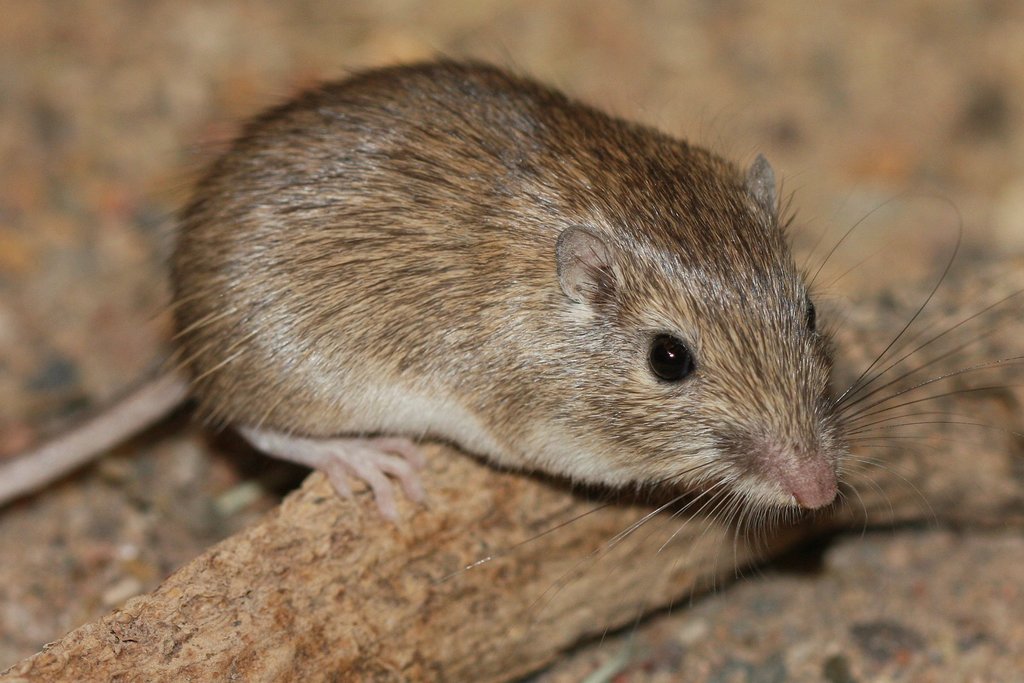
Rock Pocket Mouse
Chaetodipus intermedius
The rock pocket mouse (Chaetodipus intermedius) is one of 19 species of pocket mice in the genus Chaetodipus. (It is sometimes grouped in the genus Perognathus.)
From the article Rock pocket mouse on Wikipedia (CC BY-SA), quoted section by section
Description
Found mainly in rocky outcrops in the deserts of the southwestern United States and Mexico, the rock pocket mouse is medium-sized (length ~18 cm, weight ~12–18g) and nocturnal. It eats mainly plant seeds and makes small burrows in soil close to or under rocks to evade owls, its main predator. The breeding season spans a few months, starting in February or March, and the litter size is typically between three and six. As with most pocket mice, the tail is longer than the body (~10 cm).
In human culture
The "Chaetodipus" of Chateodipus intermedius comes from the Greek "chaeto" (bristle) and "dipus" (two-footed), referring to the hairy feet of the pocket mice that allow them to navigate rocky terrain. "Intermedius" alludes to their two fur color alleles and ability to live in both light and dark rocky regions.
Wikipedia: “Etymology”
Listen
Looking for field recordings…
Where it lives
Recorded sightings
—
geo-referenced records in GBIF, from museums, herbaria and field observers.
Drag the globe to turn it. Dots are where records exist, not a range map; darker means more records.
In the stacks
Searching the stacks…
Every page naming Chaetodipus intermedius in the Biodiversity Heritage Library →
This page is assembled live from iNaturalist, GBIF, Wikipedia, the Source Library and the Internet Archive. It is not yet part of the hand-edited codex. iNaturalist taxon 44088.