- Animals
- ›Chordates
- ›Vertebrates
- ›Mammals
- ›Therians
- ›Placental Mammals
- ›Primates, Rodents, and Allies
- ›Rodents
- ›Beavers, Pocket Gophers, and Allies
- ›Kangaroo Rats and Pocket Mice
- ›Kangaroo Rats and Mice
- ›Dipodomys
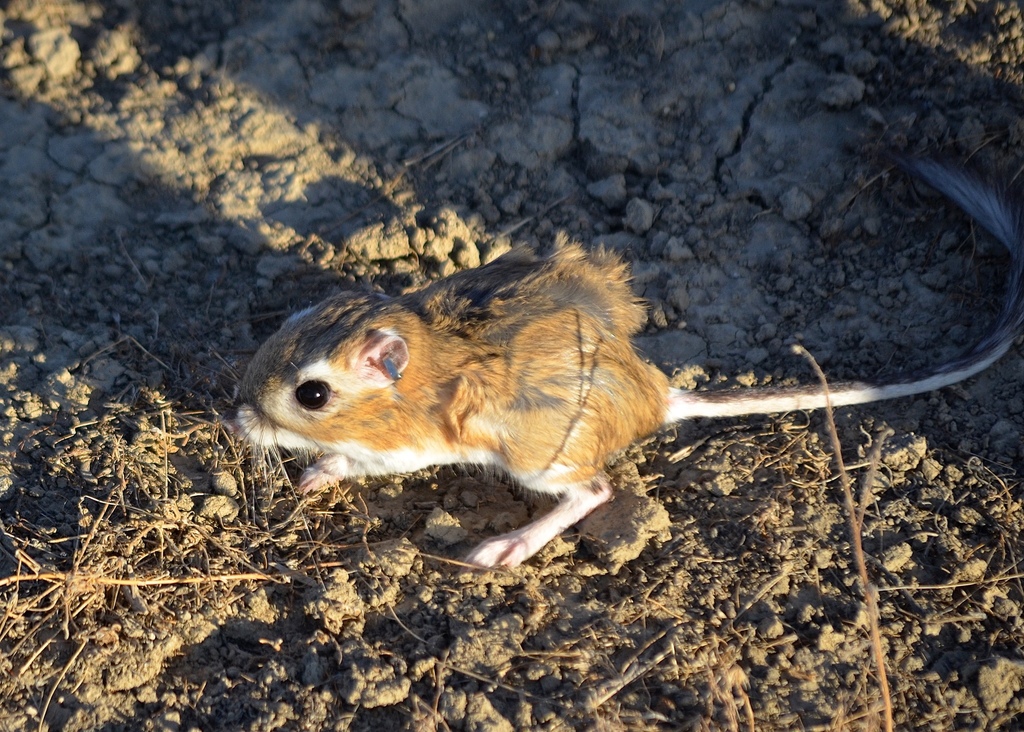
Giant Kangaroo Rat
Dipodomys ingens
The giant kangaroo rat (Dipodomys ingens) is an endangered species of heteromyid rodent endemic to California.
From the article Giant kangaroo rat on Wikipedia (CC BY-SA), quoted section by section
Description
The giant kangaroo rat, is the largest of over 20 species of kangaroo rats, which are small members of the rodent family. It measures about 15 cm (5.9 in) in length, not including its long, tufted tail, and is tan or brown in color. Like other kangaroo rats it has a large head, large eyes, and long, strong hind legs which helps it hop quickly. The giant kangaroo rat lives on dry, sandy grasslands and digs burrows in loose soil. It lives in colonies, and the individuals communicate with each other by drumming their feet on the ground. These foot thumping signals range from single, short thumps to long, drawn out "footrolls" that can average over 100 drums at 18 drums per second. These audible signals serve both as a warning of approaching danger, as a territorial communication, and to communicate mating status. Kangaroo rats are primarily seed eaters, but also eat green plants and insects. Most giant kangaroo rats gather seeds when they are available and store them for consumption later. The seeds are put into small pits on the surface of the soil and scattered over the home range of the individual. The small pits only hold the content of the two cheek pouches. In the spring and summer, individuals generally spend less than two hours of the night foraging above ground. They are very territorial and never leave their den for more than 15 minutes per day. …
Listen
Looking for field recordings…
Where it lives
Recorded sightings
—
geo-referenced records in GBIF, from museums, herbaria and field observers.
Drag the globe to turn it. Dots are where records exist, not a range map; darker means more records.
In the stacks
Searching the stacks…
Every page naming Dipodomys ingens in the Biodiversity Heritage Library →
This page is assembled live from iNaturalist, GBIF, Wikipedia, the Source Library and the Internet Archive. It is not yet part of the hand-edited codex. iNaturalist taxon 44125.