- Animals
- ›Chordates
- ›Vertebrates
- ›Ray-finned Fishes
- ›Spiny-rayed fishes
- ›Blennies, Damselfishes and Allies
- ›Blennies
- ›Combtooth Blennies
- ›Salariin Blennies
- ›Blenniella
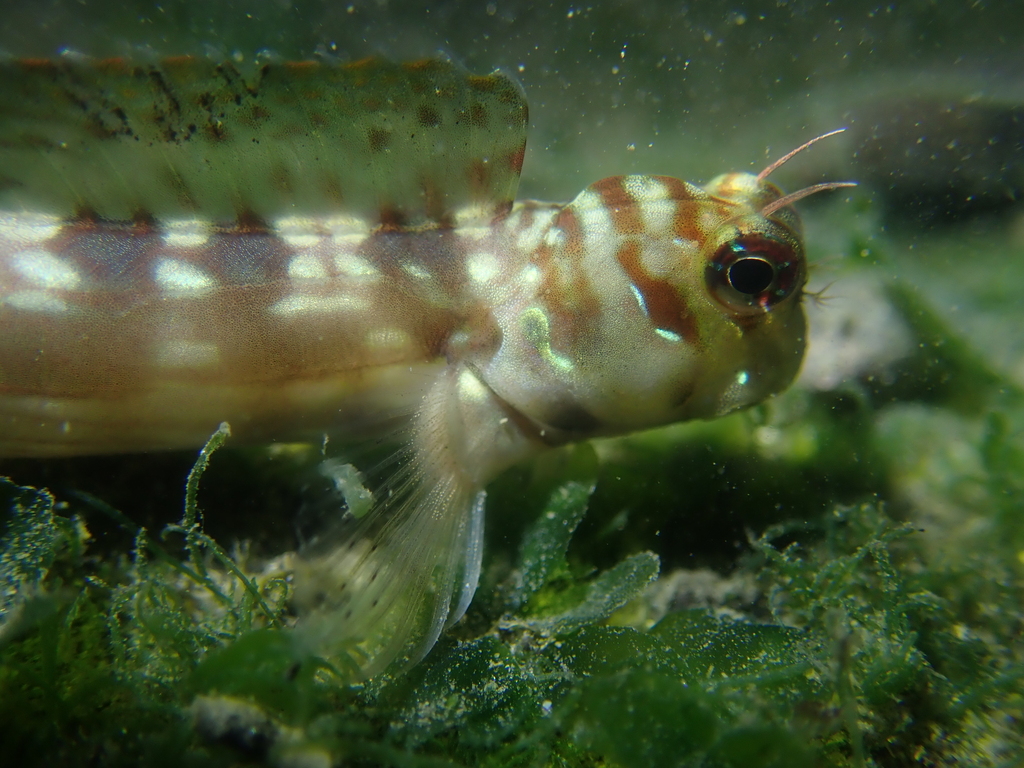
Biliton Rockskipper
Blenniella bilitonensis
The biliton blenniella (Blenniella bilitonensis), also known as the biliton rockskipper, is a small saltwater fish species found in the intertidal zone throughout the southwestern Pacific Ocean. It is a member of the family Blenniidae, or the “combtooth blennies.” The species was first described in 1858 by Peter Bleeker, on Biliton Island in Indonesia from which the species gets its name.
From the article Blenniella bilitonensis on Wikipedia (CC BY-SA), quoted section by section
Range & habitat
The biliton blenniella is found in temperate waters of the western Pacific Ocean, from the Ryukyu Islands off southern Japan to the McClure and New Year Islands in the Northern Territory of Australia. Within this north–south range the species can be found between 100 and 135 degrees east longitude. It is found near-shore in shallow waters and is often associated with tide-pools.
Wikipedia: “Distribution”
In human culture
Biliton blenniella are found in the intertidal zone and is often associated with tide-pools and coastal bays. It is known to feed on algae that it scrapes from rocks. The species is often found in large congregations, typically in tidal areas. Like other members of the amphibious family Blenniidae, the biliton blenniella may be seen outside of the water for brief periods, holding on to rock surfaces until waves wash it back into the water. When disturbed from small tidepools, members of the family Blenniidae will often jump out of the water and scurry across rocky surfaces in search of a bigger pool, retreating to deeper water for safety. Biliton blenniella have a variety of adaptations that allow it to survive in the harsh conditions of the intertidal zone. To maintain structure and agility when jumping on rocks outside of the water, the species has evolved some reduced and fused bone structures compared to other intertidal fish species. Similarly, research has found a limited diversity of body shapes in intertidal members of Blenniidae, unlike their subtidal relatives. …
Wikipedia: “Life History”
Where it lives
Recorded sightings
—
geo-referenced records in GBIF, from museums, herbaria and field observers.
Drag the globe to turn it. Dots are where records exist, not a range map; darker means more records.
In the stacks
Searching the stacks…
Every page naming Blenniella bilitonensis in the Biodiversity Heritage Library →
This page is assembled live from iNaturalist, GBIF, Wikipedia, the Source Library and the Internet Archive. It is not yet part of the hand-edited codex. iNaturalist taxon 445694.