- Animals
- ›Chordates
- ›Vertebrates
- ›Mammals
- ›Therians
- ›Placental Mammals
- ›Primates, Rodents, and Allies
- ›Rodents
- ›Mice, Rats, and Hamsters
- ›Muroids
- ›Hamsters, Voles, Lemmings, and Allies
- ›Hamsters
- ›Phodopus
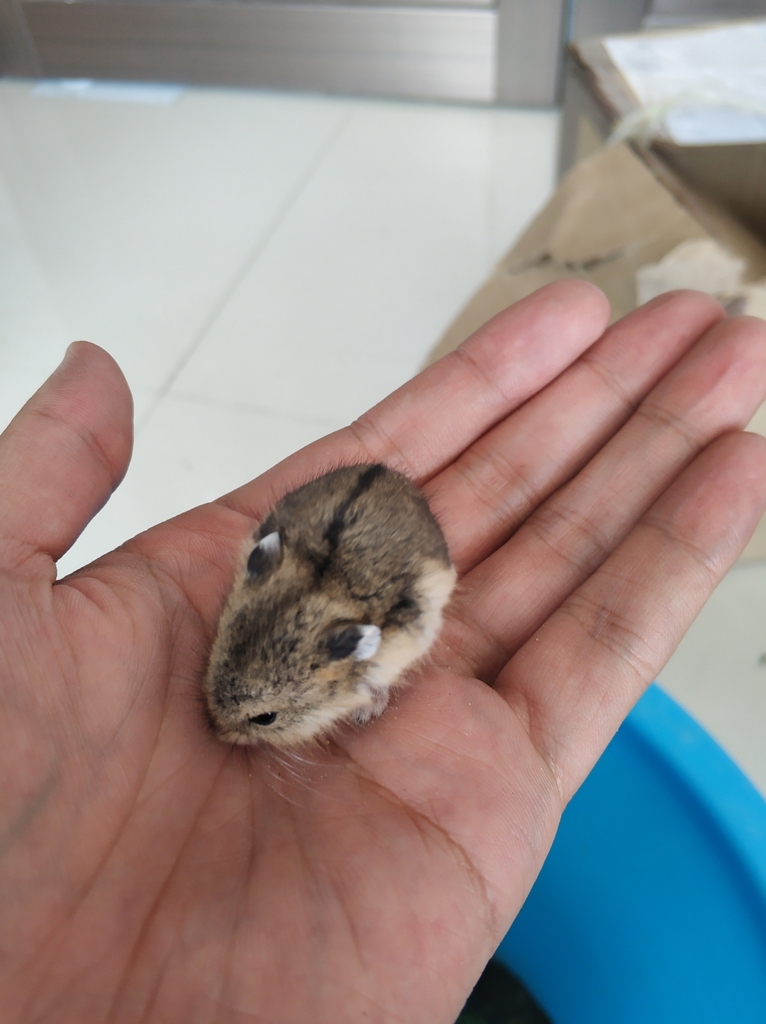
Campbell's Dwarf Hamster
Phodopus campbelli
Campbell's dwarf hamster (Phodopus campbelli) is a species of hamster in the genus Phodopus. It was given its common name by Oldfield Thomas in honor of Charles William Campbell, who collected the first specimen in Mongolia on July 1, 1902. It is almost physically indistinguishable from the closely related P.sungorus, but can be distinguished by its use of biparental care. Campbell's dwarf hamster typically has a narrow dorsal stripe compared to P.sungorus and brown or gray fur on the stomach. This hamster may be raised in captivity and kept as a small pet.
In the wild, the breeding season for Campbell's dwarf hamster varies by location. For example, the breeding season begins towards the middle of April in Tuva and towards the end of April in Mongolia. However, there is no fixed breeding season in captivity, and they can breed frequently throughout the year. Females are usually sexually mature at two months, and the gestation period is typically 20 days. Campbell's dwarf hamster is crepuscular, along with all species of Phodopus and is active throughout the year. Campbell's dwarf hamsters are omnivores, and so feed on both plant and insect material. Campbell's dwarf hamster inhabits burrows with four to six horizontal and vertical tunnels in the steppes and semi deserts of central Asia, the Altai Mountains, autonomous areas of Tuva and the Hebei province in northeastern China.
From the article Campbell's dwarf hamster on Wikipedia (CC BY-SA), quoted section by section
Description
The size of Campbell's dwarf hamster varies depending on its location. For example, eight wild specimens examined from Mongolia showed an average head and body length of 80 mm (3.1 in), an average hind foot length of 13.5 mm (0.53 in) long, with a tail length of 5 mm (0.20 in). In captivity, they are proportionally larger, as commercial pet food and fruits provide more nutrition than food found commonly in the wild. The lips and cheeks have white fur and the rest of the fur around the face can be either grey or brown. A dark and narrow dorsal stripe runs along the center of the back from the nape of the neck to about 2.5 cm (0.98 in) above the tail. The surface of the hands and feet are white to ensure the animal stays warm in colder climates in countries such as Mongolia.
In both the wild and captivity, Campbell's dwarf hamsters scent-mark around their territories using Harderian glands, skin glands located behind the ears. They use urine and feces for communication. Campbell's dwarf hamster is distinguished from the similar-looking Djungarian hamster by its smaller ears and no dark patch on the crown of its head, in certain colorations. The dorsal stripe of Campbell's dwarf hamster is narrower, shorter, and darker than that of the Djungarian hamster, and the fur on the stomach of Campbell's dwarf hamster is grey, but it is white on the Djungarian hamster. …
Range & habitat
Campbell's dwarf hamsters inhabit burrows in the steppes and semideserts of central Asia, the Altai Mountains, autonomous areas of Tuva, and the Hebei province in northeastern China. A burrow can contain four to six horizontal and vertical tunnels. The tunnels leading to the nesting area can be as deep as 1 m (3 ft 3 in) below the ground, but are usually 20–30 cm (7.9–11.8 in) deep. The burrows are lined with either dry grass or sheep's wool. They may sometimes share burrows with Daurian pikas, but only in the steppes and semideserts of northern Manchuria. In parts of Mongolia, the hamsters may also share burrows with species of Meriones to save them from digging their own. In Tuva, Campbell's dwarf hamsters have been found living with other hamsters, such as the Chinese striped hamster, the Roborovski hamster, and the long-tailed dwarf hamster. The diets of the three types of hamsters are different to avoid fighting over the same type of food, which is why they live together. Campbell's dwarf hamsters may also live near areas of human civilization. In Mongolia, they may be found in yurts to keep warm during the winter, as they do not have thermoregulation like the Djungarian hamster. They have five main predators: the Eurasian eagle owl, the steppe eagle, the corsac fox, the common kestrel, and the saker falcon. …
Wikipedia: “Distribution and habitat”
What it does
As omnivores, Campbell's dwarf hamsters eat a variety of different foods. A balanced diet for a hamster consists of 16-24% protein, 60-65% carbohydrates, and 5–7% fat, with constant access to fresh water. In their natural habitats, dwarf hamsters feed almost exclusively on plant materials. In captivity, Campbell's dwarf hamsters can get the required nutrition from commercially available food designed specifically for hamsters, which typically contain a mix of dry grains, nuts, and seeds that may be fortified with vitamins and minerals. An excess of any one particular seed or nut can lead to digestive problems, obesity, and forms nutritional deficiency. In addition to a commercially prepared seed mix, a balanced diet for a Campbell's dwarf hamster in captivity includes a regulated variety of fresh vegetables and fruits. Dark greens such as kale are rich in vitamins and minerals. Wild vegetables such as yarrow, chickweed, and dandelion and raspberry leaves, are also good sources of protein that help prevent obesity. A hamster in captivity can occasionally eat mealworms or earthworms, which have high protein contents for them. Boiled egg whites and small pieces of clean, cooked chicken are also sources of extra protein. They can also eat wheat grain, sunflower seeds, and locusts. The teeth of Campbell's dwarf hamster never stop growing. …
Wikipedia: “Diet”
Listen
Looking for field recordings…
Where it lives
Recorded sightings
—
geo-referenced records in GBIF, from museums, herbaria and field observers.
Drag the globe to turn it. Dots are where records exist, not a range map; darker means more records.
In the stacks
Searching the stacks…
Every page naming Phodopus campbelli in the Biodiversity Heritage Library →
This page is assembled live from iNaturalist, GBIF, Wikipedia, the Source Library and the Internet Archive. It is not yet part of the hand-edited codex. iNaturalist taxon 44929.