- Animals
- ›Chordates
- ›Vertebrates
- ›Mammals
- ›Therians
- ›Placental Mammals
- ›Primates, Rodents, and Allies
- ›Rodents
- ›Squirrels, Dormice, and Mountain Beavers
- ›Squirrels
- ›Ground and African Tree Squirrels
- ›Holarctic Ground Squirrels
- ›Ammospermophilus
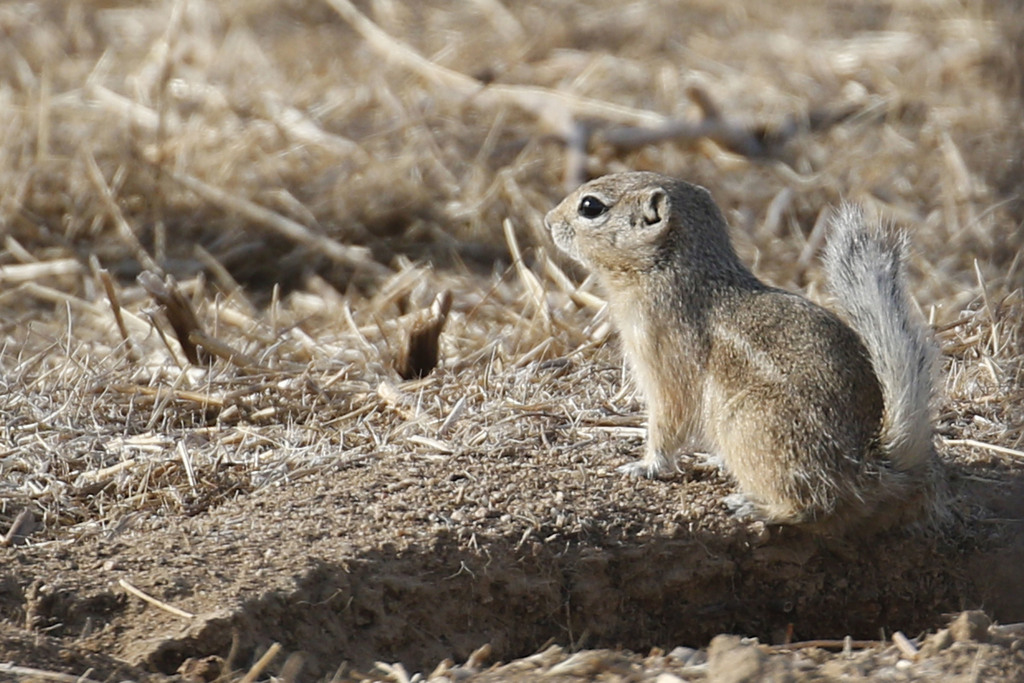
Nelson's Antelope Squirrel
Ammospermophilus nelsoni
The San Joaquin antelope squirrel or Nelson's antelope squirrel (Ammospermophilus nelsoni), is a species of antelope squirrel, in the San Joaquin Valley of the U.S. state of California.
From the article San Joaquin antelope squirrel on Wikipedia (CC BY-SA), quoted section by section
Range & habitat
The San Joaquin antelope squirrel is found in the San Joaquin Valley, including slopes and ridge tops along the western edge of the valley. It is endemic to the region, and is found in a much smaller range today than it originally inhabited. Since the San Joaquin Valley fell under heavy agricultural cultivation, habitat loss combined with rodenticide use has reduced the squirrels numbers enough that it is now listed as a threatened species. Most of today's remaining San Joaquin antelope squirrels can be found in the Carrizo Plain, where their original habitat remains undisturbed. The squirrels live in small underground familial colonies on sandy, easily excavated grasslands in isolated locations in San Luis Obispo and Kern Counties. Common vegetation associated with the squirrel includes Atriplex and Ephedra, and some junipers. The binomial of this species commemorates the American naturalist Edward William Nelson.
Wikipedia: “Distribution and habitat”
What it does
It is omnivorous, feeding on seeds, green vegetation, insects, and dried animal matter. It occasionally caches food. Redstem fialree (Erodium cicutarium) and brome grass (Bromus rubens) are important food items for the squirrels. However, their diet may differ depending on the time of day or time of year. Green vegetation is the most common diet type from December to mid-April because it is the most abundant during this period. Likewise, insects make up more than 90% of the squirrel's diet from mid-April to December because they are more abundant. Although seeds are available for most of the year, it is not the preferable diet of the squirrels. They will choose insects or green vegetation when available over seeds, even if the seeds are more abundant and easier to access. Some speculate that this could be due to the higher amount of water in insects and green vegetation, which would be necessary for the species to survive in such a hot, dry climate. Unfortunately for the Nelson's antelope squirrel, there is not an abundant water source nearby. Under laboratory conditions, the squirrels readily accept water. However, they can also survive at least 7 months in the shade without water. At the end of 7 months they appeared relatively healthy and not at all emaciated.
Wikipedia: “Diet”
Listen
Looking for field recordings…
Where it lives
Recorded sightings
—
geo-referenced records in GBIF, from museums, herbaria and field observers.
Drag the globe to turn it. Dots are where records exist, not a range map; darker means more records.
In the stacks
Searching the stacks…
Every page naming Ammospermophilus nelsoni in the Biodiversity Heritage Library →
This page is assembled live from iNaturalist, GBIF, Wikipedia, the Source Library and the Internet Archive. It is not yet part of the hand-edited codex. iNaturalist taxon 46254.