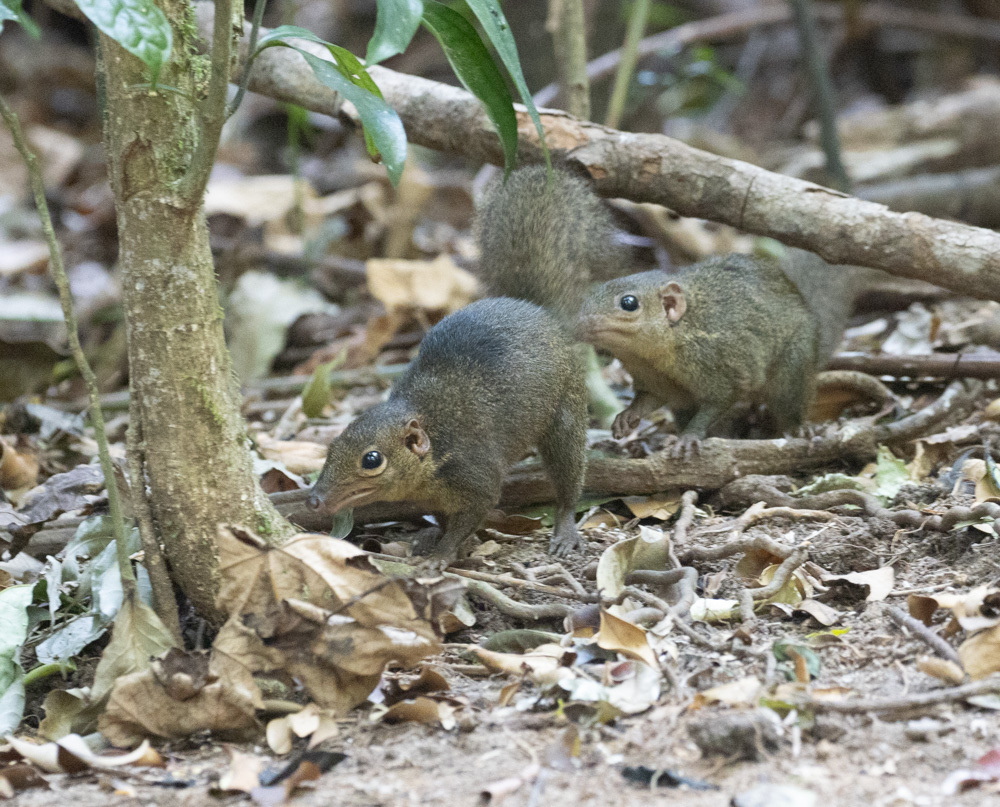
Treeshrews
Scandentia
The treeshrews (also called tree shrews or banxrings) are small mammals native to the tropical forests of South and Southeast Asia. They make up the entire order Scandentia (; from Latin scandere 'to climb'), which split into two families: the Tupaiidae (19 species, "ordinary" treeshrews), and the Ptilocercidae (one species, the pen-tailed treeshrew).
Though called 'treeshrews', and despite having previously been classified in Insectivora, they are not true shrews, and not all species live in trees. They are omnivores; among other things, treeshrews eat fruit. As fellow members of Euarchonta, treeshrews are closely related to primates, and have been used as an alternative to primates in experimental studies of myopia, psychosocial stress, and hepatitis.
2 branches of this order, most-observed first · about 23 known species
See this branch on the Wheel of Life →

Where it lives
Recorded sightings
—
geo-referenced records in GBIF, from museums, herbaria and field observers.
Drag the globe to turn it. Dots are where records exist, not a range map; darker means more records.
In the stacks
Searching the stacks…
Every page naming Scandentia in the Biodiversity Heritage Library →
This page is assembled live from iNaturalist, GBIF, Wikipedia, the Source Library and the Internet Archive. It is not yet part of the hand-edited codex. iNaturalist taxon 46280.