
Pipefishes and Allies
Syngnathiformes
The Syngnathiformes are an order of ray-finned fishes that includes the pipefishes, seahorses, trumpetfishes, goatfish, dragonets, flying gurnards, and sea moths, among others.
These fishes have generally elongated, narrow bodies surrounded by a series of bony rings, with small, tubular mouths. The shape of their mouths—at least, in syngnathids—allows for the ingestion of prey at close range via suction. Many species of Syngnathiformes also employ strategic camouflage (such as cryptic coloration and overall physical form) to hunt successfully and gain closer access to prey, as well as to protect themselves from larger predators. Several groups, for example, live among seaweed, not only swimming with their bodies aligned vertically (to blend in with the floating plant matter), but also have developed physical features that mimic the seaweed. The pygmy seahorses are among the smallest of all syngnathids, with most being so tiny—and mimicking the specific coral they spend their lives on—that they were only recently described by scientists.
4 branches of this order, most-observed first · about 695 known species

Syngnathoidei
suborderSyngnathoidei
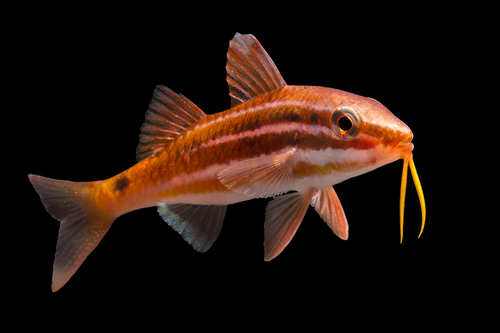
Goatfishes
suborderMulloidei

Dragonets
suborderCallionymoidei

Flying Gurnards and Seamoths
suborderDactylopteroidei
Where it lives
Recorded sightings
—
geo-referenced records in GBIF, from museums, herbaria and field observers.
Drag the globe to turn it. Dots are where records exist, not a range map; darker means more records.
In the stacks
Searching the stacks…
Every page naming Syngnathiformes in the Biodiversity Heritage Library →
This page is assembled live from iNaturalist, GBIF, Wikipedia, the Source Library and the Internet Archive. It is not yet part of the hand-edited codex. iNaturalist taxon 47245.