- Animals
- ›Chordates
- ›Vertebrates
- ›Amphibians
- ›Frogs and Toads
- ›Narrow-mouthed Frogs
- ›American Narrow-mouthed and Sheep Frogs
- ›Ctenophryne
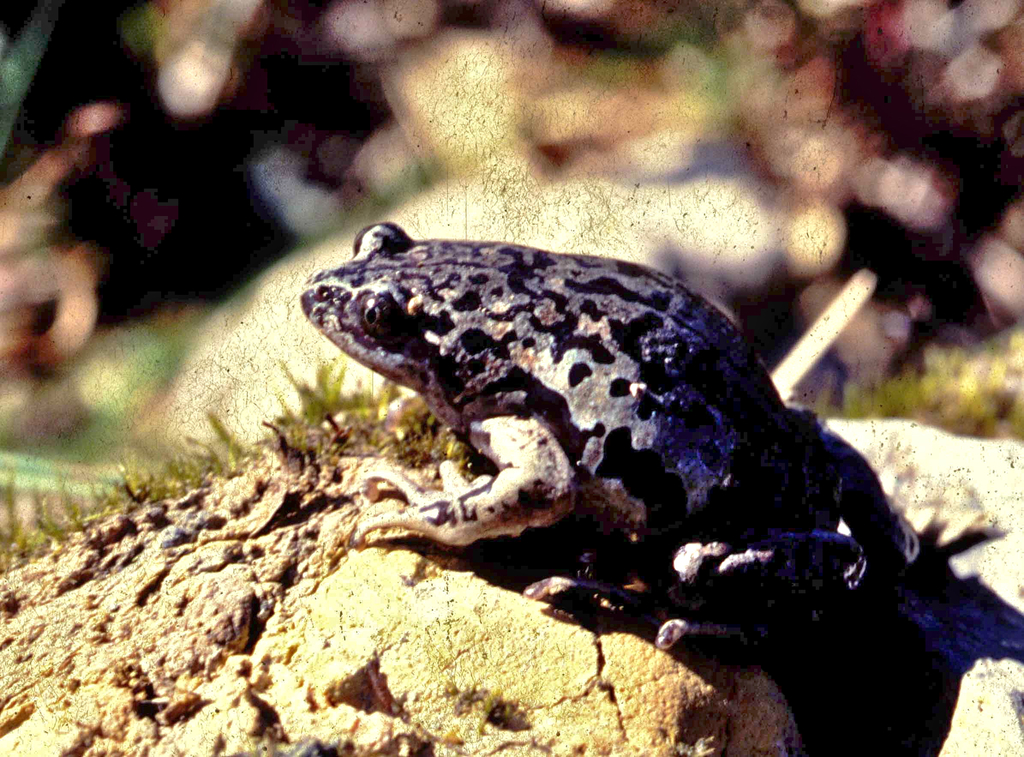
Cuenca Nelson Frog
Ctenophryne aequatorialis
Ctenophryne aequatorialis (common name: Cuenca Nelson frog, reflecting its earlier placement in Nelsonophryne) is a species of frog in the family Microhylidae. It is endemic to the Andes of Ecuador and known from the Cuenca basin in Azuay Province southward to Saraguro Canton (northern Loja Province) at elevations of 2,450–2,650 m (8,040–8,690 ft) asl.
From the article Ctenophryne aequatorialis on Wikipedia (CC BY-SA), quoted section by section
Description
Males measure about 27 mm (1.1 in) and females 37 mm (1.5 in) in snout–vent length. The dorsum has characteristic pattern of dark patches. The toes have basal webbing.
Range & habitat
The species inhabits pastures, grassland, agricultural fields, and degraded secondary habitats. They have been collected close to small pools. Eggs are laid in small pools. The tadpoles reach metamorphosis after three months. In Ecuador it is considered "endangered" because of its relatively small range, few known and presumably fragmented populations, and presumed decline in abundance. It might be present in the El Cajas National Park.
== References ==
Wikipedia: “Habitat and conservation”
Listen
Looking for field recordings…
Where it lives
Recorded sightings
—
geo-referenced records in GBIF, from museums, herbaria and field observers.
Drag the globe to turn it. Dots are where records exist, not a range map; darker means more records.
In the stacks
Searching the stacks…
Every page naming Ctenophryne aequatorialis in the Biodiversity Heritage Library →
This page is assembled live from iNaturalist, GBIF, Wikipedia, the Source Library and the Internet Archive. It is not yet part of the hand-edited codex. iNaturalist taxon 476380.