- Animals
- ›Echinoderms
- ›Sea Stars and Brittle Stars
- ›Sea Stars
- ›Forcipulatacean Sea Stars
- ›Forcipulatidan Sea Stars
- ›Asteriid Sea Stars
- ›Pycnopodiinae
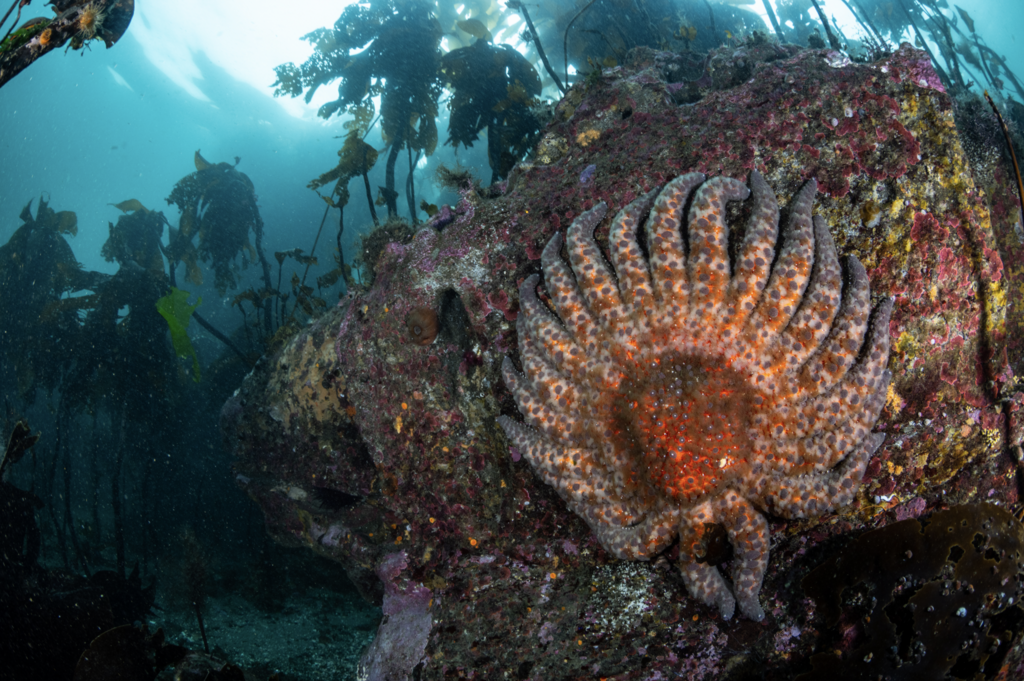
Pycnopodia
Pycnopodia helianthoides, commonly known as the sunflower sea star, is a large sea star found in the northeastern Pacific Ocean. The only species of its genus, it is among the largest sea stars in the world, with a maximum arm span of 1 m (3.3 ft). Adult sunflower sea stars usually have 16 to 24 limbs. They vary in color. Sunflower sea stars are predatory and carnivorous, feeding mostly on sea urchins, clams, sea snails, and other small invertebrates. Although the species was widely distributed throughout the northeast Pacific, its population rapidly declined from 2013. The sunflower sea star is classified as Critically Endangered on the IUCN Red List.
1 branches of this genus, most-observed first
See this branch on the Wheel of Life →
Where it lives
Recorded sightings
—
geo-referenced records in GBIF, from museums, herbaria and field observers.
Drag the globe to turn it. Dots are where records exist, not a range map; darker means more records.
In the stacks
Searching the stacks…
Every page naming Pycnopodia in the Biodiversity Heritage Library →
This page is assembled live from iNaturalist, GBIF, Wikipedia, the Source Library and the Internet Archive. It is not yet part of the hand-edited codex. iNaturalist taxon 47674.