- Animals
- ›Chordates
- ›Vertebrates
- ›Amphibians
- ›Frogs and Toads
- ›African Box-headed Frogs
- ›Cacosterninae
- ›Tomopterna
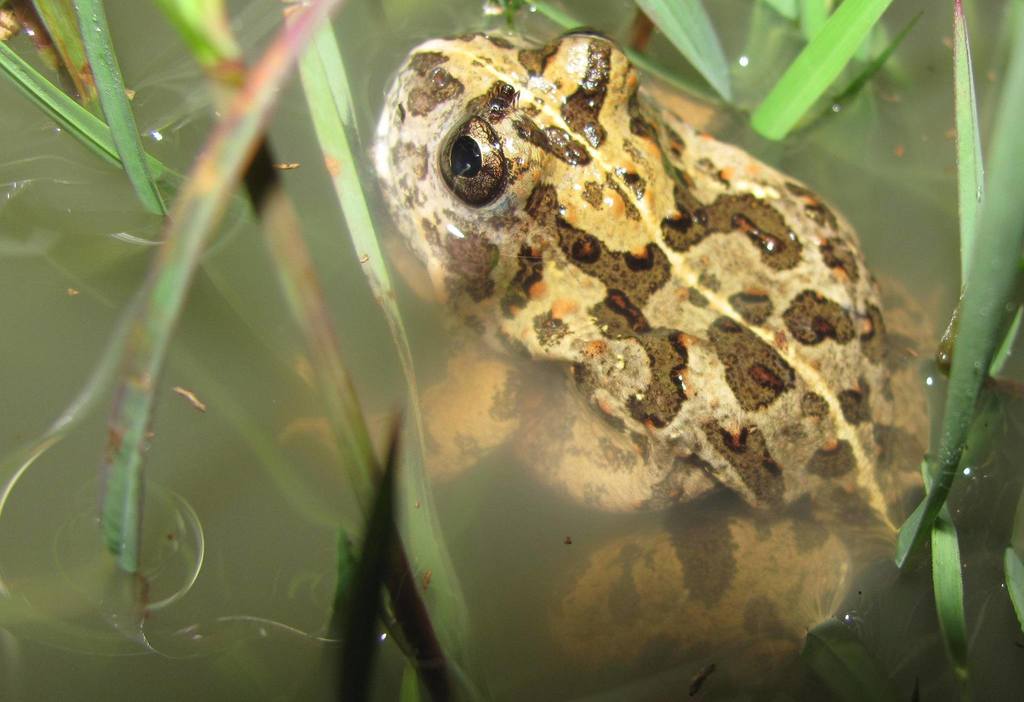
Tomopterna gallmanni
Tomopterna gallmanni, commonly known as Gallmann's sand frog, is a species of frog in the family Pyxicephalidae. It is a cryptic species endemic to Kenya.
From the article Tomopterna gallmanni on Wikipedia (CC BY-SA), quoted section by section
Description
Tomopterna gallmanni is a stout, toad-like frog with a small head and thick legs. The dorsal markings consist of several irregular dark grey patches on a lighter grey background, sometimes with a complete or broken white line running down the back. Brown warts with black borders are present on the dorsum and sides. The underside is a creamy white colour that becomes pinkish on the palms and around the vent. T. gallmanni is a cryptic species that closely resembles other species in the genus Tomopterna. It can be differentiated from similar species by its smooth ventral surface that becomes coarsely granular towards the thighs and vent. The tadpoles of this species are unknown.
Range & habitat
Endemic to Kenya, Tomopterna gallmanni is known from the Laikipia Plateau, Baragoi, Maralal, and Naivasha. It has been recorded at several protected areas within this range, including Laikipia National Reserve, the Lewa Wildlife Conservancy, Ngare Ndare Forest, and the Ol Pejeta Conservancy. It occurs in moist, open grassland, savannah, and woodland habitats at altitudes between 1,300–2,000 m (4,300–6,600 ft) above sea level, and is known to inhabit both man-made and naturally occurring water bodies.
Wikipedia: “Range and habitat”
What it does
The advertisement call of Tomopterna gallmanni consists of a series of notes, each composed of one or two pulses, that resembles a knocking sound. Males call from the edges of temporary pools and eggs are laid singly. This species is abundant at breeding sites and has been recorded alongside Ptychadena anchietae and Ptychadena mascareniensis. It is known to burrow underground during periods of persistent dry weather.
== References ==
Wikipedia: “Ecology”
Listen
Looking for field recordings…
Where it lives
Recorded sightings
—
geo-referenced records in GBIF, from museums, herbaria and field observers.
Drag the globe to turn it. Dots are where records exist, not a range map; darker means more records.
In the stacks
Searching the stacks…
Every page naming Tomopterna gallmanni in the Biodiversity Heritage Library →
This page is assembled live from iNaturalist, GBIF, Wikipedia, the Source Library and the Internet Archive. It is not yet part of the hand-edited codex. iNaturalist taxon 476828.