- Animals
- ›Chordates
- ›Vertebrates
- ›Ray-finned Fishes
- ›Spiny-rayed fishes
- ›Blennies, Damselfishes and Allies
- ›Blennies
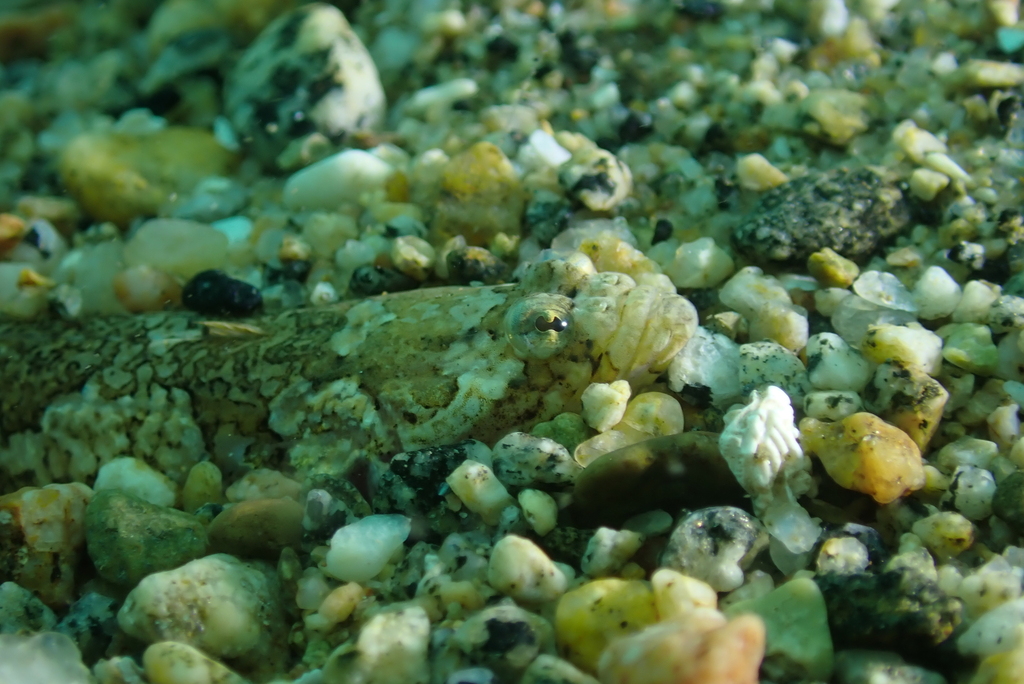
Sand Stargazers
Dactyloscopidae
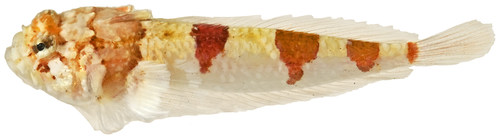
Sand stargazers are blennioids; perciform marine fish of the family Dactyloscopidae. Found in temperate to tropical waters of North and South America; some may also inhabit brackish environments. The giant sand stargazer (Dactylagnus mundus) is the largest at 15 cm in length; all other species are under 10 cm.
These blennies are named well: sand stargazers have protruding eyes on the top of their heads, fixed in an upward gaze, and may be on stalks. Their large mouths are also upturned. The dorsal fin is long and may or may not be continuous, with seven to 23 spines; the pelvic fins are situated below the throat and possess one spine. The anal fin is equally long and flowing. The mouth is fringed, and like the upper edge of the operculum (the gill cover), this fringe is divided into finger-like structures. The body is greatly elongated, and coloration is generally drab.
9 branches of this family, most-observed first · about 48 known species
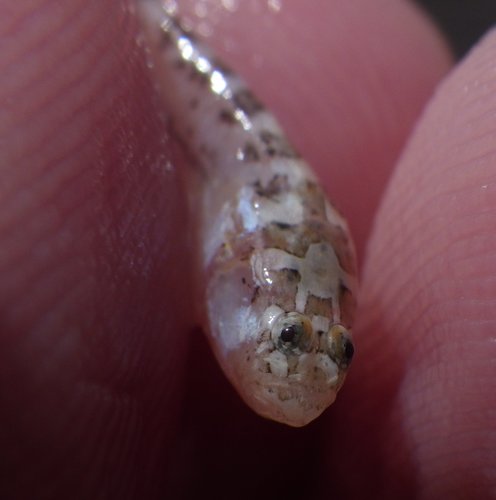
Dactyloscopus
genusDactyloscopus
Sindoscopus
genusSindoscopus

Gillellus
genusGillellus
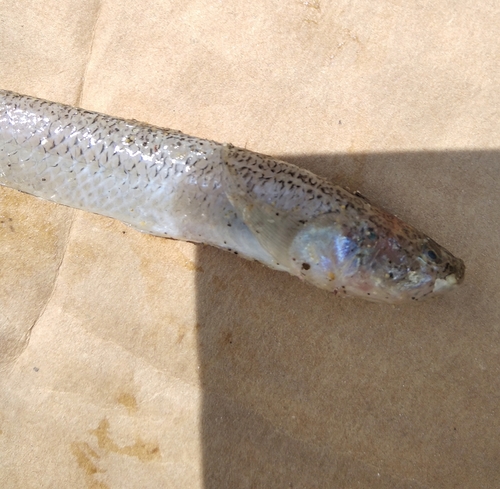
Dactylagnus
genusDactylagnus
Platygillellus
genusPlatygillellus

Myxodagnus
genusMyxodagnus
Leurochilus
genusLeurochilus
Heteristius
genusHeteristius
Storrsia
genusStorrsia
Where it lives
Recorded sightings
—
geo-referenced records in GBIF, from museums, herbaria and field observers.
Drag the globe to turn it. Dots are where records exist, not a range map; darker means more records.
In the stacks
Searching the stacks…
Every page naming Dactyloscopidae in the Biodiversity Heritage Library →
This page is assembled live from iNaturalist, GBIF, Wikipedia, the Source Library and the Internet Archive. It is not yet part of the hand-edited codex. iNaturalist taxon 48569.