- Animals
- ›Chordates
- ›Vertebrates
- ›Ray-finned Fishes
- ›Bonytongues and mooneyes
- ›Bonytongues
- ›Arapaimas
- ›Arapaima
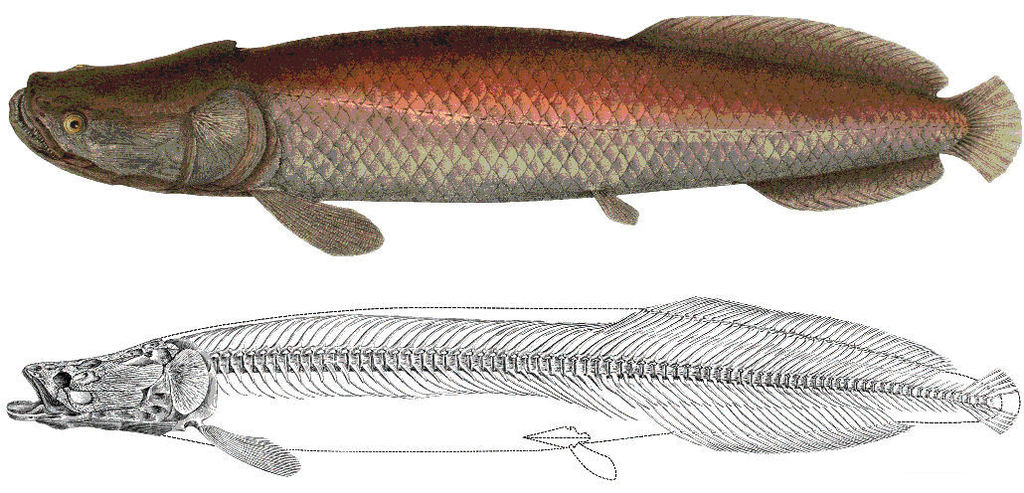
Agassiz's Arapaima
Arapaima agassizii
Arapaima agassizii is a species of freshwater fish endemic to Brazil. It is a member of the arapaimas, a genus of air-breathing fish that contains some of the world's largest freshwater fish.
It is known only from a single now-lost holotype collected between 1817 and 1820 from an unspecified region in the lowlands of the Brazilian Amazon, and an 1847 description by Achille Valenciennes, based on notes & illustrations of the specimen made by Johann Baptist von Spix and Louis Agassiz in 1829. The holotype skeleton was kept at the Bavarian State Collection of Zoology and destroyed during World War II, but the species was redescribed in a 2013 review of wild-caught Arapaima specimens worldwide on the basis of Valenciennes' description, with the review finding sufficient morphological evidence that A. agassizii is distinct from all other species of arapaima.
Where it lives
Recorded sightings
—
geo-referenced records in GBIF, from museums, herbaria and field observers.
Drag the globe to turn it. Dots are where records exist, not a range map; darker means more records.
In the stacks
Searching the stacks…
Every page naming Arapaima agassizii in the Biodiversity Heritage Library →
This page is assembled live from iNaturalist, GBIF, Wikipedia, the Source Library and the Internet Archive. It is not yet part of the hand-edited codex. iNaturalist taxon 487480.