- Animals
- ›Chordates
- ›Vertebrates
- ›Birds
- ›Rollers, Kingfishers, and Allies
- ›Kingfishers
- ›River, Dwarf, and Pygmy Kingfishers
- ›Ceyx
On eBird ↗
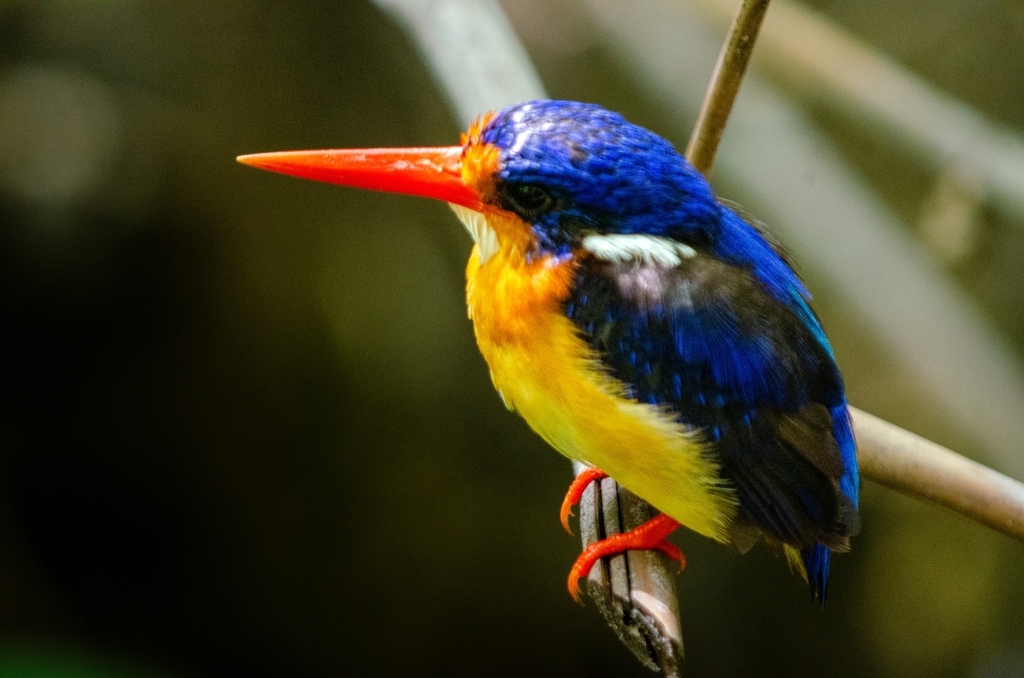
Dimorphic Dwarf-Kingfisher
Live sightings near you, the range map, bar charts of when it is seen, and Macaulay Library photos and recordings.
Dimorphic Dwarf Kingfisher
Ceyx margarethae
The dimorphic dwarf kingfisher (Ceyx margarethae) is a species of bird in the family Alcedinidae that is endemic to the central and southern Philippines. Its natural habitat is subtropical or tropical moist lowland forests.
From the article Dimorphic dwarf kingfisher on Wikipedia (CC BY-SA), quoted section by section
Description
This species was formerly considered as one of the 15 recognised subspecies of what was then known as the variable dwarf kingfisher (Ceyx lepidus or Alcedo lepidus). A molecular phylogenetic study published in 2013 found that most of the insular subspecies had substantially diverged from one another. The variable dwarf kingfisher was therefore split and 12 of the subspecies, including the dimorphic dwarf kingfisher, were promoted to species status. At the same time the name of the variable dwarf kingfisher was changed to the Moluccan dwarf kingfisher.
Wikipedia: “Description and taxonomy”
Range & habitat
Its natural habitat is tropical moist lowland forests. To be precise, it inhabits islands such as Negros, Cebu, Camiguin Sur, Mindanao and many other small islands in the central and southern Philippines IUCN has assessed this bird as least-concern species but the population is decreasing. This species' main threat is habitat loss with wholesale clearance of forest habitats as a result of logging, agricultural conversion and mining activities occurring within the range.
== References ==
Wikipedia: “Habitat and conservation status”
What it does
It is presumed to feed on invertebrates, small reptiles and fish. Typically observed alone or as a pair. Not much is known about their breeding habits. In 2024, a nest was observed on Panay built on the side of a clay cliff. Clutch size was 4 and took 21 days to fledge.
Wikipedia: “Ecology and behavior”
Listen
Looking for field recordings…
Where it lives
Recorded sightings
—
geo-referenced records in GBIF, from museums, herbaria and field observers.
Drag the globe to turn it. Dots are where records exist, not a range map; darker means more records.
In the stacks
Searching the stacks…
Every page naming Ceyx margarethae in the Biodiversity Heritage Library →
This page is assembled live from iNaturalist, GBIF, Wikipedia, the Source Library and the Internet Archive. It is not yet part of the hand-edited codex. iNaturalist taxon 513981.