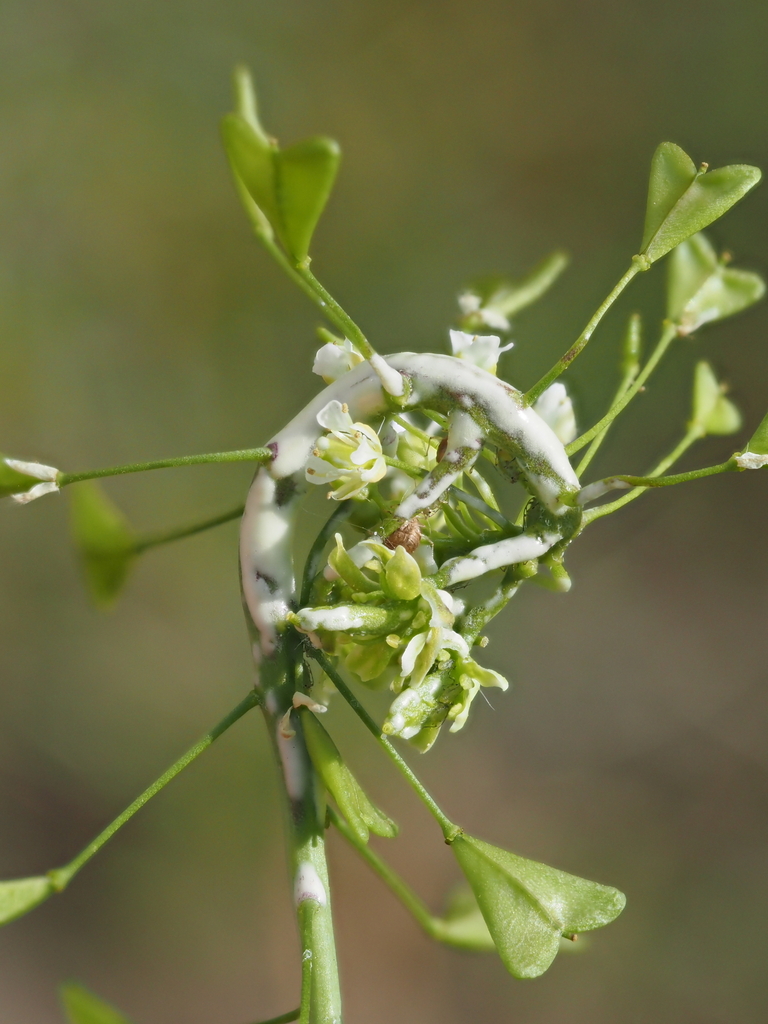
Water Molds
Oomycota
Oomycota or oomycetes (/ˌoʊəˈmaɪsiːts/) form a distinct phylogenetic lineage of fungus-like eukaryotic microorganisms. They are filamentous, microscopic, absorptive organisms that reproduce both sexually and asexually. Oomycetes occupy both saprophytic and pathogenic lifestyles, and include some of the most notorious pathogens of plants, causing devastating diseases such as late blight of potato and sudden oak death. One oomycete, the mycoparasite Pythium oligandrum, is used for biocontrol, attacking plant pathogenic fungi. The oomycetes are also often referred to...
12 branches of this phylum, most-observed first

Peronosporomycetes
classPeronosporomycetes

Saprolegniomycetes
classSaprolegniomycetes
Ducellieriales
orderDucellieriales

Olpidiopsidales
orderOlpidiopsidales
Anisolpidiales
orderAnisolpidiales
Diatomophthorales
orderDiatomophthorales
Haliphthorales
orderHaliphthorales
Pontismatales
orderPontismatales
Eurychasmatales
orderEurychasmatales
Haptoglossales
orderHaptoglossales
Miraculales
orderMiraculales
Rozellopsidales
orderRozellopsidales
Where it lives
Recorded sightings
—
geo-referenced records in GBIF, from museums, herbaria and field observers.
Drag the globe to turn it. Dots are where records exist, not a range map; darker means more records.
In the stacks
Searching the stacks…
Every page naming Oomycota in the Biodiversity Heritage Library →
This page is assembled live from iNaturalist, GBIF, Wikipedia, the Source Library and the Internet Archive. It is not yet part of the hand-edited codex. iNaturalist taxon 52595.