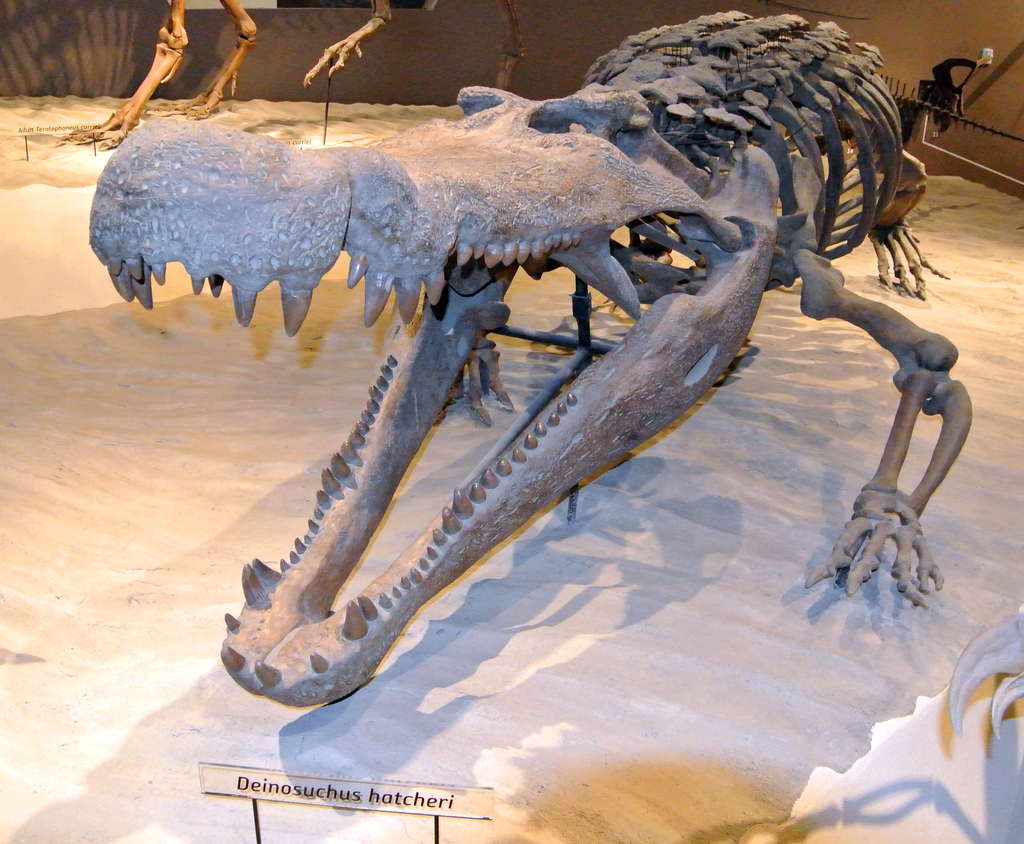
Deinosuchus
Deinosuchus is an extinct genus of eusuchian, either an alligatoroid crocodilian or a stem-group crocodilian, which lived during the Late Cretaceous around 82 to 73 million years ago. The first remains were discovered in North Carolina in the 1850s, and the genus was first described in 1909. Additional fragments were discovered in the 1940s and were later incorporated into an influential, though inaccurate, skull reconstruction at the American Museum of Natural History. Knowledge of Deinosuchus remains incomplete, but better cranial and postcranial material found in recent years has expanded scientific understanding of this massive predator.
Although Deinosuchus was far larger than any modern crocodile or alligator, with the largest surpassing 9 meters (30 ft) in total length, its overall appearance was fairly similar to its smaller relatives, but with a proportionally longer skull than modern crocodilians. It had large, robust teeth built for crushing, and its back was covered with thick hemispherical osteoderms. One study indicated Deinosuchus may have lived for up to 50 years, growing at a rate similar to that of modern crocodilians, but maintaining this growth over a much longer time.
2 branches of this genus, most-observed first

Deinosuchus riograndensis
speciesDeinosuchus riograndensis

Deinosuchus rugosus
speciesDeinosuchus rugosus
Where it lives
Recorded sightings
—
geo-referenced records in GBIF, from museums, herbaria and field observers.
Drag the globe to turn it. Dots are where records exist, not a range map; darker means more records.
In the stacks
Searching the stacks…
Every page naming Deinosuchus in the Biodiversity Heritage Library →
This page is assembled live from iNaturalist, GBIF, Wikipedia, the Source Library and the Internet Archive. It is not yet part of the hand-edited codex. iNaturalist taxon 543792.