- Animals
- ›Chordates
- ›Vertebrates
- ›Ray-finned Fishes
- ›Grinners, Lizardfishes, and Allies
- ›Lizardfishes
- ›Synodontinae
- ›Synodus
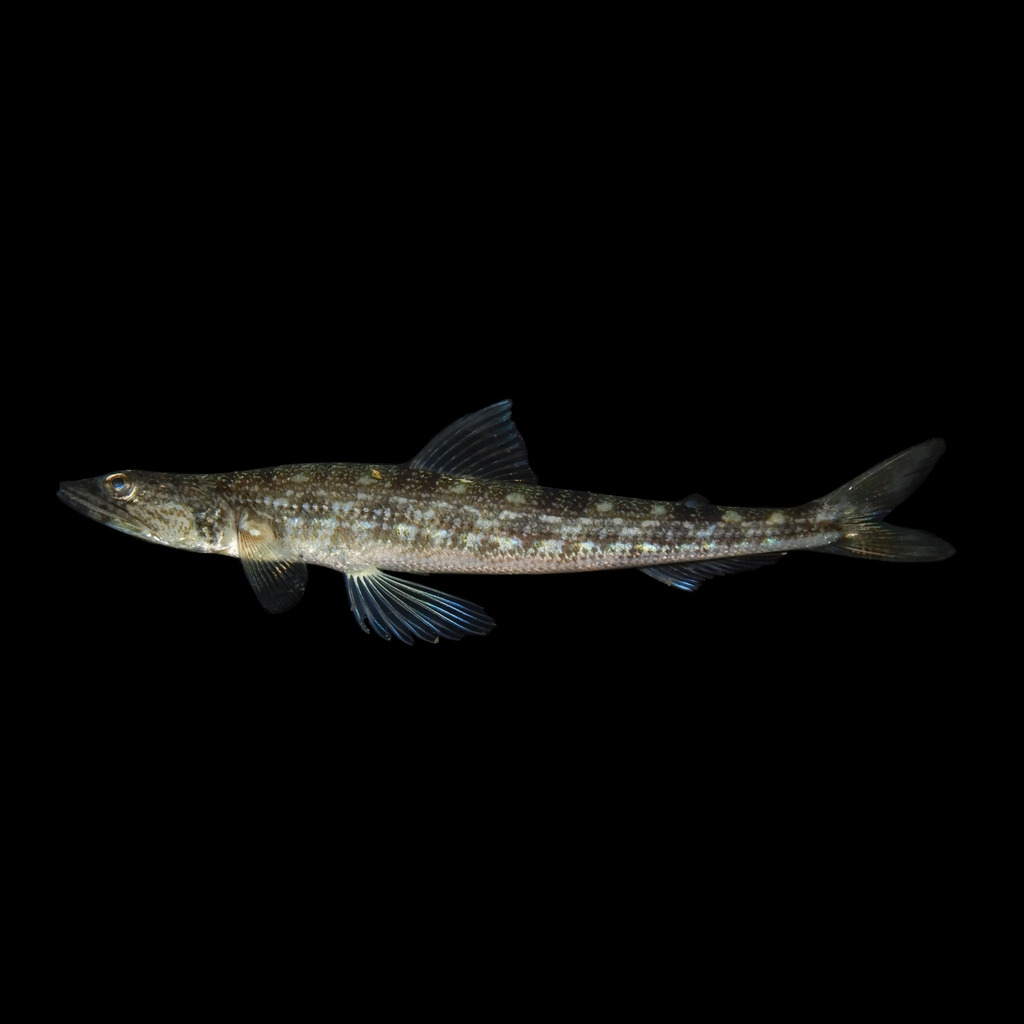
Inshore Lizardfish
Synodus foetens
The inshore lizardfish (Synodus foetens) is a member of the family Synodontidae (Russell et al. 2015). The body of this species is elongated, similar to a cigar-shape (Harry 2016). The inshore lizardfish has a maximum length recorded of about 50 cm but generally we see them at about 40 cm long. Their lifespan can be up to nine years (Russell et al. 2015). The maximum weight has been seen as 900 grams (Russell et al. 2015). Females are...
From the article Inshore lizardfish on Wikipedia (CC BY-SA), quoted section by section
Description
The inshore lizardfish has a maximum length recorded of about 50 cm (20 in) but lengths around 40 cm (16 in) are more common. Their lifespan can be up to nine years. The body of this species is elongated, similar to a cigar. Inshore lizardfishes have a thin body that swims quickly and has a subcarangiform swimming style. The heads of lizardfish are slightly compressed and the tops of their heads are wrinkly in nature. The maximum weight has been seen as 900 g (32 oz). Females are generally larger than males when mature. The shape of the mouth of this species is large and pointed. The snout is pointed. The top jaw extends beyond the eye. They rely on their vision to spot prey from below so inshore lizardfishes have large eyes and rounded pupils. Many slender teeth are present in the roof of the mouth and jaws. The lateral line is considered to be well marked. The lateral line encompasses around 60 scales along the length. The inshore lizardfish has no dorsal spines, 10-13 dorsal soft rays, no anal spines, 11-13 anal soft rays, and 56-62 vertebrae. Inshore lizardfish have large dorsal and pelvic fins in comparison to their body to assist with steering. A large, pointed caudal fin helps to propel the fish forward. The color of the dorsal side of the lizardfish ranges from various shades of brown to olive. The belly side ranges from white to yellow. …
Range & habitat
The habitats for these fish include the bottom in shallow inshore marine waters, usually over sand or mud bottoms, including creeks, rivers, among seagrasses, estuaries, bays, and lagoons. Adults have been found to be also in the open sea above continental shelves. The inshore lizardfish has been found in temperatures ranging from 8.3–31.7 °C (46.9–89.1 °F). It has also been seen to withstand a wide range of salinities, from 1.9ppt to 60 ppt. Biomass appears to determine their distribution in their habitat, smaller inshore lizardfish are found closer to shore while larger specimens are more offshore. In areas like San Blas Archipelagos, Panama, the inshore lizardfish was found to be most abundant in numbers during the dry season. During these dry periods in tropical waters, lizardfish have demonstrated themselves as key members of their ecosystem and that they take on a strong predatory role. They have been abundant in tropical reef environments. The inshore lizardfish has a great tolerance for changing conditions that would be detrimental for other species. Its capability of tolerating such a wide range of temperatures and salinities makes a strong case for the lizardfish tolerating our warming oceans and climate. Its wide range of prey also suggest that it has a large potential niche and that it could assimilate into a variety of different habitats if needed.
Wikipedia: “Habitat”
What it does
The inshore lizardfish is an ambush predator. Its diet consists of various demersal fish and small invertebrates. They include: shrimp, crabs, and cephalopods. Because the inshore lizardfish reside in environments that have lots of changing conditions, the inshore lizardfish diet also changes with the conditions. In the Gulf of Mexico, specifically, the inshore lizardfish relies on certain species to get through the seasons. During the colder months, between November and February, inshore lizardfish mainly rely on two different species: Upeneus parvus and Loligo pealei. During the rainier season, the inshore lizardfish was seen to rely on Engyophrys senta and L. pealei. The inshore lizardfish is seen hunting in a wild manner where it lurches at its prey and then quickly finishes it off. There are records of inshore lizardfish that have shrimp, crabs, squid, sea urchins, and annelids in their stomachs, but other smaller fish are their main food source. Its diverse diet allows it to adapt to many different biotic and abiotic conditions and it has a large niche because of its flexibility. In a study conducted in Florida about the parasites within Synodus foetens, the digestive tracts and stomachs were observed in many specimens. …
Wikipedia: “Diet”
In human culture
The generic name Synodus is from the Greek syn, meaning grown together, and odus meaning teeth.
Wikipedia: “Etymology”
Where it lives
Recorded sightings
—
geo-referenced records in GBIF, from museums, herbaria and field observers.
Drag the globe to turn it. Dots are where records exist, not a range map; darker means more records.
In the stacks
Searching the stacks…
Every page naming Synodus foetens in the Biodiversity Heritage Library →
This page is assembled live from iNaturalist, GBIF, Wikipedia, the Source Library and the Internet Archive. It is not yet part of the hand-edited codex. iNaturalist taxon 54440.