On eBird ↗
Bonin Grosbeak
Live sightings near you, the range map, bar charts of when it is seen, and Macaulay Library photos and recordings.
Bonin Grosbeak
Carpodacus ferreorostris
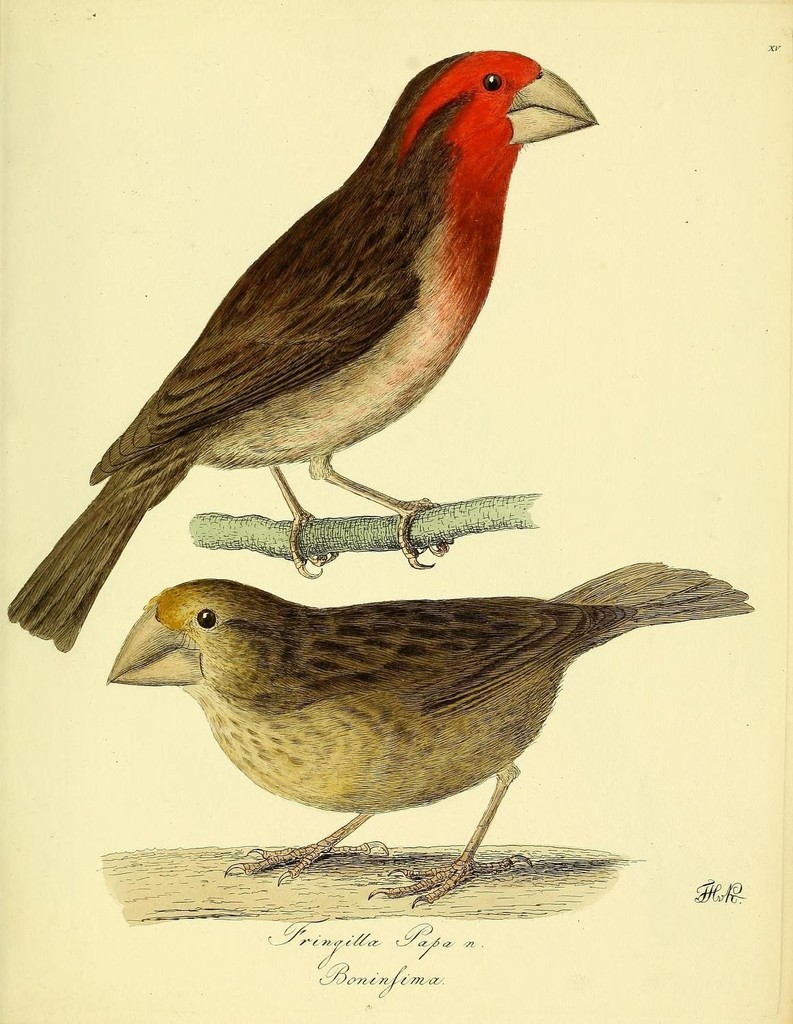
The Bonin grosbeak or Bonin Islands grosbeak (Carpodacus ferreorostris) is an extinct finch. It is one of the diverse bird taxa that are vernacularly called "grosbeaks", but it is not closely related to the grosbeaks sensu stricto. Many authorities place the species in the genus Carpodacus, but some place it in its own genus, Chaunoproctus. A 2013 genetic analysis found it to be a relatively basal member of the group, more derived than the common rosefinch, but with no close relatives, with an estimated divergence time from other members of the group around 12.5 million years ago.
From the article Bonin grosbeak on Wikipedia (CC BY-SA), quoted section by section
Range & habitat
It was found only on Chichi-jima in the Ogasawara Islands. While reports that it was also found on islands of the Haha-jima group (母島列島, known as "Baily Islands" to early Western explorers) are almost certainly erroneous, it might have occurred on Anijima and Otōtojima of the Chichi-jima group (父島列島, formerly "Beechey Islands"). Chichi-jima proper is the only place, however, where the bird was observed. Several specimens were taken; some 10 remain at present. Contemporary illustrations show considerable differences, especially in males. Whether these are due to seasonal variation or whether several subspecies or even species existed could only be determined by a thorough review of the available material.
Wikipedia: “Habitat”
What it does
It was a retiring although not shy bird, and was usually found singly or in pairs. It fed on fruits and buds which were primarily picked up from the ground or low shrubs; it rarely was observed to perch in trees, being apparently rather phlegmatic and somewhat reluctant to fly. Only one kind of vocalization has been described: a soft, pure and high note, sometimes short, sometimes drawn out; sometimes given singly, sometimes in a short series.
Wikipedia: “Behaviour”
Listen
Looking for field recordings…
Where it lives
Recorded sightings
—
geo-referenced records in GBIF, from museums, herbaria and field observers.
Drag the globe to turn it. Dots are where records exist, not a range map; darker means more records.
In the stacks
Searching the stacks…
Every page naming Carpodacus ferreorostris in the Biodiversity Heritage Library →
This page is assembled live from iNaturalist, GBIF, Wikipedia, the Source Library and the Internet Archive. It is not yet part of the hand-edited codex. iNaturalist taxon 558595.