- Animals
- ›Chordates
- ›Vertebrates
- ›Ray-finned Fishes
- ›Spiny-rayed fishes
- ›Butterflyfishes, Angelfishes, and Allies
- ›Seabreams and Porgies
- ›Stenotomus
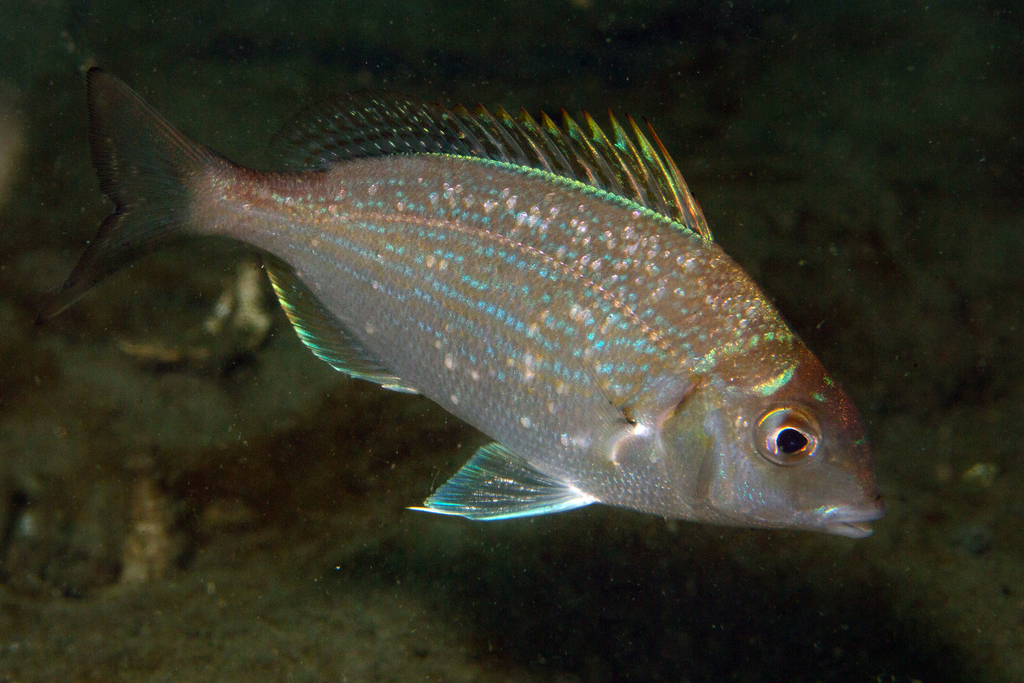
Scup
Stenotomus chrysops
The scup (Stenotomus chrysops) is a fish that occurs primarily in the Atlantic from Massachusetts to South Carolina. Along with many other fish of the family Sparidae, it is also commonly known as porgy.
Scup grow as large as 18 in (460 mm) and weigh 3–4 lb (1.4–1.8 kg), but they average 0.5–1.0 lb (0.23–0.45 kg). Scup can live up to 20 years; females can begin to reproduce at the age of two. Every year female scups lay approximately 7,000 eggs in sand and weed abundant areas.
From the article Scup on Wikipedia (CC BY-SA), quoted section by section
At the table
The flesh is "firm and flaky", with a "sweet almost shrimplike flavor". Many consumers like their light flavor and they are characterized as panfish. Popular methods of cooking include frying, broiling, and baking. Though the flesh is similar to that of more prestigious fish in the sea bream family like daurade and orata, the names "scup" and "porgy" are sometimes considered unattractive, leading to culinary names like orata Americana and Montauk sea bream. Its similarity to Pagrus major and its mild and fatty characteristics makes it suitable for sushi.
Wikipedia: “Cuisine”
Where it lives
Recorded sightings
—
geo-referenced records in GBIF, from museums, herbaria and field observers.
Drag the globe to turn it. Dots are where records exist, not a range map; darker means more records.
In the stacks
Searching the stacks…
Every page naming Stenotomus chrysops in the Biodiversity Heritage Library →
This page is assembled live from iNaturalist, GBIF, Wikipedia, the Source Library and the Internet Archive. It is not yet part of the hand-edited codex. iNaturalist taxon 56043.