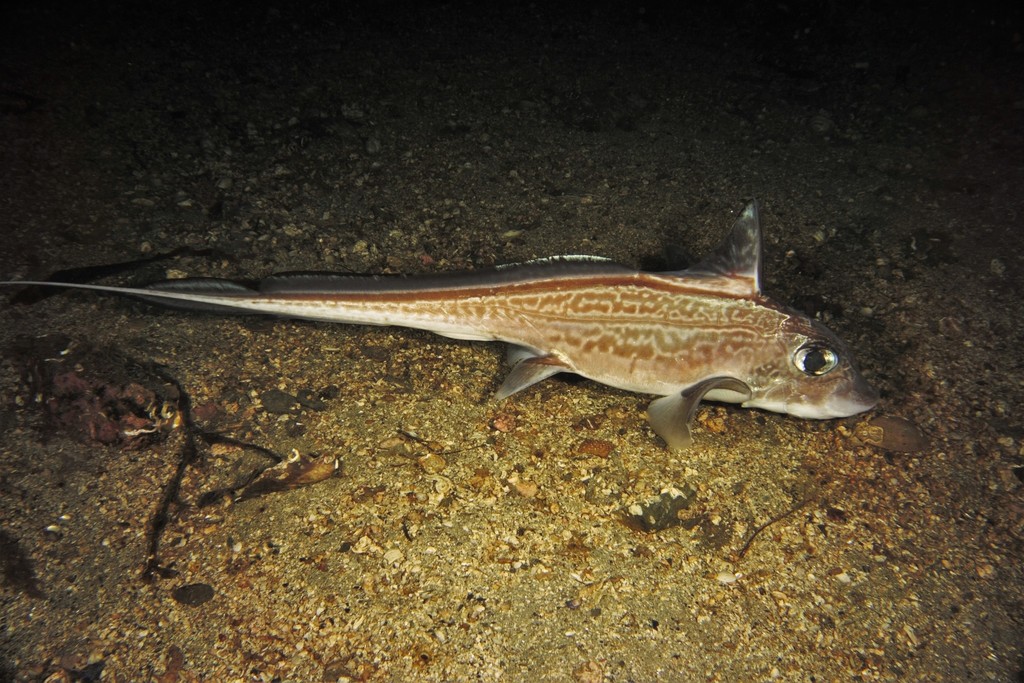
Chimaeras
Holocephali
Holocephali (sometimes spelled Holocephala; Greek for "complete head" in reference to the fusion of upper jaw with the skull) is a subclass of cartilaginous fish. The only living holocephalans are the three families of chimaeras, but the group also includes many extinct members and was more diverse during the Paleozoic and Mesozoic eras. The earliest known fossils of holocephalans date to the Middle Devonian, and the subclass likely reached its peak diversity during the following Carboniferous Period. Molecular clock studies suggest that holocephalans diverged from their closest relatives, elasmobranchs such as sharks and rays, during the Early Devonian or the Silurian Period.
Extinct holocephalans are typically divided into a number of orders, although the relationships between these groups are poorly understood. Several different definitions of Holocephali exist, with the group sometimes considered a less inclusive clade within the larger subclasses Euchondrocephali or Subterbranchialia and with its members spread into the now obsolete groups Paraselachimorpha or Bradyodonti. Per these classification schemes, the name Holocephali is used only for chimaeras and their closest relatives. Recent research has suggested that the orders Cladoselachiformes and Symmoriiformes, which were historically considered relatives or ancestors of sharks, should instead be considered holocephalans.
1 branches of this subclass, most-observed first · about 61 known species
See this branch on the Wheel of Life →
Where it lives
Recorded sightings
—
geo-referenced records in GBIF, from museums, herbaria and field observers.
Drag the globe to turn it. Dots are where records exist, not a range map; darker means more records.
In the stacks
Searching the stacks…
Every page naming Holocephali in the Biodiversity Heritage Library →
This page is assembled live from iNaturalist, GBIF, Wikipedia, the Source Library and the Internet Archive. It is not yet part of the hand-edited codex. iNaturalist taxon 60450.