- Animals
- ›Chordates
- ›Vertebrates
- ›Ray-finned Fishes
- ›Carps, Characins, Catfishes and Allies
- ›Catfishes
- ›Loricarioidei
- ›Armored Catfishes
- ›Cascudinhos
- ›Parotocinclus
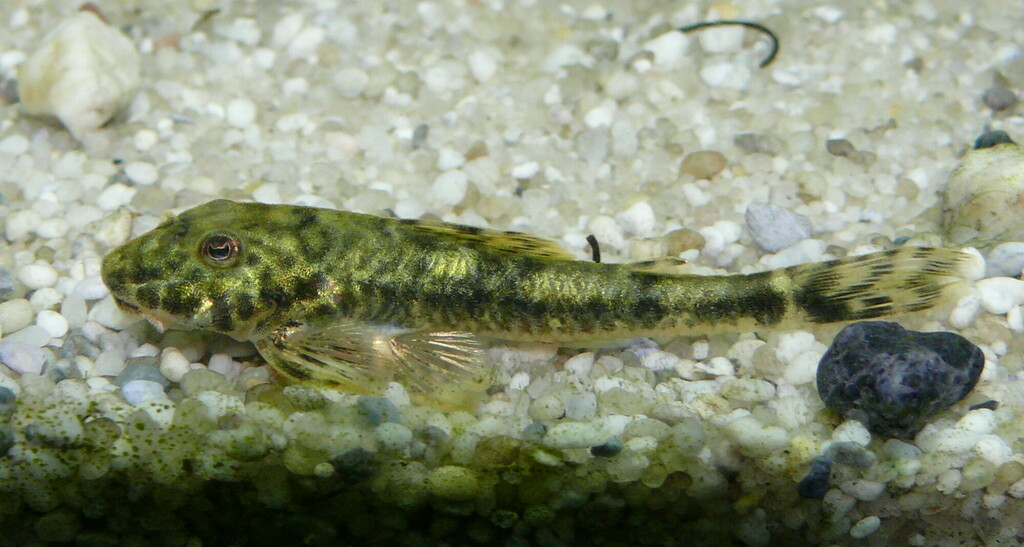
Parotocinclus jumbo
Parotocinclus jumbo is a fish in the family Loricariidae native to South America. It is found swimming in the Paraiba do Norte and Piranhas rivers in Paraiba State, Canhotinho River in Pernambuco State, a tributary of the Mundau River, flowing near the city of Maceio in Alagoas State, and Salgado River in Ceara State, Brazil. This species reaches a length of 5.8 cm (2.3 in).
From the article Parotocinclus jumbo on Wikipedia (CC BY-SA), quoted section by section
Description
Parotocinclus jumbo has an elongated body and it reaches a total length of 4 cm (1.6 in). It has 8 soft rays in its dorsal fin and 6 in its anal fin. The odontodes on the snout of this catfish are almost as wide as they are long and have heart-shaped tips.
Range & habitat
Parotocinclus jumbo is endemic to Brazil where it occurs in the coastal rivers of the states of Ceará, Paraíba, Pernambuco and Alagoas. This species is found in slow-moving, clear watercourses in flat, shallow areas with sandy and rocky bottoms.
== References ==
Wikipedia: “Distribution”
In human culture
Parotocinclus jumbo is classified in the genus Parotocinclus, is a combination of para, meaning "near", and the genus Otocinclus, the genus the type species, P. maculicauda was originally thought to be a member of. The specific name, jumbo, means large and is derived from the name of an African bush elephant called Jumbo, which P. T. Barnum bought from London Zoo and imported into the United States in 1882. This species is larger in size than most of the species in its genus.
Wikipedia: “Etymology”
Where it lives
Recorded sightings
—
geo-referenced records in GBIF, from museums, herbaria and field observers.
Drag the globe to turn it. Dots are where records exist, not a range map; darker means more records.
In the stacks
Searching the stacks…
Every page naming Parotocinclus jumbo in the Biodiversity Heritage Library →
This page is assembled live from iNaturalist, GBIF, Wikipedia, the Source Library and the Internet Archive. It is not yet part of the hand-edited codex. iNaturalist taxon 616744.