 NL·0538
Herbarium of the Nature Library
- Name
- Mobula birostris
- Family
- Mobulidae
- Native to
- Tropical, subtropical and temperate oceans worldwide, mostly offshore and around oceanic islands
- Habitat
- Open ocean, Coral reef, Seamounts
Giant oceanic manta ray
Mobula birostris
Also calledManta, 'blanket' (Spanish) · Pari manta (Indonesian) · Oni-itomakiei (Japanese) · Shuāngwěn qiánkǒu fúfèn 双吻前口蝠鲼 (Chinese) · Hāhālua (Hawaiian)
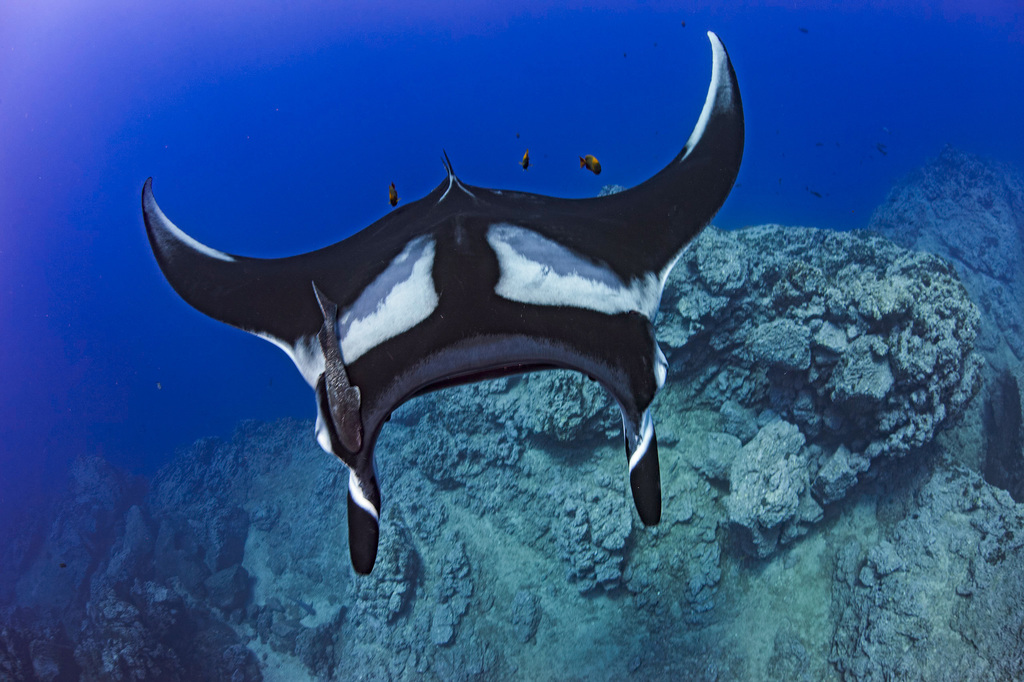
The largest ray, with a wingspan of up to about 7 m. It glides through the open ocean filtering plankton and visits reef 'cleaning stations' where small fish pick off parasites.
The giant oceanic manta ray, giant manta ray, oceanic manta ray, or pelagic manta ray is a species of ray in the family Mobulidae and the largest type of ray in the world. It is circumglobal and is typically found in tropical and subtropical waters but can also be found in temperate waters. Until 2017, the species was classified in the genus Manta, along with the smaller reef manta ray. DNA testing revealed that both mantas are closer related to some Mobula species than these are to other Mobula, being claded together. As a result, the two Manta species were absorbed into Mobula to reflect the new classification. Wikipedia
What it can do
- iHas the largest brain relative to body size of any fish
- iiCaptive mantas reacted to their reflection in ways that suggest self-awareness
- iiiFunnels plankton into its mouth with cephalic fins that unroll like scoops
- ivLeaps clear of the water and somersaults while feeding
- vEach individual's belly spot pattern is unique and lifelong
In the field
Field marks
- aHuge, diamond-shaped ray
- bTwo cephalic fins in front of the mouth
- cBlack above with white shoulder patches
- dWhite below with dark spots
- Not to be confused with
- Reef manta (Mobula alfredi) is smaller with shoulder patches that curve inward. Devil rays are smaller with mouths on the underside.
- Where to see it
- Revillagigedo Islands (Socorro), Mexico; Isla de la Plata (Ecuador)
- When
- Socorro about Nov–Jun
Life & habits
- Diet
- Filter feeder: zooplankton, krill, fish larvae
- Habitat
- Open ocean, upwelling zones, seamounts and offshore reefs
- Size
- Wingspan usually 4.5–7 m; up to ~2 t
- Lifespan
- 40+ years
Females give birth to a single pup every two to five years, one of the slowest reproductive rates of any fish.
Where it lives
Recorded sightings
—
geo-referenced records in GBIF, from museums, herbaria and field observers.
Native range
Tropical, subtropical and temperate oceans worldwide, mostly offshore and around oceanic islands
Drag the globe to turn it. Dots are where records exist, not a range map; darker means more records.
In the old herbals & bestiaries
No plate in the Source Library names this exact species, so these show its closest relatives as the old naturalists drew them: same genus, or the same kind of animal. Click a plate to read the page it came from, with translation.

In the stacks
Searching the stacks…
Every page naming Mobula birostris in the Biodiversity Heritage Library →
Marginalia
Spanish-speaking pearl divers named it manta, 'blanket', and sailors' 'devil-fish' tales told of mantas wrapping and drowning divers, which are untrue. Its gill plates are now traded as a modern health tonic, the main threat to the species.
Curiosity
Mantas are close relatives of sharks and have no stinging spine, unlike stingrays.
Kinship






Photographs: iNaturalist contributors under the licences shown. Records: GBIF.org. Historical plates: Source Library (CC BY-SA 4.0; originals public domain). Summary text: Nature Library editors and Wikipedia (CC BY-SA). Medicinal and edibility notes are historical and educational, not advice. iNaturalist taxon 623966.