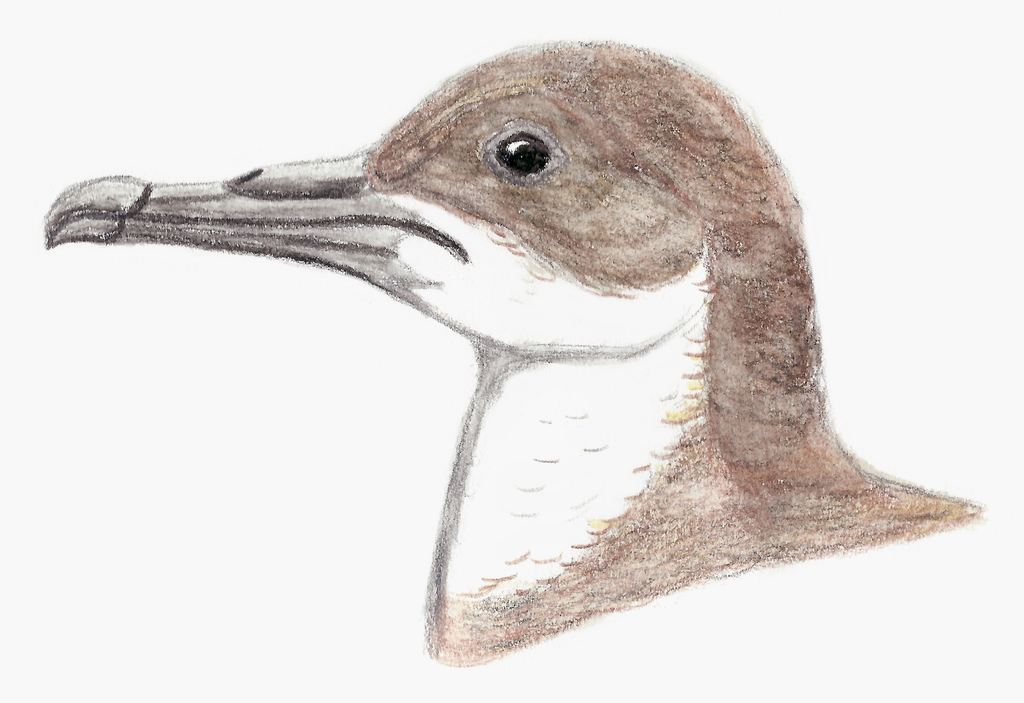
Dune Shearwater
Puffinus holeae
The dune shearwater (Puffinus holeae), also known as the Canarian shearwater or Hole's shearwater, was a relatively large shearwater which bred in the Canary Islands archipelago of the North Atlantic Ocean. Fossils have also been found in the Figueira Brava cave archaeological site on the western coast of Portugal. The specific epithet honours Mrs Jean Hole, who collected fossil material of the species on the Jandia Peninsula of Fuerteventura. It was intermediate in size between the Manx and Cory's shearwaters. Its breeding colonies were in dune fields, in contrast to those of the smaller and sympatric lava shearwater which bred in lava fields. The species went extinct about 2000–3000 years ago, contemporaneously with the first human settlement of the islands by the Guanches, likely due to be human predation.
== References ==
Listen
Looking for field recordings…
Where it lives
Recorded sightings
—
geo-referenced records in GBIF, from museums, herbaria and field observers.
Drag the globe to turn it. Dots are where records exist, not a range map; darker means more records.
In the stacks
Searching the stacks…
Every page naming Puffinus holeae in the Biodiversity Heritage Library →
This page is assembled live from iNaturalist, GBIF, Wikipedia, the Source Library and the Internet Archive. It is not yet part of the hand-edited codex. iNaturalist taxon 631561.