- Animals
- ›Echinoderms
- ›Sea Stars and Brittle Stars
- ›Brittle Stars
- ›Myophiuroida
- ›Metophiurida
- ›Ophintegrida
- ›Ophiacanthida
- ›Ophiodermatina
- ›Ophiodermatoidea
- ›Ophiodermatidae
- ›Ophioderma
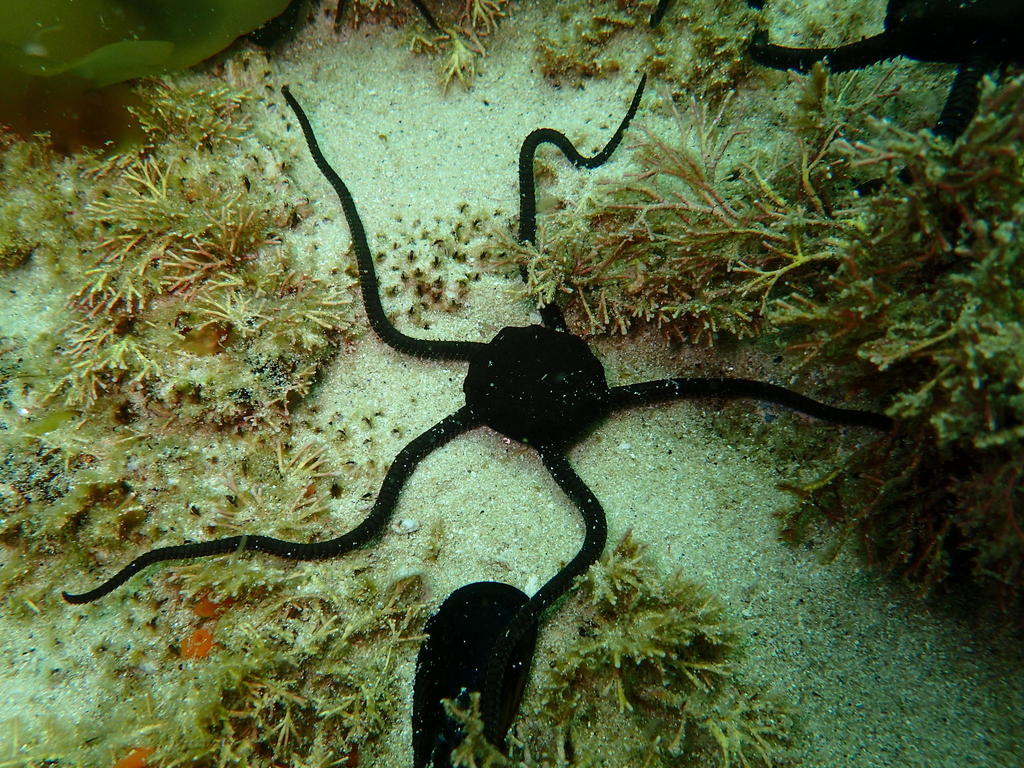
Serpent-skinned Brittle Star
Ophioderma wahlbergii
Ophioderma is a genus of brittle stars in the family Ophiodermatidae. Research on the Ophiuroid rubicundum species has discovered the creatures oppurtunistic behaviors and ability to adapt in the circumstances of a new given environment. Alongside their high adaptability, their strong feeding responses allow them to thrive in the depths of the coral reefs seen in the western Atlantic....
From the article Ophioderma (echinoderm) on Wikipedia (CC BY-SA), quoted section by section
What it does
Brittle stars can reproduce in three different ways, sexual, asexual, and larval. In sexual reproduction, they engage in broadcast spawning, which is releasing eggs and sperm in the water where external fertilization occurs. The fertilized egg turns into planktonic larvae that drift before settling on the ocean floor; then, they mature into adult brittle stars. During asexual reproduction, they reproduce through regeneration. When an arm is lost, it can regenerate and, in some species, form a new arm. This form of reproduction allows certain species to enhance their survival. And lastly, larval development, following fertilization, brittle star larvae undergo various developmental stages before transitioning into adulthood. In some species, larvae may remain attached to the parent until they can sustain themselves.
Wikipedia: “Reproduction”
Where it lives
Recorded sightings
—
geo-referenced records in GBIF, from museums, herbaria and field observers.
Drag the globe to turn it. Dots are where records exist, not a range map; darker means more records.
In the stacks
Searching the stacks…
Every page naming Ophioderma wahlbergii in the Biodiversity Heritage Library →
This page is assembled live from iNaturalist, GBIF, Wikipedia, the Source Library and the Internet Archive. It is not yet part of the hand-edited codex. iNaturalist taxon 632242.