- Animals
- ›Chordates
- ›Vertebrates
- ›Ray-finned Fishes
- ›Spiny-rayed fishes
- ›Perches, Scorpionfishes, Sticklebacks, and Allies
- ›Scorpionfishes and Allies
- ›Scorpionfishes
- ›Rockfishes
- ›Sebastes
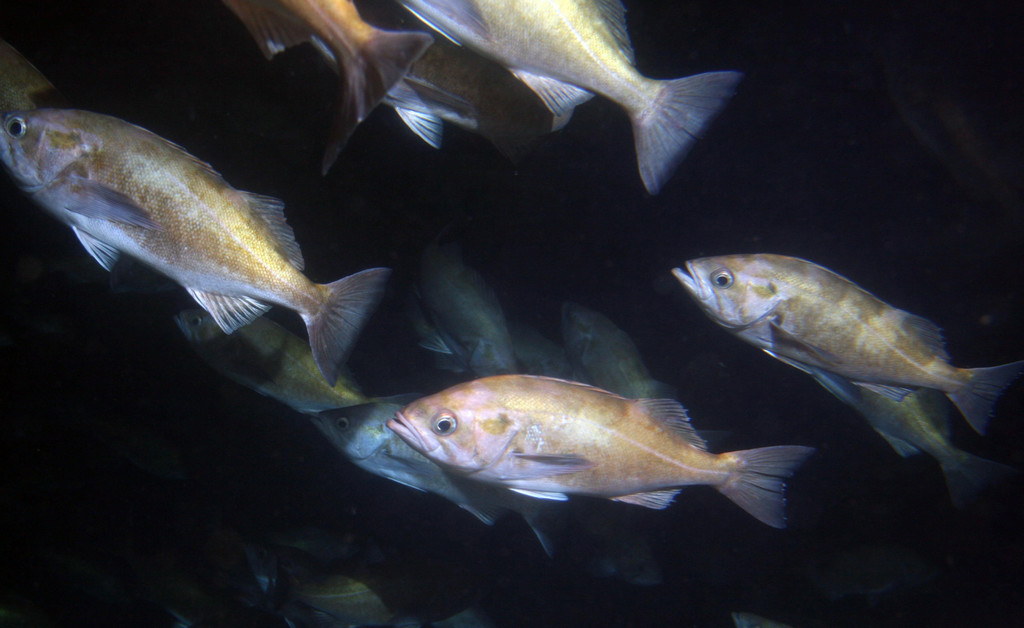
Widow Rockfish
Sebastes entomelas
The widow rockfish (Sebastes entomelas), or brown bomber, is a species of marine ray-finned fish belonging to the subfamily Sebastinae, the rockfishes, part of the family Scorpaenidae. It is found in the northeastern Pacific Ocean.
From the article Widow rockfish on Wikipedia (CC BY-SA), quoted section by section
Description
The widow rockfish has an elongate and compressed, scale covered body which has a depth which is around one third of its standard length. The head is relatively short, and the upper profile is slightly curved. The mouth is relatively small, the lower jaw projects slightly. The color is brassy brown over most of the body with the belly generally lighter in color, often with a reddish cast. The fin membranes, especially those in the anal and pectoral fins, are black. Specimens smaller than 10 inches (250 mm) are lighter in color and are tinged with vague streaks of orange. There are weak spines on the head and there are 13 spined and 14-16 soft rays in the dorsal fin while the anal fin has 3 spines and 8-10 soft rays. This species attains a maximum total length of 60 cm (24 in).
Range & habitat
The widow rockfish occurs from Todos Santos Bay, Baja California, to Albatross Bank, in the Gulf of Alaska. Adult widow rockfishes are most abundant from British Columbia to northern California. This is a pelagic-neritic fish which is found at depths between 0 and 549 m (0 and 1,801 ft).
Wikipedia: “Distribution and habitat”
Where it lives
Recorded sightings
—
geo-referenced records in GBIF, from museums, herbaria and field observers.
Drag the globe to turn it. Dots are where records exist, not a range map; darker means more records.
In the stacks
Searching the stacks…
Every page naming Sebastes entomelas in the Biodiversity Heritage Library →
This page is assembled live from iNaturalist, GBIF, Wikipedia, the Source Library and the Internet Archive. It is not yet part of the hand-edited codex. iNaturalist taxon 64478.