- Animals
- ›Chordates
- ›Vertebrates
- ›Ray-finned Fishes
- ›Spiny-rayed fishes
- ›Perches, Scorpionfishes, Sticklebacks, and Allies
- ›Scorpionfishes and Allies
- ›Stonefishes
- ›Choridactylinae
- ›Inimicus
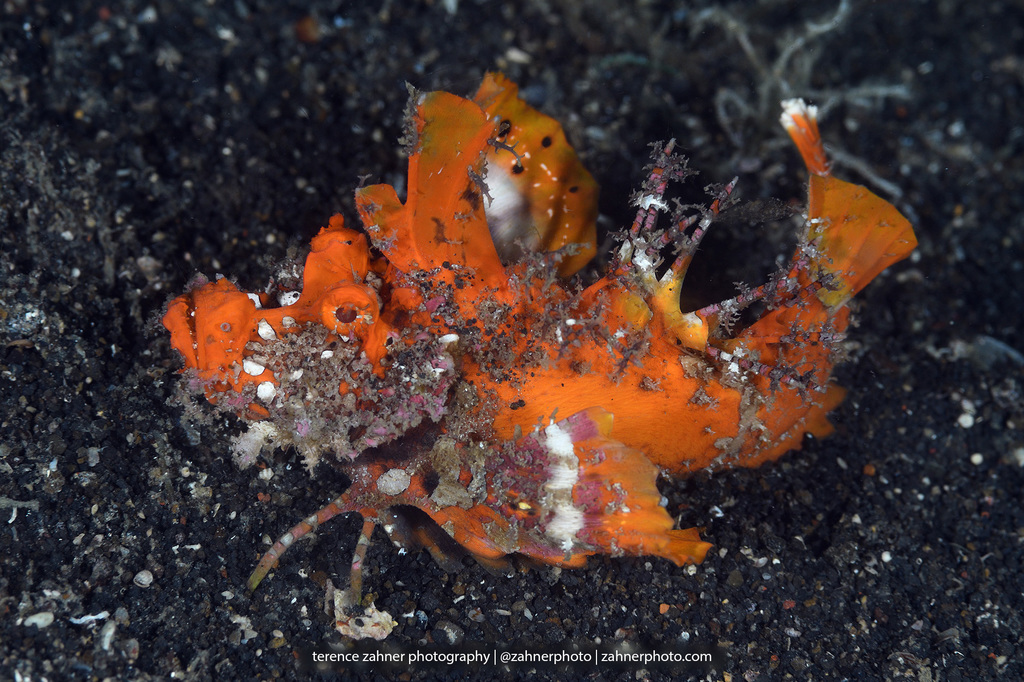
Devil Stinger
Inimicus didactylus
Inimicus didactylus, also known as sea goblin, demon stinger or devil stinger or red sea walkman, is a Western Pacific member of the Inimicus genus of venomous fishes, closely related to the true stonefishes. It can reach a body length of 25 cm (10 in) and is irregularly surfaced with spines and a knobby appearance. The fish has venomous spines to ward off enemies. The fish are nocturnal, and often dig themselves partially into the sandy seabed during the day. The body is red or sandy yellow and well camouflaged on sandy and coral seabeds.
From the article Inimicus didactylus on Wikipedia (CC BY-SA), quoted section by section
What it does
Inimicus didactylus is a piscivorous ambush predator. It is nocturnal and typically lies partially buried on the sea floor or on a coral head during the day, covering itself with sand and other debris to further camouflage itself. It has no known natural predators. When disturbed by a scuba diver or a potential predator, it fans out its brilliantly colored pectoral and caudal fins as a warning. Once dug in, it is very reluctant to leave its hiding place. When it does move, it displays an unusual mechanism of subcarangiform locomotion — it crawls slowly along the seabed, employing the four lower rays (two on each side) of its pectoral fins as legs. Its dorsal spines are venomous.
Wikipedia: “Behavior”
Where it lives
Recorded sightings
—
geo-referenced records in GBIF, from museums, herbaria and field observers.
Drag the globe to turn it. Dots are where records exist, not a range map; darker means more records.
In the stacks
Searching the stacks…
Every page naming Inimicus didactylus in the Biodiversity Heritage Library →
This page is assembled live from iNaturalist, GBIF, Wikipedia, the Source Library and the Internet Archive. It is not yet part of the hand-edited codex. iNaturalist taxon 64500.