- Animals
- ›Chordates
- ›Vertebrates
- ›Amphibians
- ›Frogs and Toads
- ›Poison Frogs
- ›Poison Dart Frogs
- ›Colostethinae
- ›Ameerega
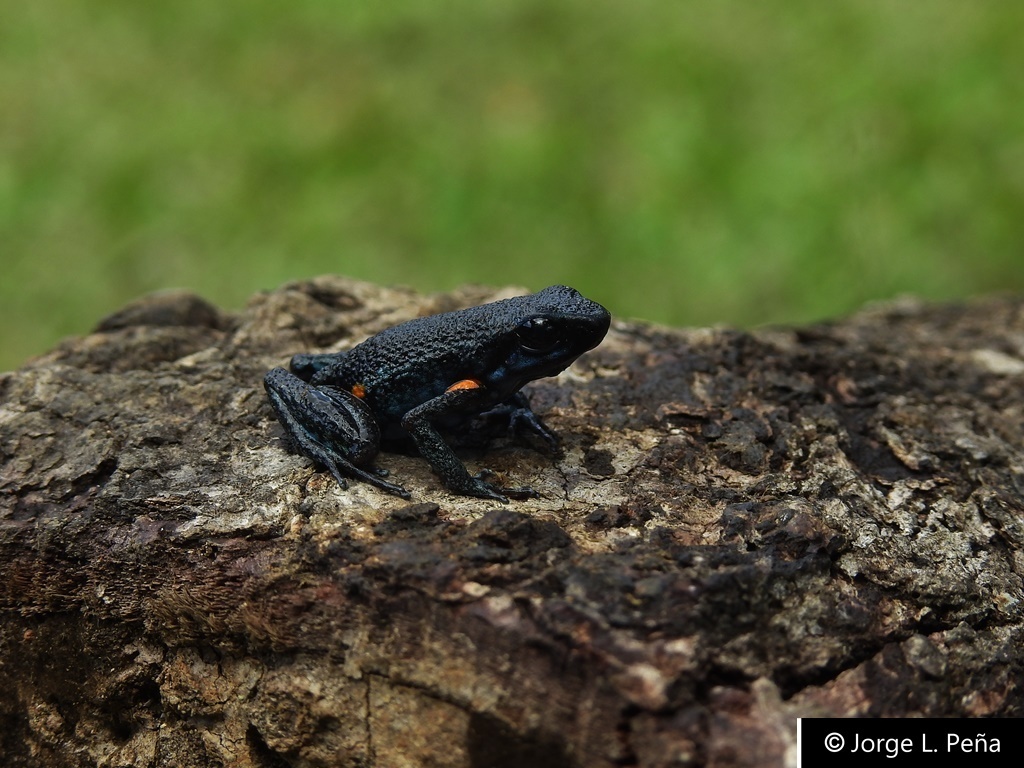
Niceforo's Poison Frog
Ameerega ingeri
Ameerega ingeri, also known commonly as Niceforo's poison frog, Brother Niceforo's poison frog, or Inger's poison frog, is a species of frog in the family Dendrobatidae. The species is endemic to the Colombian Amazon. It is known with certainty only from its type locality in the Caquetá Department. Records from the Putumayo Department ascribed to this species likely refer to Ameerega bilinguis, although other sources continue to include Putumayo in the range of Ameerega ingeri.
From the article Ameerega ingeri on Wikipedia (CC BY-SA), quoted section by section
Description
The type series of A. ingeri consists of four specimens, the largest of which (the holotype) measures 27.5 mm (1.1 in) in snout-to-vent length (SVL). The body is elongate. The eyes are large and prominent. The tympanum is small but distinct. The fingers are long and have relatively small discs and slight lateral fringes; no webbing is present. The toes are long and have slight basal webbing. The skin is dorsally coarsely granular. The dorsum in preserved specimens is slate black, but the top of head is little lighter, and there are traces of a gray chevron mark in front of the eyes. The venter is slate black, with slight indications of a coarse, light reticulation on the belly.
Range & habitat
Ameerega ingeri occurs in tropical rainforest at 200 m (660 ft) above sea level, or if more broadly defined, at 100–400 m (330–1,310 ft). It is threatened by habitat loss—the area of the type locality is already deforested.
== References ==
Wikipedia: “Habitat and conservation”
In human culture
The specific name ingeri honors Robert F. Inger, an American zoologist from the Field Museum of Natural History. "Niceforo" in the common name refers to Brother Nicéforo María, a missionary and naturalist in Colombia, who collected the type series.
Wikipedia: “Etymology”
Listen
Looking for field recordings…
Where it lives
Recorded sightings
—
geo-referenced records in GBIF, from museums, herbaria and field observers.
Drag the globe to turn it. Dots are where records exist, not a range map; darker means more records.
In the stacks
Searching the stacks…
Every page naming Ameerega ingeri in the Biodiversity Heritage Library →
This page is assembled live from iNaturalist, GBIF, Wikipedia, the Source Library and the Internet Archive. It is not yet part of the hand-edited codex. iNaturalist taxon 64892.