- Animals
- ›Chordates
- ›Vertebrates
- ›Amphibians
- ›Frogs and Toads
- ›Poison Frogs
- ›Cryptic Forest Frogs
- ›Aromobatinae
- ›Mannophryne
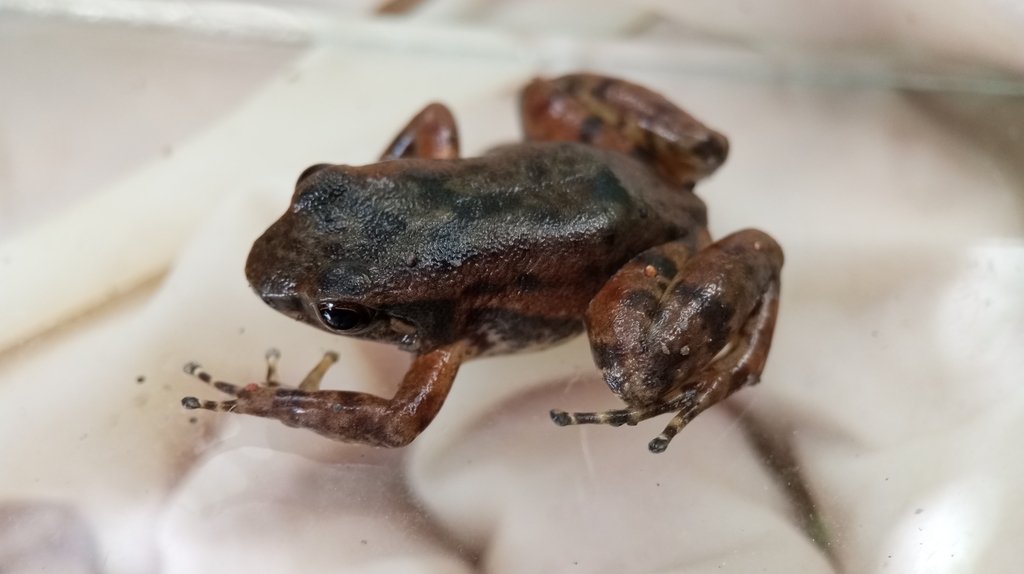
Paseo los Ilustres Fingered Poison Frog
Mannophryne trujillensis
Mannophryne trujillensis is an endangered amphibian species. It is a type of fingered poison frog and is a member of the Aromabatide family. It is native to Cordillera de Merida, Venezuela. It needs constant access to water and differs from other similar species because it features a combination of morphological features.
From the article Mannophryne trujillensis on Wikipedia (CC BY-SA), quoted section by section
Description
It differs from other similar species because it features a combination of morphological features.
Range & habitat
This diurnal, riparian frog is lives near streams on mountains surrounded by lowlands. It can live in streams in secondary forests and other somewhat disturbed areas, such as under roads. Scientists observed the frog between 700 and 1800 meters above sea level. The frog's known range is near two moderately protected areas: the Santo Domingo-Motatán and Río Castán river protection areas.
Wikipedia: “Habitat”
What it does
The male frogs perch on rocks next to streams and call to the female frogs during the day. Scientists infer that this frog has young the same way as other frogs in Mannophryne: The female frog lays eggs on land, and, after the eggs hatch, the male frogs carry the tadpoles to water.
Wikipedia: “Reproduction”
Listen
Looking for field recordings…
Where it lives
Recorded sightings
—
geo-referenced records in GBIF, from museums, herbaria and field observers.
Drag the globe to turn it. Dots are where records exist, not a range map; darker means more records.
In the stacks
Searching the stacks…
Every page naming Mannophryne trujillensis in the Biodiversity Heritage Library →
This page is assembled live from iNaturalist, GBIF, Wikipedia, the Source Library and the Internet Archive. It is not yet part of the hand-edited codex. iNaturalist taxon 66098.