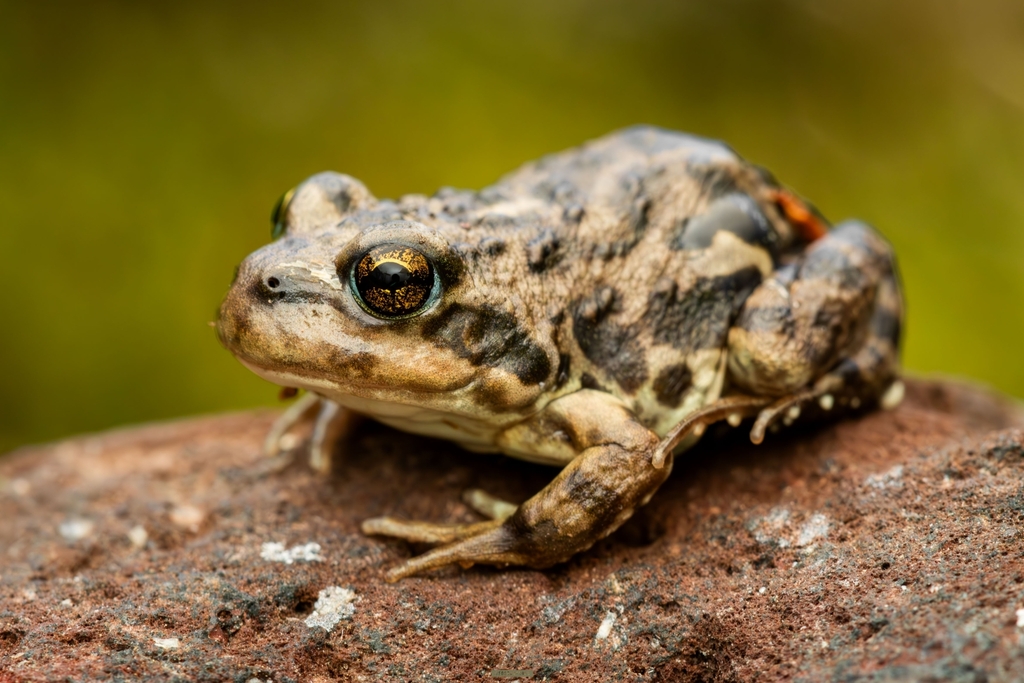
Large Four-eyed Frog
Pleurodema bufoninum
Pleurodema bufoninum, the large four-eyed frog or sapo de cuatro ojos grandes, is a species of frog in the family Leptodactylidae. It is found in Argentina and Chile. Its natural habitats are subantarctic forests, temperate forests, subantarctic shrubland, temperate shrubland, subtropical or tropical dry shrubland, subantarctic grassland, temperate grassland, intermittent rivers, swamps, intermittent freshwater marshes, arable land, rural gardens, ponds, and open excavations. The common name "four-eyed frog" refers to two inguinal poison glands that resemble
From the article Pleurodema bufoninum on Wikipedia (CC BY-SA), quoted section by section
Range & habitat
Its natural habitats are subantarctic forests, temperate forests, subantarctic shrubland, temperate shrubland, subtropical or tropical dry shrubland, subantarctic grassland, temperate grassland, intermittent rivers, swamps, intermittent freshwater marshes, arable land, rural gardens, ponds, and open excavations. The frog has been reported in protected areas. Scientists have seen it between 0 and 2,440 m (0 and 8,005 ft) above sea level.
Wikipedia: “Habitat”
What it does
When threatened, the frog lowers its head and raises its rear. When the frog adopts this posture, the poison glands are also raised toward the predator. The predator may also confuse the frog's raised posterior for the head of a larger animal.
== References ==
Wikipedia: “Behavior”
In human culture
The common name "four-eyed frog" refers to two inguinal poison glands that resemble eyes.
Wikipedia: “Etymology”
Listen
Looking for field recordings…
Where it lives
Recorded sightings
—
geo-referenced records in GBIF, from museums, herbaria and field observers.
Drag the globe to turn it. Dots are where records exist, not a range map; darker means more records.
In the stacks
Searching the stacks…
Every page naming Pleurodema bufoninum in the Biodiversity Heritage Library →
This page is assembled live from iNaturalist, GBIF, Wikipedia, the Source Library and the Internet Archive. It is not yet part of the hand-edited codex. iNaturalist taxon 66509.