- Animals
- ›Chordates
- ›Vertebrates
- ›Amphibians
- ›Frogs and Toads
- ›Poison Frogs
- ›Poison Dart Frogs
- ›Dendrobatinae
- ›Ranitomeya
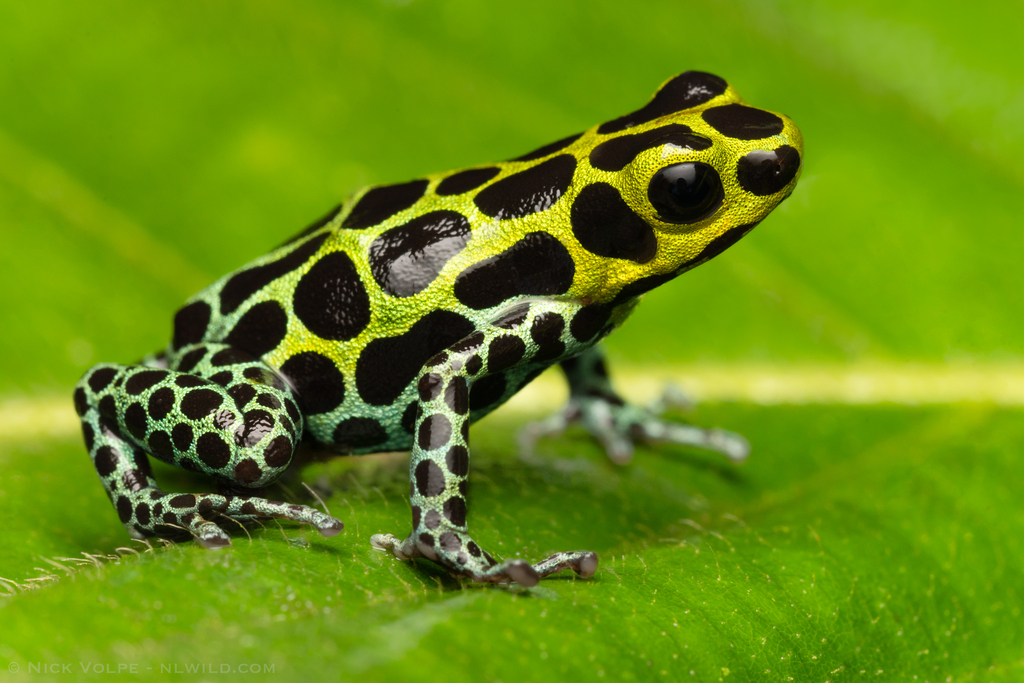
Variable Poison Frog
Ranitomeya variabilis
Ranitomeya variabilis, formerly known as Dendrodates variabilis, is a species of small poison dart frog distributed in northern Peru, along the eastern slope of Andes in the upper Rio Huallaga drainage basin. Its common name, Zimmerman's poison frog, is named after Elke Zimmermann, a German zoologist who described the morph of this species and differentiated it from D. ventrimaculatus. The species was formerly considered to be synonymous with Ranitomeya ventrimaculata.
Ranitomeya variabilis usually has a bright yellow body with deep blue limbs, and black spots or stripes across the ventral side of the body. The colors change in some geographic locations. R. variabilis has different mimicry relationships with two other species. Like other frogs in the same family, R. variabilis has toxic skin alkaloid which repels potential predators.
From the article Zimmerman's poison frog on Wikipedia (CC BY-SA), quoted section by section
Range & habitat
R. variabilis is native to South America. It is mainly distributed in the western region of the Amazonian-Orinocan Lowlands, which is around northern Peru, Ecuador, western Brazil, and the southern Colombia region. R. variabilis can be found as far as 195 kilometers southeast of Brazil. The average rainfall in areas in which R. variabilis habituate is around 2500 mm, with a dry season between June and September. This dry season is correlated with changes in parental and egg deposition behaviors. Temperature varies from 16 to 32 °C and tends to be on the lower end during the dry season. Adults are often found in secondary to ancient forests because of the presence of ideal oviposition sites. Individuals have also been found around higher arboreal perches.
Conservation. R. variabilis populations are threatened by habitat loss and fragmentation due to agricultural development and logging. R. variabilis is involved in illegal pet trafficking for poison dart frogs.
Wikipedia: “Habitat and distribution”
What it does
R. variabilis tadpoles are known to be omnivorous and cannibalistic. In addition to eggs and conspecific tadpoles in the same phytotelma, R. variabilis tadpoles are also able to feed on organic detritus, small insect larvae, and other anuran eggs. Adult R. variabilis generally prey on ants, fruit flies, termites, and small beetles.
Wikipedia: “Diet”
Listen
Looking for field recordings…
Where it lives
Recorded sightings
—
geo-referenced records in GBIF, from museums, herbaria and field observers.
Drag the globe to turn it. Dots are where records exist, not a range map; darker means more records.
In the stacks
Searching the stacks…
Every page naming Ranitomeya variabilis in the Biodiversity Heritage Library →
This page is assembled live from iNaturalist, GBIF, Wikipedia, the Source Library and the Internet Archive. It is not yet part of the hand-edited codex. iNaturalist taxon 67048.